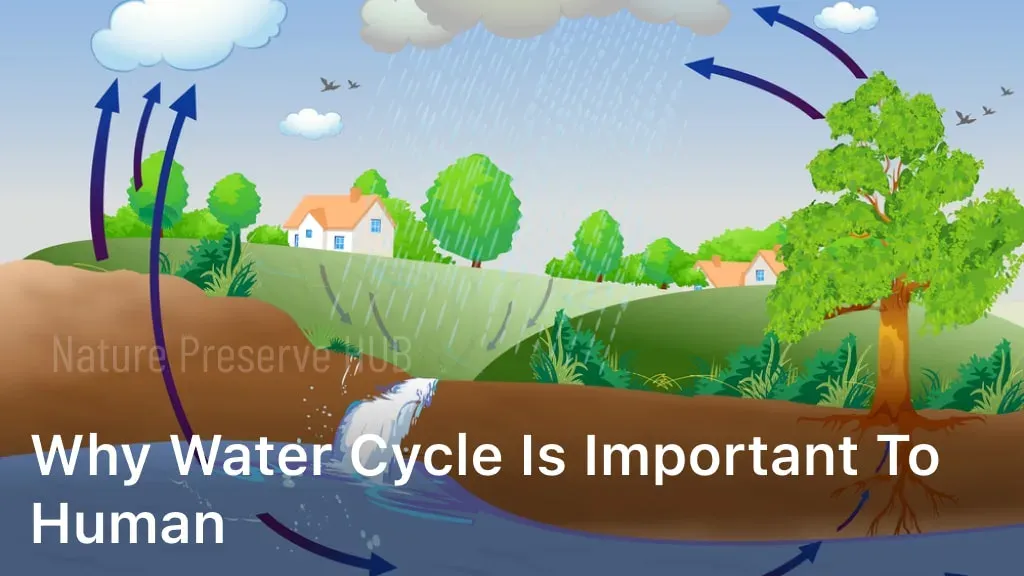
naturepreservehub.com. Why Water Cycle is Important to Human. an essential process for sustaining life and maintaining our ecosystems. Learn more on our site. The water cycle, also known as the hydrologic cycle, is a natural process that allows water to move continuously around the Earth. It involves various stages that include evaporation, condensation, precipitation, and runoff. This process is essential for the survival of all living organisms on Earth, including humans. Without the water cycle, life on Earth would not exist. Human beings, like all other species, rely on water for their survival. Water is necessary for various body functions, including digestion, circulation, and temperature regulation. Additionally, water is crucial for agriculture, industrial processes, and maintaining the cleanliness of our homes and environment. The water cycle is not only important for human survival but also for maintaining ecosystems and biodiversity. It ensures that water is distributed evenly throughout the planet, supporting the growth of plants and animals. It also helps to moderate the Earth’s temperature, acting as a natural cooling system. Key Takeaways: The water cycle is a natural process that allows water to move continuously around the Earth. It is essential for sustaining human life as water is necessary for various body functions and activities. The water cycle is crucial for maintaining ecosystems and biodiversity, ensuring the growth of plants and animals. It also helps to moderate the Earth’s temperature, acting as a natural cooling system. The water cycle is vital for human existence, and its preservation is crucial for a sustainable future. What Is The Water Cycle? Water is one of the most important substances on Earth. It is essential for all forms of life. Without water, there would be no life on Earth. The water cycle is the process that describes how water moves around on, above, and below the surface of the Earth. The water cycle has many important parts, including precipitation, evaporation, and transpiration. Precipitation is water that falls from the atmosphere to the Earth’s surface. This can happen in the form of rain, snow, sleet, or hail. Evaporation is when water on the Earth’s surface evaporates into the atmosphere. Transpiration is when water is released from plants into the atmosphere. The water cycle is important to human beings because we rely on water for many things. We use water for drinking, cooking, bathing, and irrigation. Irrigation is the process of watering crops. Without the water cycle, there would be no fresh water to drink or to water crops. The water cycle is also important because it helps to regulate the Earth’s temperature. The water cycle is a never-ending process that is always happening all around us. It is an important part of the Earth’s ecosystems and helps to keep life on Earth possible. Why Water Cycle is Important to Human The water cycle refers to the natural process of how water moves through the environment. Understanding this process is crucial in comprehending the significance of water in sustaining life on Earth. The water cycle consists of four main stages: evaporation, condensation, precipitation, and runoff. Evaporation occurs when water transforms from a liquid state to a gas due to heat from the sun. Condensation takes place when water vapor forms in the atmosphere and condenses into clouds. Precipitation occurs when moisture in the clouds falls back to the earth’s surface in the form of rain, snow, sleet, or hail. Runoff is the movement of water over land surfaces to rivers, lakes, or oceans, completing the cycle. “The water cycle is a beautiful process that ensures the continuity of life on Earth.” This natural process is essential for the survival of all living organisms, including human beings. It provides us with the water we drink, bathe in, and use for agriculture and industry. Understanding the water cycle is critical in managing and conserving water resources and ensuring sustainable practices. Processes That Make Up The Water Cycle The water cycle, also known as the hydrological cycle, consists of several processes that continuously move water between the Earth’s surface and the atmosphere. These processes include: 1. Evaporation This is the process by which water from oceans, lakes, rivers, and other surface waters is converted into water vapor due to heat from the sun. 2. Transpiration Plants absorb water through their roots and release water vapor into the atmosphere through tiny pores in their leaves called stomata. This is known as transpiration. 3. Condensation Water vapor in the atmosphere cools and changes back into liquid water droplets, forming clouds. This process occurs when moist air rises and encounters cooler air, causing the vapor to condense. 4. Precipitation Water falls from the atmosphere to the Earth’s surface in the form of rain, snow, sleet, or hail. This is the culmination of the water cycle, and it replenishes water in oceans, lakes, rivers, and on land. 5. Infiltration Precipitated water that reaches the ground can either flow over the surface (runoff) or seep into the ground. Infiltration is the process of water penetrating the soil and becoming groundwater. 6. Surface Runoff Water that does not infiltrate the soil may flow over the land surface and eventually find its way into rivers, lakes, or oceans. This runoff plays a crucial role in shaping landscapes. 7. Subsurface Flow Some water that infiltrates the soil moves below the surface, creating underground flows that contribute to the formation of groundwater. 8. Surface Water Storage Water accumulates in various surface reservoirs such as oceans, lakes, rivers, and ponds. These storage bodies play a vital role in maintaining a balance in the water cycle. These interconnected processes ensure a continuous movement and exchange of water between the Earth’s surface and the atmosphere, maintaining a dynamic equilibrium in the distribution of Earth’s water resources. Keep Reading : What is The Source of Energy in The Water Cycle? Importance of Understanding the Water Cycle By comprehending the water cycle, we can appreciate the interconnectedness of different ecosystems. It helps us to understand how our actions can impact the environment and the water cycle process. For example, deforestation can disrupt the water cycle