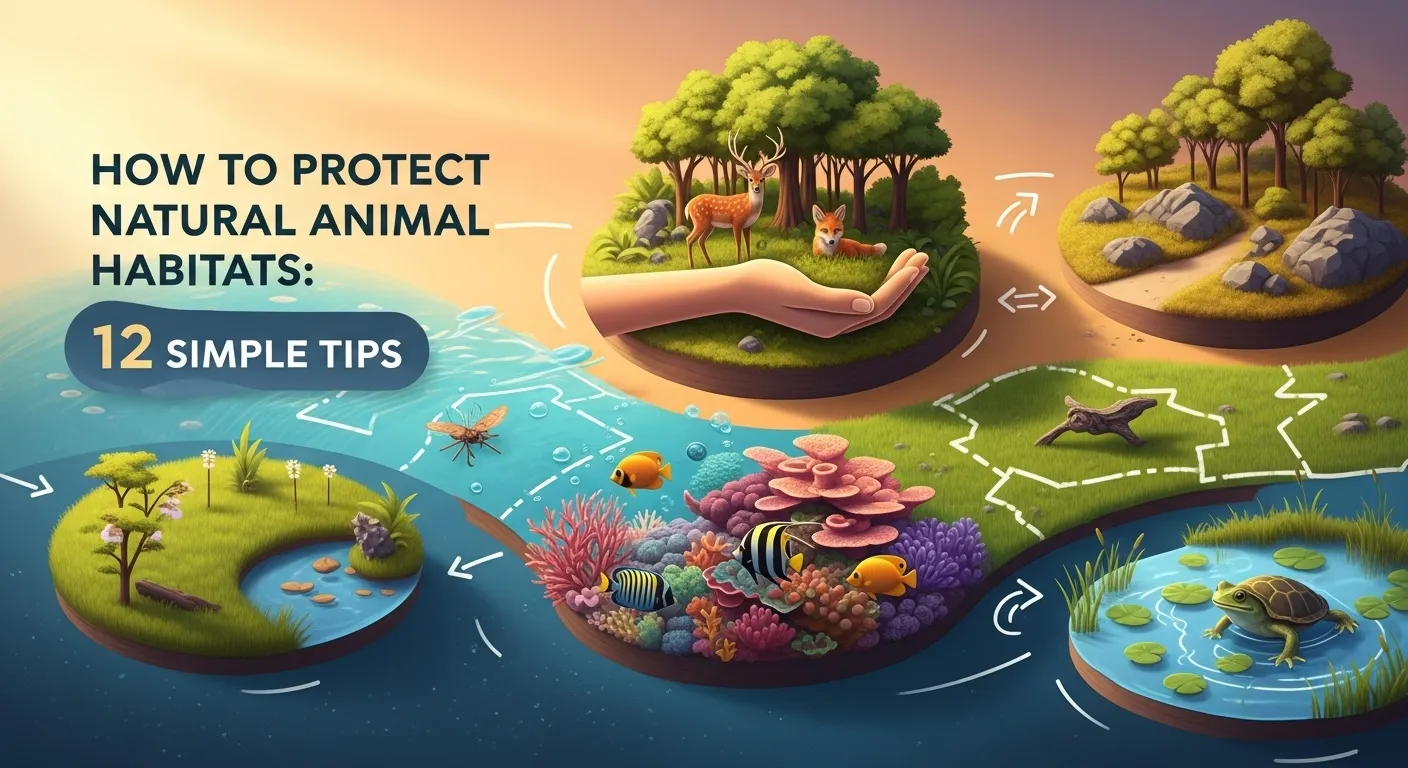
How to Protect Natural Animal Habitats: 12 Simple Tips Protecting wildlife is no longer a distant ideal; it’s a daily practice. If you’ve ever wondered how to protect natural animal habitats in a way that actually makes a difference—at home, in your community, and beyond—this guide breaks it down into practical, enjoyable actions. You’ll learn how small choices add up to big wins for biodiversity, from planting native species to advocating for habitat-friendly policies and supporting ethical travel. Here are 12 simple, science-backed tips that fit into real life and create lasting impact. Why Habitat Protection Matters Healthy habitats are the stage on which all wildlife thrives. Forests, wetlands, coral reefs, grasslands, and deserts each host complex webs of life. When habitats fragment or degrade, species lose food, shelter, migration corridors, and breeding grounds. The result? Populations decline, ecosystems unravel, and human communities lose nature’s life-support systems. Scientists agree that the biggest drivers of biodiversity loss today include land-use change, overexploitation, invasive species, pollution, and climate change. While these drivers are global, everyday decisions—what we buy, how we vote, where we travel, and how we garden—directly influence them. Habitat protection isn’t abstract; it’s practical, local, and cumulative. It’s also smart strategy. Protecting habitats safeguards ecosystem services we rely on: crop pollination, clean water, flood control, carbon storage, and disease regulation. Think of intact habitats as nature’s infrastructure—resilient, efficient, and irreplaceable. Investing your effort in conservation yields outsized returns for wildlife and people alike. Below is a quick reference showing the main threats, what they mean in daily life, and where your actions can move the needle. Driver | What it means | Everyday connection | Action lever Land/sea use change | Natural areas converted to farms, cities, roads | Food choices, housing, landscaping | Eat lower on the food chain; support smart growth; plant native Overexploitation | Unsustainable hunting, fishing, logging | Seafood, wood furniture/paper, fashion | Choose certified products; reduce demand Invasive species | Non-native species outcompete natives | Garden plants, pets, bait | Plant native; never release pets; clean gear Pollution | Chemicals, plastics, noise/light disrupt habitats | Household products, trash, lighting | Buy low-tox; reduce plastic; use wildlife-friendly lights Climate change | Shifts ranges, phenology, and habitat viability | Energy, travel, heating/cooling | Electrify, conserve energy, vote for climate action Actions You Can Take at Home and Online Start where you are. Homes, balconies, and backyards can become micro-habitats that support pollinators, birds, and beneficial insects. A single window box of native flowers can provide nectar; a small water source can help migrating birds; and pesticide-free soil invites life below ground. You don’t need a large space to create meaningful habitat. Online, your influence scales. Sharing local habitat maps, supporting credible conservation nonprofits, and amplifying citizen science results all help accelerate real-world conservation. Your voice, clicks, and contributions can steer attention and funds toward habitat protection. Remember: consistency wins. Turning habits into routine—refilling a bird bath, composting, switching to eco-friendly products—compounds into long-term benefits. 1) Shrink Your Footprint Where It Counts Reducing your resource use is one of the most direct ways to lessen pressure on habitats. Focus on big-impact actions: eat more plant-based meals, cut food waste, and choose seasonal, locally grown produce when possible. Lowering meat intake eases land-use pressure; reducing waste lessens landfill expansion; seasonal choices reduce long-distance transport impacts. At home, optimize energy use. Insulate, seal drafts, and switch to high-efficiency heating and cooling. Electrify when feasible—induction cooktops, heat pumps, and EVs all reduce emissions that drive climate-related habitat shifts. Pair with renewable energy subscriptions or rooftop solar where possible. 2) Choose Wildlife-Safe Products What you buy shapes landscapes. Prefer wood and paper certified by credible standards (e.g., FSC), seafood from sustainable fisheries, and clothing made with lower-impact fibers and dyes. Avoid products tied to deforestation or destructive extraction—look beyond green slogans to real certifications and transparency. Household chemicals matter, too. Skip broad-spectrum pesticides and herbicides; they harm pollinators and soil life. Use integrated pest management and spot treatments instead. Choose low-tox cleaners and biodegradable soaps, protecting waterways that downstream species rely on. 3) Plant Native, Even on a Balcony Native plants feed native insects, which feed birds, reptiles, and amphibians. Replace turf with a mix of native grasses, flowers, shrubs, and trees. If you only have a balcony, use pots of nectar- and seed-rich species. Add logs, leaf litter, and a shallow water dish to extend habitat benefits. Design with diversity: a layered structure (groundcover, mid-story, canopy) supports more species. Avoid invasive ornamentals—check regional plant lists and apps to find safe choices. The goal is a low-maintenance, high-benefit patchwork that links with neighbors’ yards and local green spaces. Community and Policy Engagement Personal action is powerful, but systems change scales impact. Community projects restore larger habitats, and public policies determine whether ecosystems are protected, fragmented, or polluted. Local voices often sway land-use decisions, park funding, and conservation priorities. Participate in community science and restoration. These efforts generate data that decision-makers use. They also build social networks that advocate for nature. Collective action transforms isolated wins into connected corridors for wildlife. Finally, support organizations that protect critical habitats—their land purchases, stewardship, and lobbying amplify your individual efforts. 4) Volunteer for Habitat Restoration and Citizen Science Join weekend plantings, wetland cleanups, or invasive-species pulls. Such projects revitalize habitat faster than natural recovery alone. Restoration teams plan for the right species, seasonality, and site conditions, increasing survival rates and ecosystem function. Citizen science initiatives (bird counts, amphibian monitoring, stream sampling) generate open data. Local agencies and researchers rely on these datasets to track trends and target interventions. Your observations become evidence that unlocks funding and protection. 5) Advocate for Habitat-Friendly Planning Attend town halls and planning meetings. Support ordinances that protect riparian buffers, limit light and noise pollution near sensitive habitats, and incentivize native landscaping. Ask for wildlife crossings on roads that cut through migration routes and for zoning that maintains green corridors. Contact representatives to back conservation funding, endangered species protections, and climate