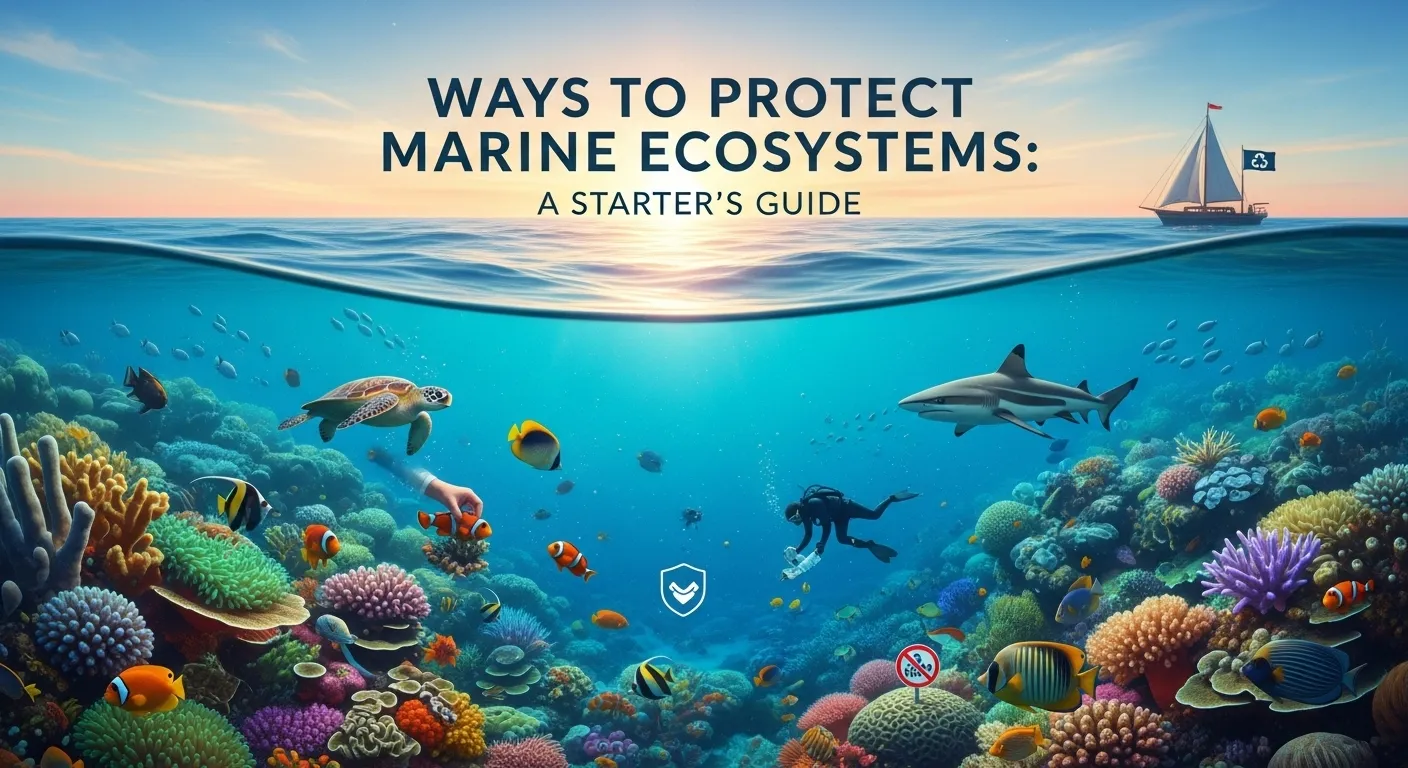
Ways to Protect Marine Ecosystems: A Starter's Guide Our oceans are under pressure like never before. If you're searching for practical ways to protect marine ecosystems, this starter's guide will walk you through the most effective actions individuals, communities, scientists, and policymakers can take to keep seas healthy and resilient. From reducing everyday plastic use to supporting marine protected areas and sustainable seafood choices, small, consistent steps add up — and this guide explains how to begin. How marine ecosystems work and why they matter<h2>Why Marine Ecosystems Matter</h2> The ocean supports life on Earth in profound ways: it produces oxygen, regulates climate, and provides food and livelihoods for billions. More than half of the planet’s oxygen comes from marine phytoplankton and coastal plants like seagrasses and mangroves. Healthy marine ecosystems also absorb large amounts of carbon dioxide, helping slow climate change while buffering coastlines against storms. Beyond these global services, marine habitats — coral reefs, kelp forests, seagrass meadows, and open-ocean food webs — are home to extraordinary biodiversity. Protecting this diversity is not just ethical; it sustains fisheries, tourism, and cultural traditions. When ecosystems degrade, fisheries collapse, coastal protection weakens, and the communities that depend on them suffer. Yet the value of the ocean is often overlooked because its benefits are diffuse and long-term. By understanding the connections between ocean health and human wellbeing, individuals and institutions can make more informed choices that protect both nature and people. The ecological functions of coastal habitats Coastal habitats like mangroves, salt marshes, and seagrass meadows act as nurseries for many commercially important fish species. They trap sediments and nutrients, improving water quality, and store carbon at rates often higher per hectare than terrestrial forests. Protecting these habitats is an efficient way to support fisheries and mitigate climate change. Many coastal ecosystems are under intense pressure from development, pollution, and land-use change. Restoration projects—replanting mangroves, re-establishing oyster reefs, or restoring tidal flow—can be highly effective, but require community support and long-term monitoring for success. Open-ocean and deep-sea importance The open ocean and deep sea may seem remote, but they regulate the planet’s climate and host unique biodiversity with roles we are still discovering. Deep-sea corals, for example, provide habitat for many species and are highly vulnerable to bottom trawling and mining. International cooperation is essential to protect these areas, particularly in areas beyond national jurisdiction. Advances in technology help map and monitor deep-sea ecosystems, but precautionary management is required where knowledge is limited. Major threats to marine ecosystems and what they do<h2>Major Threats to Marine Ecosystems</h2> Marine ecosystems face multiple, interconnected threats: pollution (especially plastic), overfishing, habitat destruction, climate change, and invasive species. These pressures often act synergistically — for example, warming waters can make corals more susceptible to disease, while pollution and overfishing reduce their ability to recover. Plastic pollution is pervasive. Microplastics have been found from surface waters to the deep sea, entering food webs and posing risks to wildlife and human health. Reducing single-use plastics and improving waste management are critical immediate steps. Climate change intensifies threats through warming, acidification, and sea-level rise. Coral bleaching events, shifting species ranges, and reduced reproductive success are already evident. Addressing climate change requires rapid emission reductions as well as local actions that increase ecosystem resilience. Pollution: plastics, nutrients, and chemical contaminants Plastic debris endangers marine life through entanglement and ingestion. Nutrient pollution from agriculture and sewage causes hypoxic “dead zones” where oxygen is too low to support most marine life. Chemical contaminants, including heavy metals and persistent organic pollutants, bioaccumulate and affect reproduction and health across species. Tackling pollution involves both source control (better agricultural practices, wastewater treatment upgrades) and consumer behavior changes (using fewer disposable products). Policy measures such as extended producer responsibility (EPR) for packaging are also effective at scale. Overfishing and destructive fishing practices Overfishing reduces population sizes and alters food webs. Destructive methods such as bottom trawling physically destroy habitats like cold-water coral gardens and seamount ecosystems. Illegal, unreported, and unregulated (IUU) fishing undermines management efforts and equitable resource sharing. Sustainable fisheries management — catch limits based on scientific assessments, gear restrictions, and bycatch mitigation — helps rebuild stocks. Empowering local communities with rights-based management (e.g., community-managed marine areas) improves compliance and outcomes. Practical individual actions to protect the ocean<h2>Practical Actions Individuals Can Take</h2> Individuals can make a meaningful difference through daily choices and civic engagement. Personal behaviors like reducing plastic use, choosing sustainable seafood, and supporting habitat restoration are direct ways to protect marine ecosystems. Small habits scaled across millions of people create measurable impact. Start with waste reduction: carry a reusable water bottle and bag, refuse unnecessary packaging, and avoid single-use plastics. When plastics are unavoidable, ensure they are recycled correctly and never litter. Volunteer for local beach cleanups and support organizations that remove marine debris. Education and advocacy matter. Vote for policymakers who prioritize climate action and ocean protection, support sustainable businesses, and promote ocean literacy among youth. Engaged citizens catalyze the political will needed for large-scale marine conservation measures. Reduce, reuse, recycle — and refuse Reducing demand is the most effective way to lessen waste. Refuse single-use items, reuse durable alternatives, and recycle correctly. Refusing and reducing are more impactful than recycling alone, since many plastics are not economically recyclable. Adopt habits like carrying a reusable coffee cup, avoiding plastic straws, and choosing products with minimal packaging. When shopping, favor companies with transparent sustainability commitments. Make sustainable seafood choices Choose seafood certified by reputable programs (e.g., MSC, ASC) or follow local seafood guides that recommend sustainable options. Eating lower on the food chain — like mollusks and small pelagic fish — often reduces pressure on ecosystems. Support fisheries that use selective gear and are managed with science-based quotas. When in doubt, ask your fishmonger or restaurant about sourcing and fishing methods. Community and policy-level strategies that scale impact<h2>Community & Policy-Level Strategies</h2> Large-scale protection requires systemic solutions: marine protected areas (MPAs), better fisheries management, pollution control, and climate mitigation. Well-designed MPAs can restore ecosystem