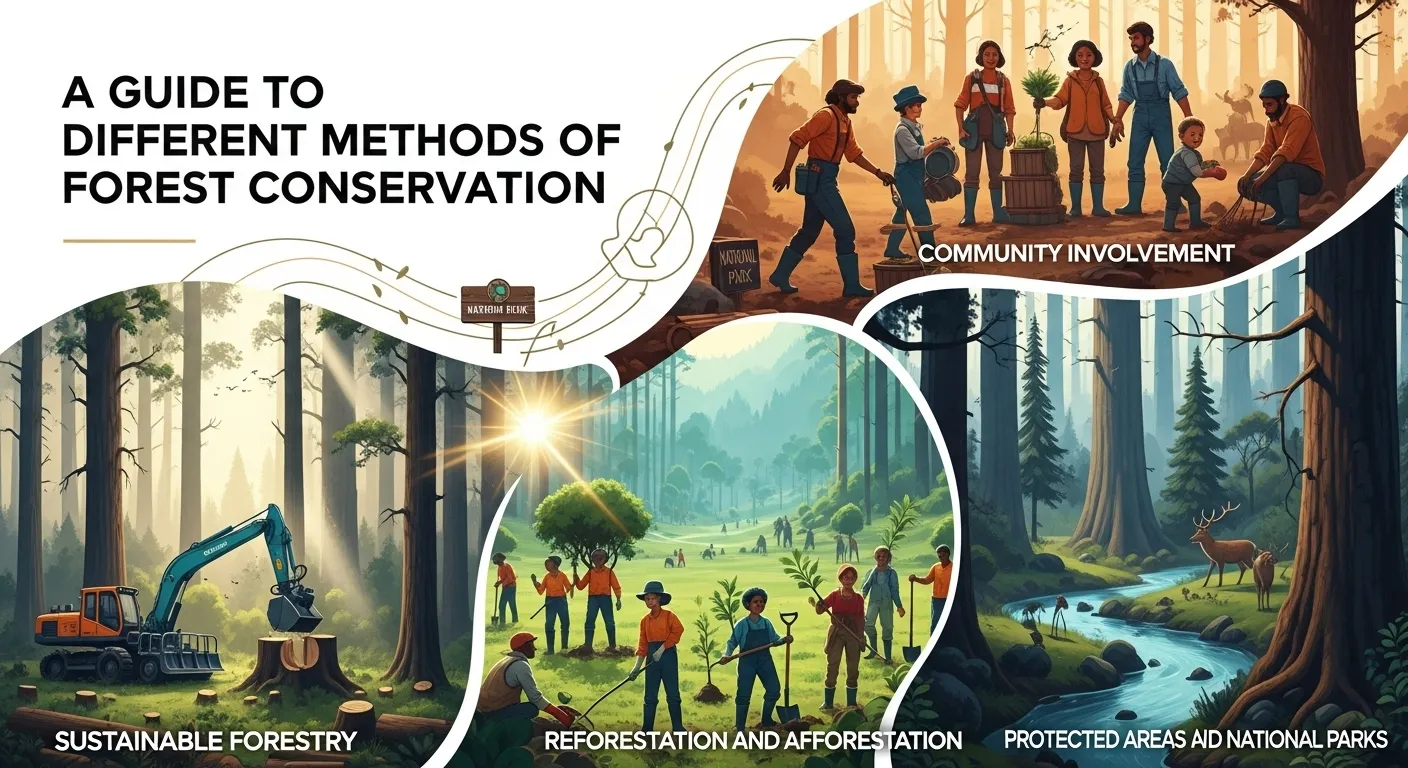
Forests are the lifeblood of our planet, the vast, green lungs that breathe life into our atmosphere and harbor an incredible diversity of life. Yet, these vital ecosystems are facing a silent, creeping crisis: deforestation. Every year, millions of hectares are lost to agriculture, logging, and urbanization, pushing countless species toward extinction and destabilizing our climate. The challenge is immense, but so is our capacity for action. Understanding the different methods of forest conservation is the first critical step toward protecting these irreplaceable natural treasures for future generations. This guide will explore the multifaceted strategies, from protecting what we have to restoring what we’ve lost, offering a comprehensive look at the tools at our disposal in this crucial fight. The Crucial Importance of Forest Ecosystems Before diving into conservation methods, it's essential to understand what's at stake. Forests are far more than just collections of trees; they are complex, dynamic ecosystems that provide essential services, often called ecosystem services, that are fundamental to human well-being and planetary health. Their most well-known role is acting as massive carbon sinks. Through photosynthesis, forests absorb vast amounts of carbon dioxide (CO2), a primary greenhouse gas, from the atmosphere, storing it in their biomass (trunks, leaves, roots) and soil. This process of carbon sequestration is a powerful natural defense against climate change. Beyond climate regulation, forests are the primary custodians of terrestrial biodiversity. It is estimated that forests are home to over 80% of all land-based species of animals, plants, and insects. This incredible biodiversity is not just beautiful; it is the foundation of resilient ecosystems. Each species plays a role, from pollinators that support agriculture to predators that control pest populations. The intricate web of life within a forest ensures its stability and ability to recover from disturbances. When we lose forests, we don't just lose trees; we lose this entire web of life, triggering a cascade of extinctions. Economically and socially, forests are a lifeline for billions of people. They provide essential resources such as timber, fuel, food, and medicinal plants. For over 1.6 billion people, including many of the world's most impoverished communities and indigenous groups, forests are a direct source of livelihood. They also play a critical role in regulating water cycles, preventing soil erosion, and purifying water sources, benefits that directly support agriculture and human settlements downstream. The loss of forests, therefore, is not just an environmental issue but a profound humanitarian and economic crisis. Proactive Conservation: Protection and Preservation Strategies The most effective and cost-efficient method of forest conservation is to protect existing forests before they are degraded or destroyed. These proactive strategies focus on preventing deforestation and maintaining the ecological integrity of intact forest landscapes, particularly old-growth forests which are exceptionally rich in carbon and biodiversity. #### Establishing and Managing Protected Areas Establishing protected areas like national parks, wildlife sanctuaries, and nature reserves is a cornerstone of forest conservation. These are legally defined geographical spaces recognized, dedicated, and managed to achieve the long-term conservation of nature. By restricting or prohibiting destructive activities such as logging, mining, and agricultural expansion, these areas serve as safe havens for wildlife and allow natural ecological processes to continue undisturbed. The effectiveness of a protected area, however, depends heavily on strong management and enforcement. A "paper park"—an area protected by law but with no on-the-ground resources for enforcement—offers little real protection against illegal logging, poaching, or encroachment. Successful protected areas require adequate funding, well-trained rangers, community involvement, and clear boundaries. When managed effectively, these areas not only preserve biodiversity but also become hubs for ecotourism, scientific research, and environmental education, providing economic benefits to nearby communities. #### Community-Based Forest Management (CBFM) For centuries, indigenous peoples and local communities have been the de facto guardians of the world’s forests. Community-Based Forest Management (CBFM) is a powerful approach that formally recognizes and empowers local communities to manage and conserve the forests they depend on. This model shifts away from a top-down, centralized government approach to one where local stakeholders have secure land tenure and a direct say in how forest resources are used and protected. The logic behind CBFM is simple: people who depend directly on the forest for their livelihood have the strongest incentive to manage it sustainably. When communities have legal rights to the forest, they are more likely to protect it from outside threats like illegal loggers and large-scale agricultural companies. This approach often integrates traditional ecological knowledge with modern conservation science, leading to more culturally appropriate and effective management plans. By providing alternative income streams through sustainable enterprises like ecotourism or the sale of non-timber forest products, CBFM helps alleviate poverty, which is a key driver of deforestation. #### Proforestation: Letting Existing Forests Grow While reforestation and afforestation (discussed later) are vital, a newer concept gaining traction is proforestation. This strategy prioritizes protecting existing forests, especially mature and old-growth forests, and allowing them to continue growing to their full ecological potential. Unlike reforestation, which can take centuries to accumulate the carbon and biodiversity of a mature forest, proforestation focuses on maximizing the potential of forests that are already standing. Older, larger trees sequester and store far more carbon than young, small trees. Intact, mature forests also harbor the highest levels of biodiversity and are more resilient to climate change impacts like drought and fire. Proforestation is therefore considered the most immediate, effective, and low-cost natural climate solution. It doesn’t require the massive investment of planting new trees; it simply requires the commitment to protect what is already there, allowing nature's own processes to do the work of accumulating carbon and fostering complex life webs. Restorative Approaches: Reforestation and Afforestation When forests have already been cleared or severely degraded, restorative approaches are necessary to bring them back. These active interventions aim to rebuild forest cover, restore ecological functions, and reconnect fragmented landscapes. The two primary methods in this category are reforestation and afforestation. #### Reforestation: Bringing Back What Was Lost Reforestation is the process of replanting trees and restoring a