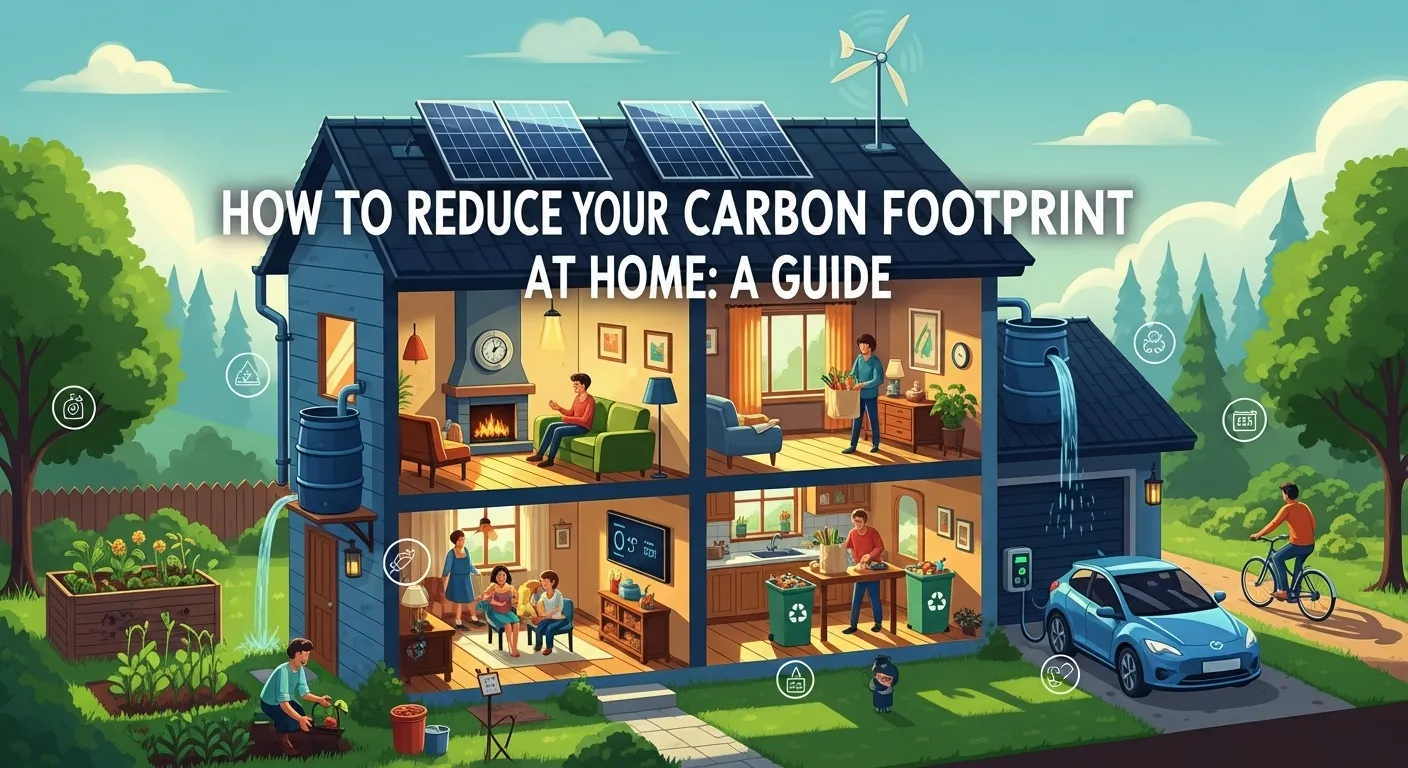
In an era where climate change headlines dominate our news feeds, the feeling of helplessness can be overwhelming. The scale of the problem seems immense, leaving many to wonder what one person can possibly do. The truth is, significant change begins with collective individual action, and the most impactful place to start is right where we live. Your home is not just a sanctuary; it is a powerful hub for positive environmental change. By understanding and implementing practical ways to reduce your carbon footprint at home, you can contribute to a healthier planet, often while saving money and improving your quality of life. This guide will walk you through actionable, effective strategies, from simple daily habits to larger, long-term investments. Understanding Your Carbon Footprint Before you can effectively reduce your carbon footprint, it’s crucial to understand what it is and where your own emissions come from. A carbon footprint is the total amount of greenhouse gases—primarily carbon dioxide (CO2)—that are generated by our actions. These emissions stem from a wide range of activities, including the energy used to power and heat our homes, the food we eat, the products we buy, and the waste we generate. It's a measure of our personal impact on the Earth's climate. Establishing a baseline is a critical first step. You can’t manage what you don’t measure. Fortunately, there are numerous free and user-friendly carbon footprint calculators available online, such as those offered by the EPA or WWF. These tools ask a series of questions about your lifestyle—your home energy usage, transportation habits, diet, and shopping patterns—to provide an estimate of your annual CO2 emissions. This personalized report highlights your biggest areas of impact, allowing you to prioritize your efforts for the greatest effect. Once you have your baseline, you can set realistic goals. The aim isn't to achieve a zero-carbon footprint overnight—an almost impossible feat in our modern world—but to make conscious, incremental improvements. Seeing that number decrease over time as you implement new habits can be an incredibly motivating experience. It transforms an abstract global problem into a tangible, personal mission where your choices have a visible and measurable positive outcome. Revolutionize Your Energy Consumption For most households, energy consumption is the single largest contributor to their carbon footprint. Electricity for lighting, appliances, and electronics, as well as fuel for heating and cooling, are typically generated by burning fossil fuels. Therefore, tackling energy use is the most high-impact area for change. By becoming more efficient and mindful of how you power your home, you can drastically cut your emissions and your utility bills. Embrace Energy-Efficient Appliances and Lighting Your home is filled with appliances that consume energy, but not all are created equal. When it's time to replace an old refrigerator, washing machine, or dishwasher, always look for the ENERGY STAR label. Products with this certification are guaranteed to meet strict energy efficiency guidelines set by the U.S. Environmental Protection Agency. An ENERGY STAR-certified refrigerator, for example, is about 9% more energy-efficient than a standard model, which translates to significant energy and cost savings over its lifetime. Lighting is another area ripe for optimization. If you are still using traditional incandescent or even CFL bulbs, switching to Light Emitting Diode (LED) bulbs is one of the quickest and easiest ways to reduce energy use. LEDs consume up to 90% less energy and can last 25 times longer than incandescent bulbs. While the upfront cost is slightly higher, their longevity and efficiency make them far more economical and environmentally friendly in the long run. Making a wholesale switch to LEDs throughout your home is a powerful, one-time action with lasting benefits. Bulb Type Average Lifespan (Hours) Energy Use for 800 Lumens (Watts) Estimated 10-Year Cost (Bulb + Electricity) Incandescent 1,200 60W ~$75 CFL 8,000 14W ~$25 LED 25,000 10W ~$18 Master Your Heating and Cooling Systems Heating and cooling (HVAC) often account for nearly half of a home's total energy use. Optimizing your system can lead to massive carbon reductions. A programmable or smart thermostat is an essential tool. It allows you to automatically lower the heat or air conditioning when you are asleep or away from home, preventing wasted energy. Setting your thermostat just a few degrees lower in the winter and higher in the summer can reduce your HVAC-related emissions by 5-15%. Beyond the thermostat, focus on your home's envelope. Proper insulation and draft-proofing are paramount. Check for air leaks around windows, doors, and electrical outlets. Use weatherstripping and caulk to seal these gaps—a simple and inexpensive DIY project. Ensure your attic and walls are adequately insulated to prevent heat from escaping in the winter and entering in the summer. Regular maintenance of your HVAC system, including cleaning or replacing filters monthly, ensures it runs at peak efficiency. Unplug and Power Down Many modern electronics continue to draw power even when they are turned off. This phenomenon, known as phantom load or vampire power, can account for up to 10% of your household electricity use. Devices like televisions, game consoles, microwaves, and chargers are common culprits. The solution is simple: unplug devices when they are not in use. To make this easier, plug multiple devices (like your entire entertainment center) into a single power strip. This allows you to cut power to all of them with the flip of a single switch. Smart power strips go a step further, automatically cutting power to peripheral devices when the main device (like a computer) is turned off. Also, be sure to activate the energy-saving modes on your computers, monitors, and other electronics, which automatically put them into a low-power sleep state after a period of inactivity. Rethinking Your Water Usage The link between water and carbon emissions may not be immediately obvious, but it's significant. A tremendous amount of energy is required to pump, treat, and deliver fresh water to your tap. Even more energy is used in your home to heat that water for showers, laundry, and dishwashing. Therefore, conserving water—especially hot