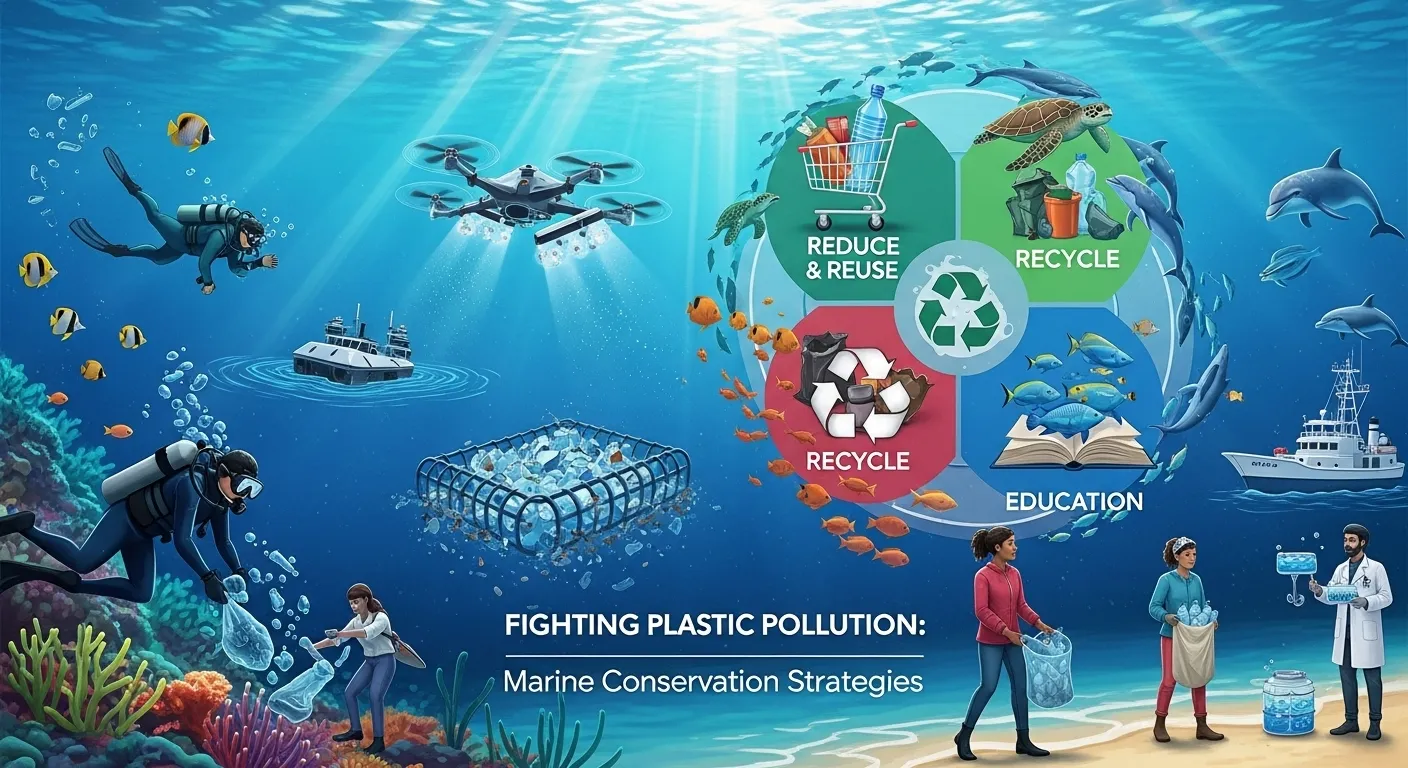
The vast, blue expanse of our planet's oceans, a source of life, wonder, and sustenance, is choking. A relentless tide of plastic waste inundates marine ecosystems, threatening wildlife, habitats, and even human health. From the deepest oceanic trenches to the most remote Arctic ice, plastic pollution has become a pervasive global crisis. This dire situation calls for an urgent, multifaceted response. Effectively tackling this issue requires a deep understanding and implementation of a wide range of marine conservation strategies for plastic pollution, encompassing everything from grassroots community action to high-level international policy. This article will explore these critical strategies, offering a comprehensive guide to understanding the problem and, more importantly, the solutions that can turn the tide against plastic. The Staggering Scale of Marine Plastic Pollution Before diving into solutions, it is crucial to grasp the sheer magnitude of the problem. Every year, millions of tons of plastic waste enter the oceans from various sources, including coastal communities, overflowing landfills, industrial discharge, and river systems that act as conveyor belts for debris. This plastic doesn't just disappear; it fragments over time into smaller and smaller pieces, but it never truly goes away. Its persistence is what makes it such a formidable environmental threat, creating a floating legacy of pollution that will last for centuries. The impact on marine life is both tragic and devastating. We have all seen the heart-wrenching images of turtles entangled in six-pack rings or seabirds with stomachs full of plastic fragments. Animals often mistake plastic for food, leading to internal injuries, starvation, and death. Beyond direct ingestion and entanglement, plastic pollution destroys critical habitats. Coral reefs can be smothered by plastic bags, and the seafloor can become a junkyard, altering the chemical and physical environment and disrupting the delicate balance of life that depends on these ecosystems. Perhaps the most insidious threat comes in the form of microplastics—tiny particles less than five millimeters in size. These can be primary microplastics, such as microbeads in cosmetics, or secondary ones, formed from the breakdown of larger plastic items. These minuscule fragments are ingested by plankton, the very foundation of the marine food web. As smaller organisms are eaten by larger ones, these plastics and the toxins they absorb bioaccumulate, moving up the food chain. This means the fish on our plates could contain plastic particles, posing a yet-to-be-fully-understood risk to human health. Upstream Solutions: Preventing Plastic from Reaching the Ocean The most effective and sustainable approach to fighting marine plastic pollution is to stop it at its source. These "upstream" solutions focus on preventing plastic from ever becoming waste in the first place. While ocean cleanup technologies are important, they are akin to mopping up a flood while the tap is still running at full blast. Turning off the tap—or at least significantly reducing the flow—is the primary goal of upstream strategies. This involves a fundamental rethinking of how we produce, consume, and manage plastic materials across their entire lifecycle. This preventative approach necessitates major improvements in waste management infrastructure, particularly in developing nations where collection and recycling systems are often underfunded or non-existent. A significant portion of ocean plastic originates from a small number of major rivers, often in regions lacking the capacity to handle their plastic waste. Investing in modern, efficient waste collection, sorting, and processing facilities in these key areas can have a disproportionately positive impact on a global scale. It's not just about building landfills; it's about creating systems that see "waste" as a resource. Ultimately, the most powerful upstream strategy is the transition to a circular economy. In a linear model, we "take, make, and dispose." In a circular model, resources are kept in use for as long as possible. This means redesigning products to be durable, reusable, and easily recyclable. It requires innovation in materials science to create safer, non-toxic alternatives and business models that prioritize services over single-use products. A circular economy for plastics would effectively design waste out of the system, creating a closed loop where plastic rarely, if ever, has the chance to leak into the environment. Reducing and Redesigning at the Source The first and most critical step in the "waste hierarchy" is reduction. This involves a conscious effort by corporations and consumers to minimize the production and use of unnecessary plastics, especially single-use items. Governments are playing a key role by implementing bans or levies on items like plastic bags, straws, cutlery, and styrofoam containers. These policies have proven effective in rapidly changing consumer behavior and reducing a visible and problematic component of plastic litter. The goal is to make single-use a rare exception rather than the default option. Beyond simply reducing, there is a massive opportunity in redesigning plastic products and packaging. Many products today are made from complex, multi-layered plastics that are technically impossible or economically unviable to recycle. Industry leaders must shift towards mono-material packaging, eliminate toxic additives, and design products for easy disassembly. This is a core tenet of Extended Producer Responsibility (EPR), where manufacturers are held accountable for the end-of-life management of their products. This financial and physical responsibility incentivizes them to design with recyclability and environmental impact in mind from the very beginning. Enhancing Waste Management Systems A significant portion of plastic leakage into the ocean is a direct result of inadequate waste management infrastructure. For billions of people, access to regular waste collection is a luxury, not a given. Improving and expanding these services is a fundamental marine conservation strategy. This includes increasing the frequency and reach of collection services, especially in informal settlements and remote coastal communities. Furthermore, it requires investing in sanitary landfills to prevent waste from being blown or washed away, and in Material Recovery Facilities (MRFs) that can sort and process recyclables efficiently. Technology is playing an increasingly important role in modernizing waste management. AI-powered robots can now sort plastics with a speed and accuracy that surpasses human capabilities, improving the quality and quantity of recycled materials. Simultaneously, community-based social enterprises are emerging as powerful