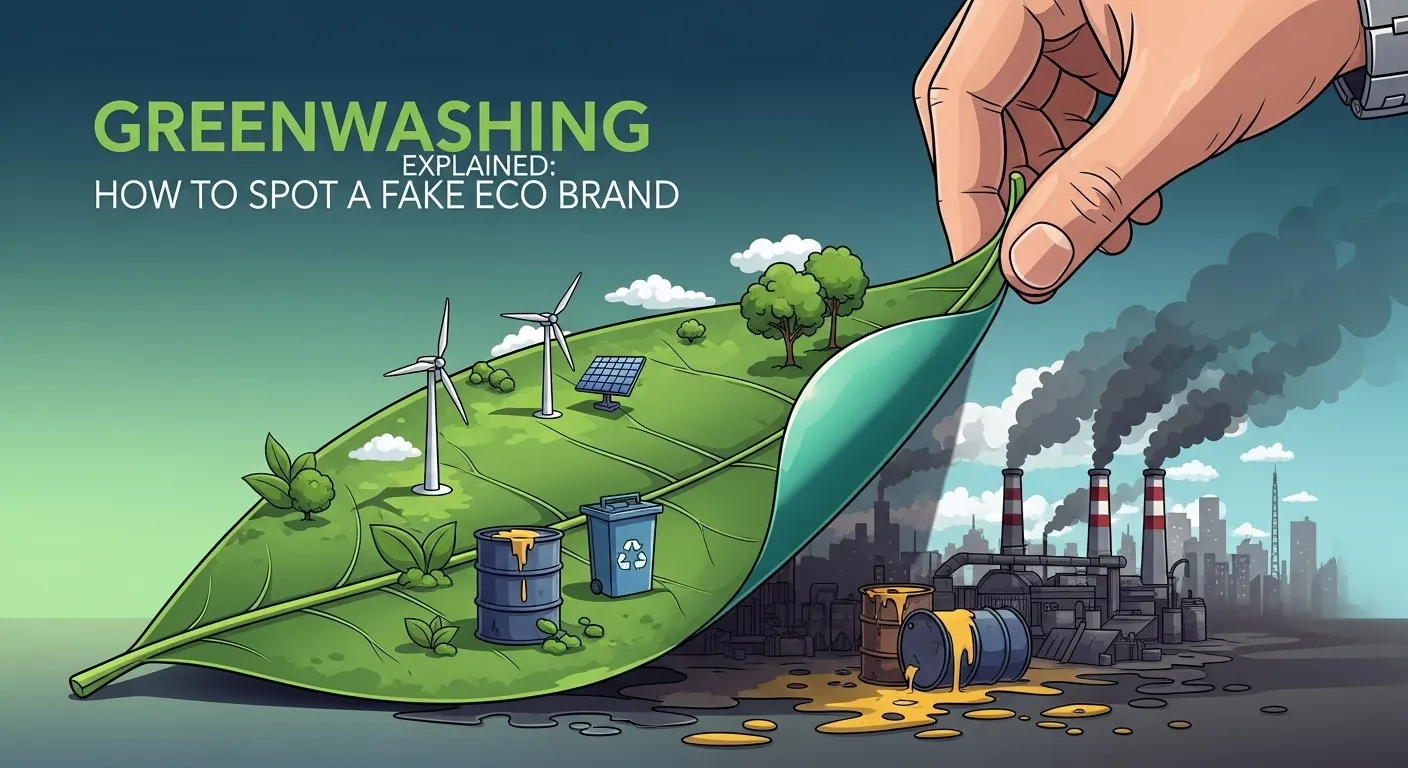
In an era where "sustainability" is more than just a buzzword, consumers are increasingly seeking out brands that align with their environmental values. We want products that are kind to the planet, made ethically, and contribute to a greener future. This powerful shift in consumer behavior has not gone unnoticed by corporations. While many companies are making genuine strides towards sustainability, others are simply riding the green wave with clever marketing tactics designed to deceive. This deceptive practice is rampant, making it crucial for every conscious consumer to understand what is greenwashing and how to spot it. This guide will arm you with the knowledge to cut through the noise, identify misleading claims, and truly support brands that are making a positive impact. What Exactly is Greenwashing? A Deeper Dive At its core, greenwashing is the act of conveying a false impression or providing misleading information about how a company's products are environmentally sound. It's a marketing spin employed to persuade the public that an organization's products, aims, or policies are environmentally friendly when, in reality, they are not. The term itself was coined in the 1980s by environmentalist Jay Westerveld, who noticed hotels were encouraging guests to reuse towels to "save the environment," while the same hotels were engaging in massive, non-eco-friendly expansion projects. This highlighted a critical disconnect: a small, token green act used to mask a much larger, environmentally damaging practice. The motivation behind greenwashing is multifaceted but primarily driven by profit and reputation. Companies understand that a significant portion of the market—especially Millennials and Gen Z—is willing to pay more for sustainable products. By painting their products with a "green" brush, they can tap into this lucrative market without undertaking the often expensive and complex work of overhauling their supply chains, manufacturing processes, or business models. It’s a shortcut to a positive public image, allowing them to appear as responsible corporate citizens while potentially continuing harmful practices behind the scenes. This is not green marketing; it is deception. The danger of greenwashing extends far beyond a single duped consumer. It systematically erodes public trust in all sustainability claims, making it harder for genuinely eco-conscious companies to stand out and be recognized for their efforts. When consumers become cynical and skeptical of all green labels, the market incentive for real change diminishes. Ultimately, greenwashing hinders progress by diverting well-intentioned consumer spending away from authentic solutions and toward cleverly disguised problems, perpetuating a cycle of environmental harm under the guise of responsibility. The "Sins" of Greenwashing: A Framework for Detection To help consumers navigate the murky waters of environmental claims, the environmental marketing firm TerraChoice (now part of UL) developed a framework known as the "Seven Sins of Greenwashing." This framework is an invaluable tool for deconstructing marketing messages and identifying red flags. Understanding these common deceptive tactics empowers you to ask the right questions and look beyond the surface-level claims. These 'sins' are not just theoretical; they are actively used in campaigns for products you see on shelves every day. Learning to recognize these patterns is the first major step toward becoming an informed consumer. Instead of feeling overwhelmed by ambiguous green claims, you can use this framework as a mental checklist. Is the brand committing one or more of these sins? If so, it’s a strong indicator that you should be skeptical and dig deeper before making a purchase. Let's break down each of these deceptive strategies. The Sin of the Hidden Trade-Off This is one of the most common forms of greenwashing. It occurs when a company highlights a single "green" attribute of a product while ignoring other, more significant environmental issues associated with it. The claim itself might be true, but it's used to distract from a larger, less flattering picture. For example, a clothing company might boast that its t-shirts are made from "100% organic cotton" but fail to mention that the cotton was processed in a factory that pollutes local waterways and relies on exploitative labor practices. A classic example in the paper industry is a product advertised as being made from sustainably harvested forests. While this sounds great, the claim conveniently glosses over the immense energy consumption, chlorine bleaching, and greenhouse gas emissions involved in the pulping and manufacturing process. The consumer is led to believe they are making a wholly sustainable choice, when in fact, they are only seeing a small, favorable piece of a much larger, more complex environmental puzzle. Always ask: what aren't they telling me? The Sin of No Proof This sin is committed when an environmental claim is made without any easily accessible supporting information or a reliable third-party certification. A brand might label their packaging as "recyclable" or their product as "biodegradable" without providing any evidence, instructions, or verification. These are just words on a package, designed to appeal to your green conscience without any accountability. If a cosmetic brand claims its ingredients are "sustainably sourced," you should be able to find information on their website detailing where and how they are sourced. If a product boasts it's made with "50% more recycled content," there should be a certification like the Global Recycled Standard (GRS) or a detailed report to back it up. A legitimate green claim will always be transparent and verifiable. The absence of proof is a major red flag that suggests the claim is hollow. The Sin of Vagueness Vague and ambiguous terms are a greenwasher's best friend. This sin involves using words that are so poorly defined or broad that their real meaning is likely to be misunderstood by the consumer. phrases like "all-natural," "eco-friendly," "green," or "environmentally safe" are common culprits. What does "all-natural" even mean? Arsenic and mercury are also "all-natural," but you certainly wouldn't want them in your skincare. These terms are essentially meaningless without specific context and clarification. A truly eco-friendly product would have specific claims, such as "Made with 100% wind power" or "Packaged in post-consumer recycled cardboard that is certified by the FSC." When