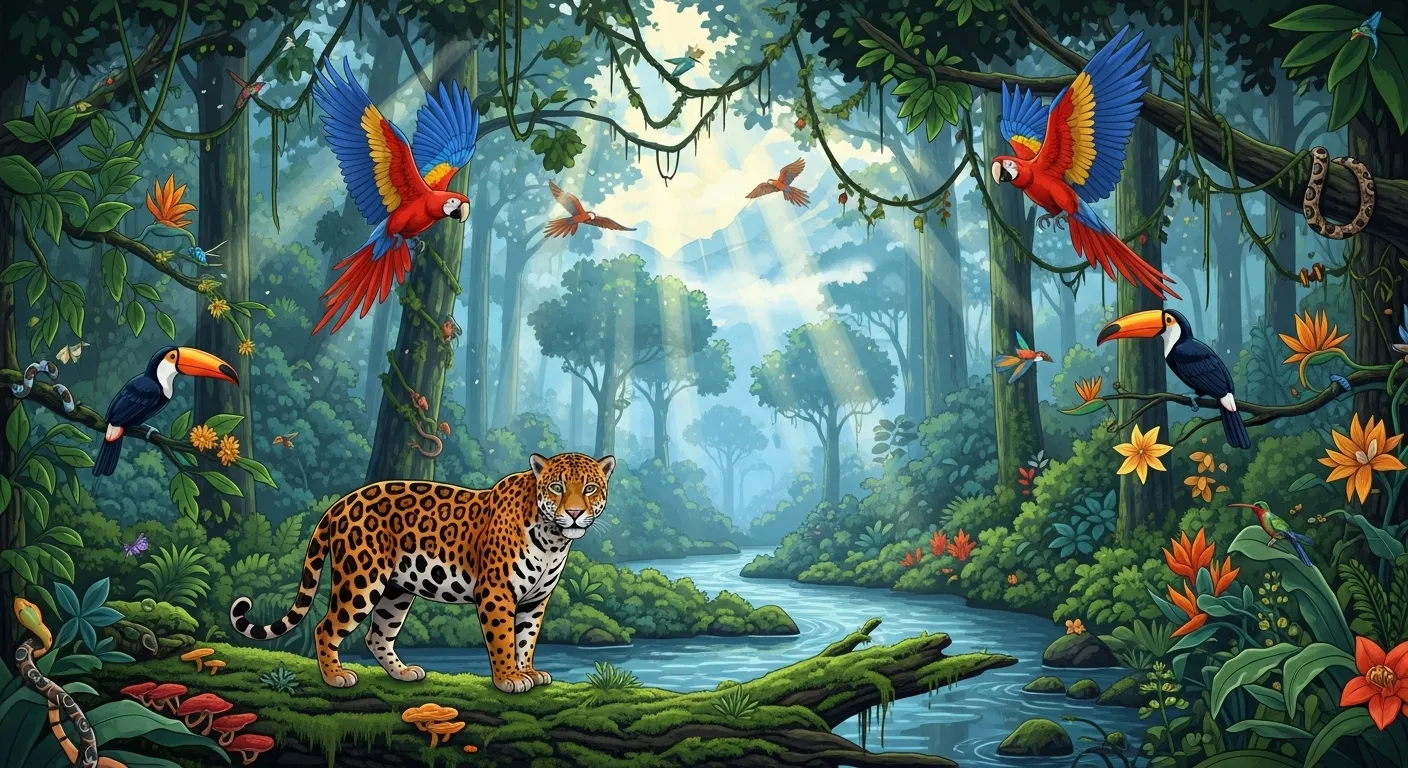
Step into the heart of the world's most vibrant and complex ecosystems. Rainforests, often called the "jewels of the Earth," are teeming with a staggering diversity of life, a symphony of sounds, and a canopy so dense it creates its own world beneath. These vital biomes play a crucial role in regulating global climate and harboring millions of species, many yet to be discovered. To truly appreciate their importance and fragility, understanding the key characteristics of a rainforest habitat is crucial. From the constant drip of moisture to the intricate web of life that connects the tallest trees to the forest floor, every element is part of a delicate, interconnected system that has evolved over millions of years. The Defining Climate: High Rainfall and Consistent Warmth One of the most fundamental characteristics of a rainforest habitat is its distinct climate, dominated by incredibly high levels of precipitation. Rainforests are, by definition, forests that receive a large amount of rain. This constant moisture is the lifeblood of the ecosystem, influencing everything from the types of plants that can grow to the very composition of the soil. Broadly, rainforests are categorized into two main types: tropical and temperate. While both are characterized by significant rainfall, they differ in their temperature ranges, with tropical rainforests located near the equator and temperate ones found in mid-latitude coastal regions. The climate of a tropical rainforest is remarkably stable and predictable throughout the year. There are no distinct seasons like summer, winter, spring, or fall. Instead, the year is divided into a wet season and a slightly less wet season. Temperatures remain consistently high, typically hovering between 21°C to 30°C (70°F to 85°F), with very little variation between day and night. This constant warmth, combined with high humidity, creates a greenhouse-like environment perfect for explosive plant growth. The air is often thick with moisture, a result of both the heavy rainfall and a process called transpiration, where plants release water vapor into the atmosphere. In contrast, temperate rainforests experience more seasonal variation. While they also receive massive amounts of rainfall, their temperatures are cooler and fluctuate more significantly throughout the year. Found in regions like the Pacific Northwest of North America, Chile, and New Zealand, these forests have cooler, milder winters and warm, moist summers. The persistent rain and coastal fog provide the necessary moisture to sustain the lush vegetation, including some of the tallest trees on Earth, like the Coast Redwood (Sequoia sempervirens). Despite the cooler temperatures, the defining feature remains the overwhelming presence of water. The Role of High Precipitation The sheer volume of rain is what sets a rainforest apart. Tropical rainforests typically receive over 2,000 millimeters (80 inches) of rain annually, with some areas exceeding a staggering 10,000 millimeters (394 inches). This precipitation is often generated through a process called convectional rainfall. The intense equatorial sun heats the moist surface, causing warm, humid air to rise rapidly. As it ascends, it cools and condenses, forming dense clouds that release torrential downpours, usually in the afternoon. This constant deluge has a profound impact on the landscape. It feeds the massive rivers like the Amazon and the Congo, creating a network of waterways that function as arteries for the ecosystem. However, it also leads to a significant challenge: nutrient leaching. The incessant flow of water washes essential soluble nutrients like calcium and magnesium out of the soil, carrying them away before plants can fully absorb them. This process directly influences the soil's composition, a paradox we will explore later. Plants have adapted to this with features like "drip tips" on their leaves, which allow excess water to run off quickly, preventing the growth of fungi and bacteria. Humidity and Temperature Stability Humidity in a tropical rainforest is consistently high, often ranging from 77% to 88% and sometimes approaching 100% at night. This pervasive dampness is a direct result of the high rainfall and the immense amount of water vapor released by the millions of plants through transpiration. The dense canopy traps this moisture, creating a steamy, enclosed environment, especially in the understory and on the forest floor. This high humidity is critical for many species, particularly amphibians like tree frogs, whose thin skin requires a moist environment to prevent dehydration. The temperature stability is another cornerstone of the tropical rainforest climate. Located near the equator, these regions receive direct, intense sunlight year-round, leading to consistently warm conditions. This lack of temperature-driven seasonality means that plants can grow, flower, and fruit continuously. Likewise, animals do not need to hibernate or migrate due to cold weather. This year-round productivity allows for continuous breeding cycles and supports a level of biological activity that is unmatched in any other terrestrial biome. It is this combination of warmth and water that fuels the incredible engine of life in the rainforest. Unparalleled Biodiversity: A Hub of Life Perhaps the most celebrated characteristic of a rainforest habitat is its mind-boggling biodiversity. Although they cover only about 6% of the Earth's land surface, rainforests are home to more than half of the world's plant and animal species. This concentration of life is so immense that a single hectare of Amazonian rainforest can contain more tree species than all of Europe combined. This biological richness, or biodiversity, encompasses the variety of genes, species, and ecosystems, making rainforests a living library of evolutionary history. The sheer numbers are staggering. Rainforests host millions of species of insects, tens of thousands of plant species, and thousands of species of birds, mammals, and fish. Many of these species are endemic, meaning they are found nowhere else on Earth. The vibrant colors of a poison dart frog, the call of a howler monkey, the silent glide of a jaguar—all are part of a complex tapestry of life. This density of species creates intense competition for resources like light, food, and space, which in turn drives the evolution of incredible specializations and adaptations. The reasons for this extraordinary biodiversity are manifold. The stable, warm, and wet climate provides