
Fighting Plastic Pollution: Marine Conservation Strategies
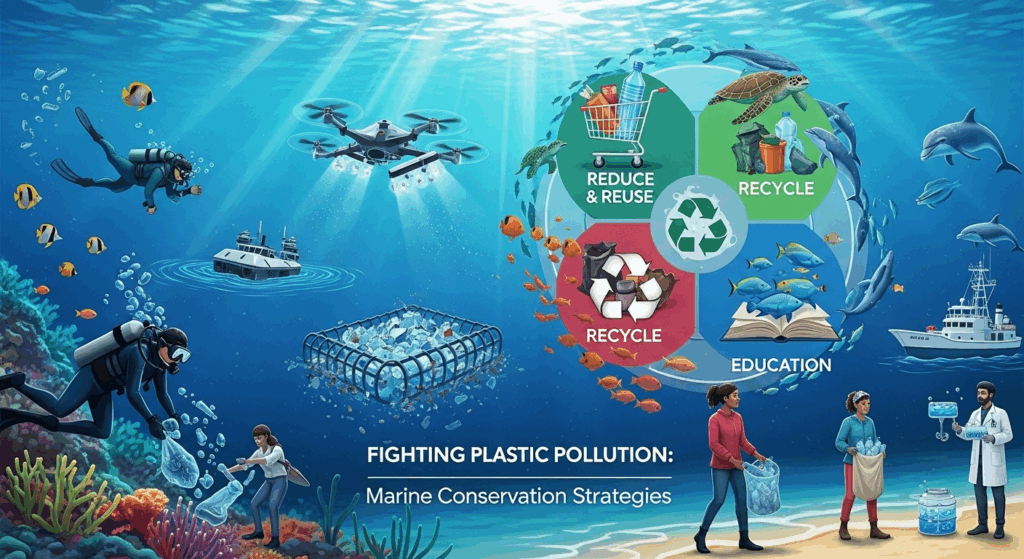
The vast, blue expanse of our planet's oceans, a source of life, wonder, and sustenance, is choking. A relentless tide of plastic waste inundates marine ecosystems, threatening wildlife, habitats, and even human health. From the deepest oceanic trenches to the most remote Arctic ice, plastic pollution has become a pervasive global crisis. This dire situation calls for an urgent, multifaceted response. Effectively tackling this issue requires a deep understanding and implementation of a wide range of marine conservation strategies for plastic pollution, encompassing everything from grassroots community action to high-level international policy. This article will explore these critical strategies, offering a comprehensive guide to understanding the problem and, more importantly, the solutions that can turn the tide against plastic.
The Staggering Scale of Marine Plastic Pollution
Before diving into solutions, it is crucial to grasp the sheer magnitude of the problem. Every year, millions of tons of plastic waste enter the oceans from various sources, including coastal communities, overflowing landfills, industrial discharge, and river systems that act as conveyor belts for debris. This plastic doesn't just disappear; it fragments over time into smaller and smaller pieces, but it never truly goes away. Its persistence is what makes it such a formidable environmental threat, creating a floating legacy of pollution that will last for centuries.
The impact on marine life is both tragic and devastating. We have all seen the heart-wrenching images of turtles entangled in six-pack rings or seabirds with stomachs full of plastic fragments. Animals often mistake plastic for food, leading to internal injuries, starvation, and death. Beyond direct ingestion and entanglement, plastic pollution destroys critical habitats. Coral reefs can be smothered by plastic bags, and the seafloor can become a junkyard, altering the chemical and physical environment and disrupting the delicate balance of life that depends on these ecosystems.
Perhaps the most insidious threat comes in the form of microplastics—tiny particles less than five millimeters in size. These can be primary microplastics, such as microbeads in cosmetics, or secondary ones, formed from the breakdown of larger plastic items. These minuscule fragments are ingested by plankton, the very foundation of the marine food web. As smaller organisms are eaten by larger ones, these plastics and the toxins they absorb bioaccumulate, moving up the food chain. This means the fish on our plates could contain plastic particles, posing a yet-to-be-fully-understood risk to human health.
Upstream Solutions: Preventing Plastic from Reaching the Ocean
The most effective and sustainable approach to fighting marine plastic pollution is to stop it at its source. These "upstream" solutions focus on preventing plastic from ever becoming waste in the first place. While ocean cleanup technologies are important, they are akin to mopping up a flood while the tap is still running at full blast. Turning off the tap—or at least significantly reducing the flow—is the primary goal of upstream strategies. This involves a fundamental rethinking of how we produce, consume, and manage plastic materials across their entire lifecycle.
This preventative approach necessitates major improvements in waste management infrastructure, particularly in developing nations where collection and recycling systems are often underfunded or non-existent. A significant portion of ocean plastic originates from a small number of major rivers, often in regions lacking the capacity to handle their plastic waste. Investing in modern, efficient waste collection, sorting, and processing facilities in these key areas can have a disproportionately positive impact on a global scale. It's not just about building landfills; it's about creating systems that see "waste" as a resource.
Ultimately, the most powerful upstream strategy is the transition to a circular economy. In a linear model, we "take, make, and dispose." In a circular model, resources are kept in use for as long as possible. This means redesigning products to be durable, reusable, and easily recyclable. It requires innovation in materials science to create safer, non-toxic alternatives and business models that prioritize services over single-use products. A circular economy for plastics would effectively design waste out of the system, creating a closed loop where plastic rarely, if ever, has the chance to leak into the environment.
Reducing and Redesigning at the Source
The first and most critical step in the "waste hierarchy" is reduction. This involves a conscious effort by corporations and consumers to minimize the production and use of unnecessary plastics, especially single-use items. Governments are playing a key role by implementing bans or levies on items like plastic bags, straws, cutlery, and styrofoam containers. These policies have proven effective in rapidly changing consumer behavior and reducing a visible and problematic component of plastic litter. The goal is to make single-use a rare exception rather than the default option.
Beyond simply reducing, there is a massive opportunity in redesigning plastic products and packaging. Many products today are made from complex, multi-layered plastics that are technically impossible or economically unviable to recycle. Industry leaders must shift towards mono-material packaging, eliminate toxic additives, and design products for easy disassembly. This is a core tenet of Extended Producer Responsibility (EPR), where manufacturers are held accountable for the end-of-life management of their products. This financial and physical responsibility incentivizes them to design with recyclability and environmental impact in mind from the very beginning.
Enhancing Waste Management Systems
A significant portion of plastic leakage into the ocean is a direct result of inadequate waste management infrastructure. For billions of people, access to regular waste collection is a luxury, not a given. Improving and expanding these services is a fundamental marine conservation strategy. This includes increasing the frequency and reach of collection services, especially in informal settlements and remote coastal communities. Furthermore, it requires investing in sanitary landfills to prevent waste from being blown or washed away, and in Material Recovery Facilities (MRFs) that can sort and process recyclables efficiently.
Technology is playing an increasingly important role in modernizing waste management. AI-powered robots can now sort plastics with a speed and accuracy that surpasses human capabilities, improving the quality and quantity of recycled materials. Simultaneously, community-based social enterprises are emerging as powerful agents of change. These organizations often work with informal waste pickers, providing them with fair wages, safe working conditions, and integrating them into the formal recycling value chain. This not only prevents plastic from polluting the environment but also creates sustainable livelihoods and fosters local stewardship.
Downstream Interventions: Cleaning Up Our Contaminated Oceans
While upstream solutions are paramount, we cannot ignore the billions of tons of plastic already circulating in our oceans. "Downstream" solutions are designed to intercept, remove, and manage this existing pollution. These strategies range from high-tech, large-scale engineering projects to simple, community-led beach cleanups. While they do not address the root cause of the problem, they are essential for mitigating the immediate harm to marine ecosystems and for removing the legacy pollution that will persist for generations.
The challenge with downstream interventions is the sheer scale and diffusion of the problem. Ocean plastic is not a single, cohesive mass like the misnamed "Great Pacific Garbage Patch"; it is a dilute soup of debris spread over millions of square kilometers, from the surface to the seafloor. This makes collection incredibly difficult, energy-intensive, and expensive. Furthermore, any technology deployed must be carefully designed to avoid harming marine life through bycatch—the unintentional capture of fish, turtles, and marine mammals.
Despite these challenges, innovation in this field is rapidly advancing. Engineers and scientists are developing a suite of tools aimed at different parts of the marine environment. These range from passive systems that use ocean currents to concentrate plastic for collection to sophisticated submersibles designed to survey and remove debris from the sensitive deep-sea floor. These cleanup efforts, when combined with strong public awareness campaigns, serve a dual purpose: they physically remove pollutants and act as a powerful, visible symbol of the crisis, galvanizing further public and political will to act.
Technological Innovations for Ocean Cleanup
One of the most well-known efforts in this space is The Ocean Cleanup, a non-profit organization developing large-scale systems to remove plastic from oceanic gyres. Their technology has evolved to include long, floating barriers that passively concentrate plastic using natural forces like wind and currents, allowing a vessel to periodically collect the accumulated debris for recycling. While ambitious and not without its critics, the project represents a bold attempt to tackle the most concentrated areas of offshore plastic accumulation.
Equally important are the technologies designed to capture plastic closer to the source, in rivers and coastal areas. Systems like Baltimore's Mr. Trash Wheel and various riverine boom-and-skimmer systems are highly effective at intercepting plastic waste before it reaches the open ocean. These interventions are often more cost-effective and have a lower risk of bycatch than open-ocean cleanup. Other emerging technologies include bubble barriers that create a curtain of air to guide plastic to a collection point, and autonomous drones and submersibles that can identify and retrieve debris.
Community-Led Cleanup Initiatives
Technology alone cannot solve this problem. The power of collective, local action is one of the most inspiring and effective marine conservation strategies. Millions of volunteers participate in beach cleanups around the world every year, organized by groups like the Ocean Conservancy and Surfrider Foundation. While the amount of plastic removed during a single cleanup may seem small in the global context, the cumulative impact is enormous. These events prevent trash from breaking down into microplastics and directly save wildlife from entanglement and ingestion.
More importantly, these cleanups are powerful tools for data collection and public education. During organized events, volunteers often act as citizen scientists, cataloging the types and brands of litter they find. This data is invaluable for identifying major pollution sources and holding corporations accountable through brand audits. It transforms a simple cleanup into a scientific and advocacy exercise. Furthermore, the act of seeing the problem firsthand creates a deep, personal connection to the issue, turning participants into lifelong advocates for ocean health and inspiring changes in their own consumption habits.
The Critical Role of Policy and International Cooperation
Individual actions and technological fixes are vital, but they cannot achieve the necessary scale of change without a strong and supportive policy framework. Systemic change requires governments to regulate, incentivize, and coordinate efforts at national and international levels. Effective policy creates a level playing field, holds polluters accountable, and unlocks the public and private investment needed to transition towards a circular economy. Plastic pollution is a transboundary problem—plastic released in one country can wash up on the shores of another—making international cooperation absolutely essential.

At the international level, a landmark development is the ongoing negotiation for a legally binding UN treaty on plastic pollution. This treaty aims to address the full lifecycle of plastic, from production and design to waste management and remediation. A strong and ambitious global treaty could harmonize regulations, mandate national action plans, facilitate technology transfer, and provide financial assistance to developing countries. It represents a once-in-a-generation opportunity to create a coordinated global response commensurate with the scale of the crisis.
Nationally, governments can deploy a range of policy tools. These include bans on problematic single-use plastics, taxes that discourage consumption, and the implementation of Extended Producer Responsibility (EPR) schemes. EPR is particularly powerful as it shifts the financial and operational burden of waste management from municipalities and taxpayers to the producers who put the plastic on the market. This creates a strong economic incentive for companies to design products that are more sustainable and easier to recycle.
Below is a table comparing different policy approaches:
| Policy Approach | Description | Pros | Cons |
|---|---|---|---|
| Bans on Single-Use Plastics | Legal prohibition of specific items like plastic bags, straws, and cutlery. | Fast reduction in visible litter; high public awareness; encourages alternatives. | May lead to substitution with other single-use materials; can face industry opposition. |
| Plastics Taxes / Levies | A fee is applied to plastic items at the point of sale to discourage use. | Reduces consumption; generates revenue that can fund environmental programs. | Can be regressive (affecting low-income individuals more); effectiveness depends on the tax level. |
| Extended Producer Responsibility (EPR) | Producers are made responsible for the collection and recycling of their products Post-consumer. | Incentivizes better design (design-for-recycling); funds recycling infrastructure. | Complex to implement and monitor; requires strong government oversight. |
| Public Awareness Campaigns | Government-funded campaigns to educate citizens about plastic reduction and recycling. | Increases voluntary action and public support for other policies. | Impact can be difficult to measure; less effective without structural changes. |
Driving Change Through Corporate and Individual Responsibility
Government policy sets the rules of the game, but corporations and individuals are the players who ultimately determine the outcome. A permanent solution to the plastic crisis requires a profound shift in both corporate behavior and individual lifestyles. Waiting for regulation is no longer a viable option; proactive leadership and widespread grassroots action are needed to accelerate the transition away from our throwaway culture. For corporations, this means viewing plastic pollution not just as a reputational risk, but as a driver for innovation and new business opportunities.
The business case for sustainability is becoming clearer every day. Companies that lead in reducing their plastic footprint, innovating in sustainable materials, and embracing circular models are increasingly favored by investors, partners, and—most importantly—consumers. Corporate Social Responsibility (CSR) is evolving from simple philanthropy to a core business strategy. This involves setting ambitious, time-bound targets for plastic reduction, investing in recycling infrastructure, and being transparent with consumers about progress.
This corporate shift is being powerfully driven by the actions of individuals. As consumers, every purchase is a vote for the kind of world we want to live in. By choosing reusable alternatives, refusing unnecessary plastic, supporting brands with sustainable practices, and demanding change from those who lag behind, we create the market demand that forces companies to adapt. While the problem can feel overwhelming, the collective power of millions of small, conscious choices can create a tidal wave of change.
Corporate Accountability and Innovation
True corporate responsibility goes beyond token gestures. It means fundamentally re-evaluating supply chains and business models. Leading companies are now publicly committing to goals like using 100% reusable, recyclable, or compostable packaging by a specific date. They are investing heavily in R&D to develop novel materials derived from seaweed, mushrooms, or other biodegradable sources. Others are pioneering reuse-and-refill models, such as the Loop platform, which partners with major brands to deliver products in durable, returnable containers.
Consumer pressure and investor scrutiny are powerful motivators for this change. Advocacy groups conduct "brand audits" at cleanups, publicly naming the companies whose packaging is most frequently found in the environment. This "name and shame" approach, combined with social media campaigns, has proven effective at pressuring corporations to take responsibility for their plastic waste. As environmental, social, and governance (ESG) criteria become more important in investment decisions, companies with poor plastic management practices face increasing financial risk.
Empowering the Consumer: Your Daily Choices Matter
The fight against plastic pollution begins at home, in the grocery store, and in our daily routines. The most powerful action any individual can take is to reduce their own plastic consumption. This involves adopting a mindset centered on the "5 Rs": Refuse, Reduce, Reuse, Recycle, and Rot (compost). Before you buy, ask yourself if you truly need it, and if there is a plastic-free alternative. Small changes, when adopted by many, have a significant collective impact.
Here are some practical steps every individual can take:
- Carry a reusable kit: Always have a reusable water bottle, coffee cup, shopping bags, and utensils with you.
- Choose plastic-free alternatives: Opt for groceries with no or minimal packaging, buy in bulk, and choose products in glass, metal, or paper.
- Avoid single-use plastics: Say no to plastic straws, disposable cutlery, and condiments in individual sachets.
- Recycle correctly: Learn your local recycling rules to avoid "wish-cycling"—placing non-recyclable items in the recycling bin, which can contaminate the whole batch.
- Use your voice: Talk to local business owners about reducing their plastic use, write to your political representatives, and support organizations working on marine conservation.
Frequently Asked Questions (FAQ)
Q: What is the single most effective strategy to stop marine plastic pollution?
A: The overwhelming consensus among scientists and policy experts is that upstream solutions are the most effective. Specifically, reducing the production of unnecessary plastics and redesigning products for circularity have the greatest potential for long-term impact. While cleanup is necessary, preventing plastic from entering the environment in the first place is far more efficient and sustainable.
Q: Are bioplastics and compostable plastics a good solution?
A: It's complicated. Bioplastics can be made from renewable sources (like corn starch), but they are not all biodegradable. "Compostable" plastics often require industrial composting facilities with high heat to break down, and they will not degrade in the ocean or a landfill. If not disposed of properly, they can cause the same harm as conventional plastics. They can be part of the solution for specific applications, but they are not a silver bullet and must be managed within a well-regulated system.
Q: How can I help if I don't live near the coast?
A: Plastic pollution is a global problem, and your actions matter no matter where you live. Much of the plastic that ends up in the ocean travels through inland rivers and waterways. By reducing your personal plastic consumption, recycling properly, and advocating for better waste management in your community, you are helping to cut off the flow of plastic at its source. Supporting national policies and sustainable brands also has an impact far beyond your local area.
Q: Do large-scale ocean cleanup technologies actually work?
A: Large-scale cleanup technologies, like those being developed by The Ocean Cleanup, are showing increasing promise for removing accumulated plastic from oceanic gyres. They are an important part of the solution for addressing "legacy" pollution. However, experts agree they cannot solve the problem alone. The rate at which plastic enters the ocean far exceeds our current ability to remove it. Therefore, they must be seen as one tool in a much larger toolbox that is heavily focused on upstream prevention.
Conclusion
Fighting marine plastic pollution is one of the great environmental challenges of our time, but it is a challenge we can meet. There is no single, easy fix; the solution lies in a dedicated, integrated application of diverse marine conservation strategies. We must aggressively pursue upstream solutions by reducing our reliance on single-use plastics and redesigning our economy to be circular. We must invest in downstream interventions to clean up the mess we have already made, using both cutting-edge technology and the power of community action. And critically, we must build a strong foundation of global and national policies that hold polluters accountable and drive systemic change.
The health of our oceans is inextricably linked to the health of our planet and ourselves. Turning the tide on plastic pollution will require unprecedented collaboration between governments, corporations, scientists, and citizens. Every choice we make, from the products we buy to the policies we support, contributes to the outcome. By working together with resolve and ingenuity, we can protect our majestic marine ecosystems and ensure a healthier, plastic-free future for generations to come.
***
Summary of the Article
The article, "Fighting Plastic Pollution: Marine Conservation Strategies," provides a comprehensive overview of the global crisis of plastic in our oceans and the multifaceted strategies required to combat it. It begins by outlining the immense scale of the problem, detailing how millions of tons of plastic enter marine environments annually, harming wildlife through entanglement and ingestion, destroying habitats, and contaminating the food web via microplastics.
The core of the article explores four key pillars of action. First, it emphasizes Upstream Solutions, arguing that preventing plastic from reaching the ocean is the most effective strategy. This involves reducing the production of single-use plastics, redesigning products for a circular economy, and significantly enhancing waste management infrastructure globally. Second, it discusses Downstream Interventions, which focus on cleaning up existing pollution. This includes large-scale technological innovations like The Ocean Cleanup's systems and river interceptors, as well as vital community-led initiatives such as beach cleanups that also serve to raise awareness and collect data.
Third, the article highlights the critical role of Policy and International Cooperation. It explains how national laws like plastic bans and Extended Producer Responsibility (EPR) schemes, alongside a legally binding international treaty on plastics, are essential for driving systemic change. Finally, it addresses the importance of Corporate and Individual Responsibility, detailing how consumer pressure can push companies towards sustainable innovation and how small, conscious choices made by individuals—guided by the "5 Rs" (Refuse, Reduce, Reuse, Recycle, Rot)—can collectively create a massive impact. The article concludes that a combination of all these strategies, driven by global collaboration, is necessary to protect our oceans for the future.
