
Albanian Protests Intensify Over Corruption Allegations
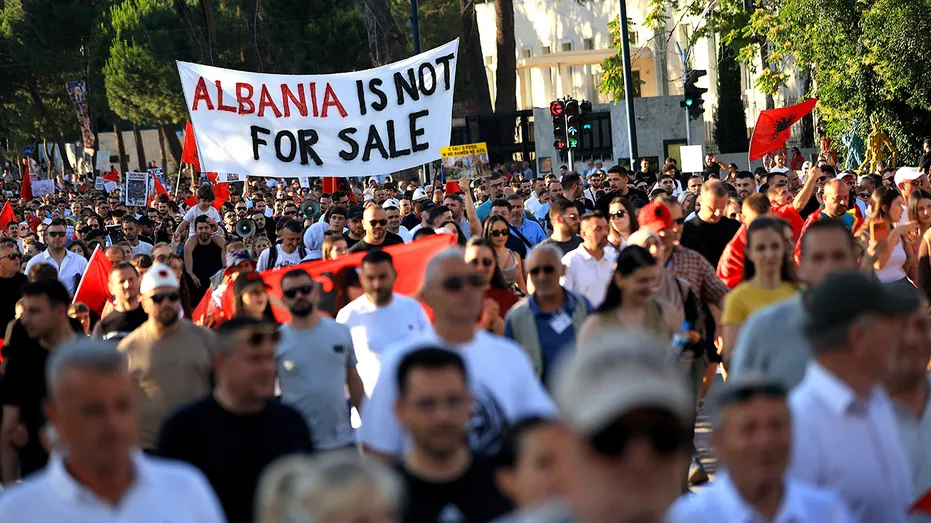
Albanian protesters flood streets demanding prime – Edi Rama’s Socialist government is now facing heightened scrutiny as widespread demonstrations erupt across the country. Citizens have taken to the streets in growing numbers, demanding the resignation of both Rama and Sali Berisha, the leader of the opposition, over decades of alleged corruption. The protests have gained momentum since the end of the communist era in 1991, when systemic graft began to take root. This latest wave of unrest centers on a controversial luxury resort project, which has sparked accusations of mismanagement and environmental neglect.
The Resort Controversy
The dispute began with a proposed development led by Jared Kushner and his business associates, who are partnering with Affinity Partners to construct two high-end resort complexes. These projects are expected to introduce approximately 10,000 hotel rooms and luxury villas along Albania’s coastline, positioning the country as a prime tourist destination. However, the plan has drawn fierce criticism for its potential impact on protected natural areas. One site, Sazan Island, is now under consideration as a location for the resort. Once a Soviet military base, the island is known for its ecological significance, with plans to develop it raising concerns among conservationists. The other location, in Zvërnec, is situated within the Vjosa-Narta protected landscape, a critical habitat for monk seals and flamingos, as well as a nesting ground for sea turtles.
“Unlike some of the misinformation in the media, the protests in Albania are not against the family of President Donald Trump or foreign investors like Jared Kushner. These investors are infusing $4 billion into the economy, which could create employment and opportunities for young Albanians,” said Agim Nesho, a former ambassador to the U.S. and the United Nations. He added that the properties are built on land whose protected status was revoked years ago, and that global investors adhere to higher standards of accountability than the local political elite.
Opposition and Public Sentiment
Eric Czuleger, Editor-in-Chief of The Under Report, has observed the escalating public discontent firsthand. After residing in Albania for five years, he noted that the current protests represent a rare moment of unity among citizens. “Rama’s government has never been under such direct pressure from the people,” Czuleger explained. “Initially, he dismissed the demonstrations as a small group of disgruntled individuals. But as the movement grew, international media outlets compelled domestic outlets to cover the issue. Suddenly, the protests were labeled a ‘hybrid war’ orchestrated by Iran and Russia,” he said.
Despite the government’s efforts to reframe the narrative, the protests have continued to gain traction. Demonstrators have been seen clashing with police in parliament, lighting flares as a symbol of their frustration. The situation has become increasingly chaotic, with many citizens questioning the transparency of Rama’s leadership. The prime minister, known for his control over key institutions, has faced accusations of using his influence to secure lucrative deals for private interests, often at the expense of public welfare.
“After 12 years of governance and at least three contested elections, including the parliamentary vote last year that the United States did not recognize, Rama’s administration has been given a supermajority to reshape laws and the constitution,” Nesho stated. “This has emboldened the public to demand accountability, and his tenure is now in serious jeopardy.”
Government Defense and Legal Claims
In response to the mounting pressure, Rama’s office released a detailed statement to Fox News Digital, addressing the concerns raised by critics. The statement asserted that Sazan Island remains state property and was never intended for sale. It also claimed that the Zvërnec area is privately owned, with multiple parties challenging the land’s ownership in court. The government further emphasized that the project requires not just a standard environmental assessment but an exhaustive review to ensure compliance with ecological standards.
Rama’s team also contested claims that protected areas were deliberately removed to facilitate development. “The project has no connection to the Vjosa Delta,” the statement said, calling the accusation a “falsehood inflated beyond imagination.” This defense highlights the government’s attempt to reconcile its policies with public outrage, though many remain skeptical of its sincerity.
European Parliament Intervention
Amid the growing unrest, the European Parliament has taken notice. On Wednesday, it issued a formal call for the Albanian government to halt construction on protected lands, according to Politico. The body also urged the suspension of new permits and projects in these areas, citing the need for greater environmental oversight. This move underscores the international concern over the potential ecological damage and the broader implications of corruption in Albania’s political sphere.
Some sources close to the project have suggested that the criticisms circulating online are not entirely accurate. They claim that certain information has been exaggerated or manipulated, possibly by external entities seeking to undermine Rama’s leadership. Nevertheless, the protests have resonated deeply with the public, reflecting a shared belief that the government has prioritized private gains over public good.
The situation in Albania has become a focal point for discussions about governance and transparency. With the country’s tourism sector seen as a potential driver of economic growth, the controversy over the resort plans has exposed tensions between development and environmental conservation. As the protests continue, the question remains whether Rama can weather the storm or if his government will be forced to reassess its approach to land use and political accountability.
Meanwhile, the opposition has seized on the crisis to challenge Rama’s leadership. Sali Berisha’s party has linked the protests to the broader pattern of corruption that has plagued Albania for over three decades. The movement has also drawn comparisons to other instances of public dissent in Europe, highlighting the deepening divide between the ruling party and the populace. For many Albanians, the protests are not just about a single project but a call for systemic change, demanding that their leaders prioritize the country’s future over personal and political interests.
As the demonstrations evolve, their impact on Albania’s political landscape will depend on how effectively the government can address the underlying grievances. Whether through compromise, reform, or further resistance, the outcome of this crisis could shape the country’s trajectory for years to come.