
Los Angeles Superintendent Alberto Carvalho Resigns Amid FBI Investigation
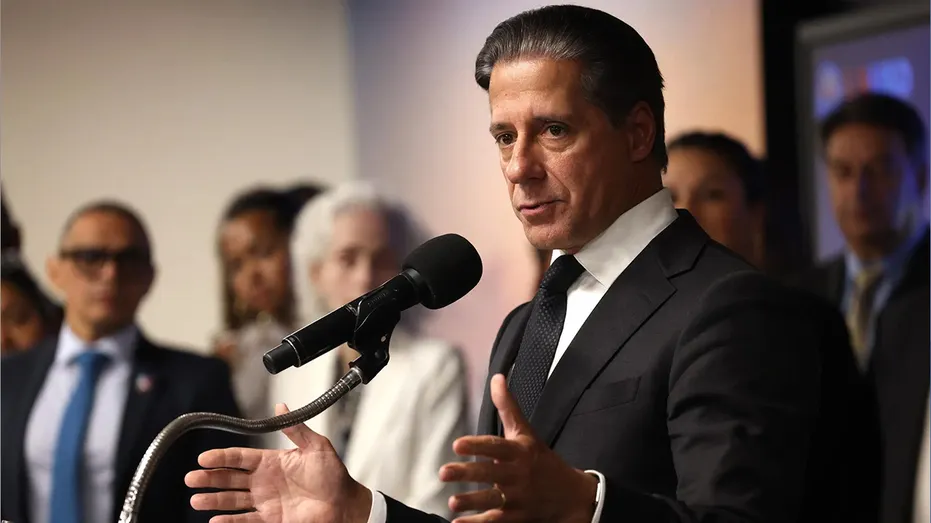
Los Angeles schools superintendent Alberto Carvalho – Alberto Carvalho, the superintendent of the Los Angeles Unified School District (LAUSD), has stepped down from his position following an FBI raid on his home and office earlier this year. His resignation, effective June 21, 2026, was announced Sunday, marking the end of his four-year tenure. Carvalho, who had led the nation’s second-largest school district since 2022, emphasized that his decision aims to eliminate obstacles to student-focused initiatives. “Placing students first has always guided my work,” he stated in a statement. “Because I believe our schools must remain focused on students and learning without distraction, I am resigning as Superintendent of LAUSD effective today.” The FBI’s intervention has raised questions about the leadership’s priorities and the potential fallout from the ongoing investigation.
FBI Raids Target Carvalho’s Home and Office
Earlier this year, federal agents executed a search at Carvalho’s residence and workplace, sparking speculation about the nature of the probe. The operation, which involved seizing documents and electronic devices, was part of a broader inquiry linked to a failed multimillion-dollar AI school contract. Fox 11 reported that staff at LAUSD headquarters were also evacuated during the raid, as investigators combed through records and materials. Additionally, a home connected to one of Carvalho’s longtime associates was searched, according to FBI Miami. While authorities have not yet disclosed the specifics of the investigation, the focus appears to center on financial dealings and potential conflicts of interest.
Failed AI Contract and Rising Concerns
The FBI probe is believed to be connected to AllHere, a startup that was contracted by LAUSD to develop a student-facing chatbot. In 2023, Carvalho approved a $6 million deal with the company, which included a $3 million upfront payment. The project, which aimed to modernize education through artificial intelligence, collapsed in 2024 after the company’s founder, Joanna Smith-Griffith, was accused of misusing funds. Allegations of data privacy violations and whistleblower claims further complicated the situation, leading to the termination of the contract. The investigation has intensified scrutiny on Carvalho’s role in the deal, particularly his close relationship with Debra Kerr, an edtech salesperson who has been a trusted collaborator since the 2000s. Kerr’s Miami home was among the locations searched during the investigation, highlighting the wide-reaching scope of the probe.
Public records cited by the Los Angeles Times reveal that Kerr played a key part in facilitating the AllHere contract. Her personal and professional ties to Carvalho, which date back decades, have fueled debates about transparency in the district’s decision-making processes. The FBI’s involvement suggests that the investigation may be examining whether these relationships influenced the awarding of the contract or created opportunities for financial impropriety. As the inquiry unfolds, officials are under pressure to clarify how the funds were allocated and whether any ethical boundaries were crossed.
Carvalho’s Resignation and Leadership Legacy
Carvalho’s decision to resign comes as the district continues to grapple with the implications of the probe. In his resignation letter, he highlighted several accomplishments during his time in office, including unprecedented improvements in graduation rates, academic performance benchmarks that surpassed pre-pandemic levels, and measurable gains in educational equity for underserved communities. “As the School Board stated, when it unanimously reappointed me late last year, our District’s executive leadership team valued achievement and equity,” he said. “I leave grateful to our students and families, whose protection we prioritized, to our teachers and staff for their dedication, and to the community for the opportunity to serve.”
“The successes we have achieved belong to you. I will miss all of you and will continue to pray for the success, health, and wellbeing of every student and family in our District.”
Carvalho’s leadership has been marked by efforts to address systemic disparities in education. During his tenure, the district launched programs designed to support at-risk students and improve access to resources. However, the FBI’s actions have cast a shadow over these achievements, prompting critics to question whether his focus on innovation overshadowed accountability. The resignation also underscores the challenges faced by school administrators in balancing ambitious goals with transparency and public trust.
LAUSD Board Commits to Stability and Continued Progress
Following Carvalho’s departure, the LAUSD Board issued a statement reaffirming its commitment to maintaining stability and progress. “The Board remains steadfast in its dedication to ensuring continuity in education and strong leadership,” the district said. “Our focus remains unchanged: providing every student with a high-quality education, supporting our dedicated workforce, and preserving the trust of the communities we serve.”
The Board’s response emphasizes its confidence in the district’s ability to recover from the current scrutiny. While the investigation into Carvalho’s actions is ongoing, the Board has appointed Andrés E. Chait as the acting superintendent to ensure daily operations continue uninterrupted. Chait, who has served in various roles within the district, will oversee the transition until a permanent replacement is selected. This move reflects the Board’s determination to address the probe while keeping the focus on student outcomes.
Despite the controversy, Carvalho’s resignation has been met with mixed reactions. Some educators and community leaders have praised his dedication to equity and innovation, while others have called for a thorough review of his decisions. The FBI’s probe into the AllHere contract and potential conflicts of interest is expected to shed light on the circumstances surrounding his departure. As the investigation progresses, the district faces the challenge of maintaining its reputation while navigating the complexities of leadership changes.
Carvalho’s tenure, though brief, has left a lasting imprint on LAUSD’s direction. His emphasis on technology-driven solutions, such as the AI chatbot project, was part of a broader strategy to modernize the educational system. However, the collapse of the initiative has raised questions about the district’s financial oversight and the role of external consultants in shaping its priorities. The FBI’s involvement adds a layer of urgency to these discussions, as officials seek to determine whether Carvalho’s leadership decisions were influenced by personal or financial interests.
As the district moves forward, the focus will shift to evaluating the impact of Carvalho’s resignation and the broader implications of the FBI investigation. The Board’s commitment to transparency and stability will be critical in restoring confidence among students, families, and stakeholders. With Andrés E. Chait taking the helm, the challenge now is to ensure that the district’s vision for the future remains aligned with its core mission of fostering academic excellence and equitable access to education.