
Beginner Eco-Friendly Guide: Simple Steps for a Greener Life
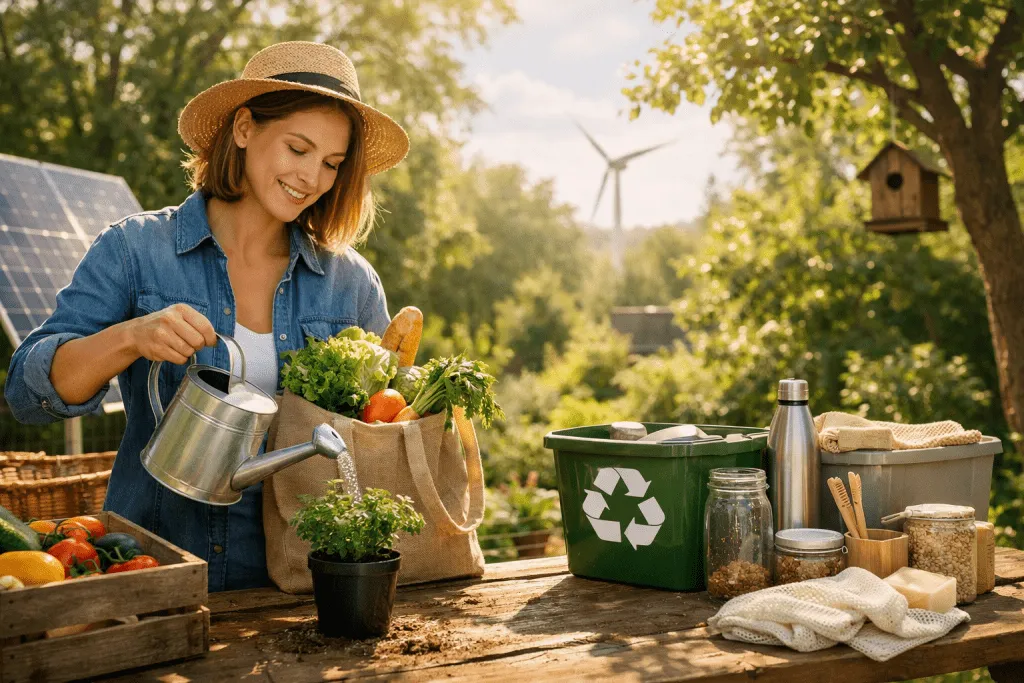
Living sustainably does not require a radical lifestyle change. A practical Beginner eco-friendly guide focuses on small, realistic actions that reduce environmental impact without disrupting daily routines. Many people want to lower waste, conserve energy, and make responsible choices but feel overwhelmed by where to start. This guide breaks down simple, actionable steps that build a solid foundation for a greener life.
Understanding the Basics of an Eco-Friendly Lifestyle
An eco-friendly lifestyle centers on reducing harm to the environment through conscious daily decisions. It involves minimizing waste, lowering energy consumption, and choosing products that have a smaller environmental footprint. The goal is not perfection, but consistent improvement.
A strong Beginner eco-friendly guide begins with understanding the concept of sustainability. Sustainability means meeting current needs without compromising the ability of future generations to meet theirs. This includes responsible use of natural resources, reducing pollution, and supporting ethical production systems.
Environmental impact is often measured through a carbon footprint, which represents the total greenhouse gases generated by individual actions. Everyday activities such as driving, using electricity, and consuming packaged goods contribute to this footprint. Reducing it starts with awareness and informed decisions.
Another important concept is the 3Rs: Reduce, Reuse, Recycle. While recycling is valuable, reducing consumption and reusing items often create a larger positive impact. A beginner should prioritize cutting unnecessary consumption before focusing solely on waste sorting.
Simple Changes at Home That Make a Big Difference
The home is the easiest place to begin applying a Beginner eco-friendly guide. Small adjustments in daily habits can significantly reduce environmental impact. These changes are practical and often save money over time.
Start with energy efficiency. Switching to LED lighting, unplugging devices when not in use, and using energy-efficient appliances can lower electricity consumption. Adjusting thermostat settings by a few degrees also reduces energy demand without sacrificing comfort.
Water conservation is another critical step. Fixing leaks, installing low-flow showerheads, and turning off the tap while brushing teeth can dramatically cut water usage. Collecting rainwater for plants or cleaning purposes further reduces reliance on treated water.
Reducing household waste is equally important. Replace single-use plastic bags with reusable ones and choose refillable containers for cleaning products. Composting food scraps decreases landfill waste and enriches soil naturally.
Finally, be mindful of household purchases. Choose durable products over disposable ones and prioritize items made from sustainable materials such as bamboo, recycled metals, or responsibly sourced wood. Long-term use reduces overall resource extraction.
Eco-Friendly Shopping and Consumption Habits
Consumption habits strongly influence environmental impact. A well-structured Beginner eco-friendly guide encourages thoughtful purchasing rather than impulsive buying. Every product purchased carries an environmental cost from production to disposal.
Before buying something new, ask whether it is truly necessary. Reducing consumption is the most effective sustainability strategy. Borrowing, renting, or buying second-hand items significantly decreases resource demand.
When shopping, prioritize products with minimal packaging. Excess plastic and non-recyclable materials increase waste streams. Bulk buying and choosing refill stations help reduce packaging waste.
Look for credible eco-certifications such as Fair Trade, FSC (Forest Stewardship Council), or organic labels. These certifications indicate adherence to environmental and ethical standards. However, remain cautious of greenwashing, where brands exaggerate sustainability claims.
Food choices also matter. Buying local and seasonal produce reduces transportation emissions. Reducing meat consumption, even slightly, lowers environmental impact because livestock production contributes heavily to greenhouse gas emissions and land degradation.
Sustainable Transportation and Daily Movement
Transportation is one of the largest contributors to carbon emissions globally. A Beginner eco-friendly guide should address mobility choices realistically. Not everyone can eliminate car use, but adjustments can reduce overall impact.
Walking or cycling short distances significantly lowers emissions and improves personal health. Public transportation is more efficient than individual car use and reduces congestion. Carpooling is another effective option when public transit is unavailable.
If driving is necessary, maintaining proper tire pressure and driving at steady speeds improves fuel efficiency. Reducing unnecessary trips by combining errands also lowers fuel consumption.
For those considering long-term changes, transitioning to electric vehicles or hybrid models can reduce emissions, especially when powered by renewable energy sources. However, lifestyle optimization should precede major purchases to ensure real environmental benefits.
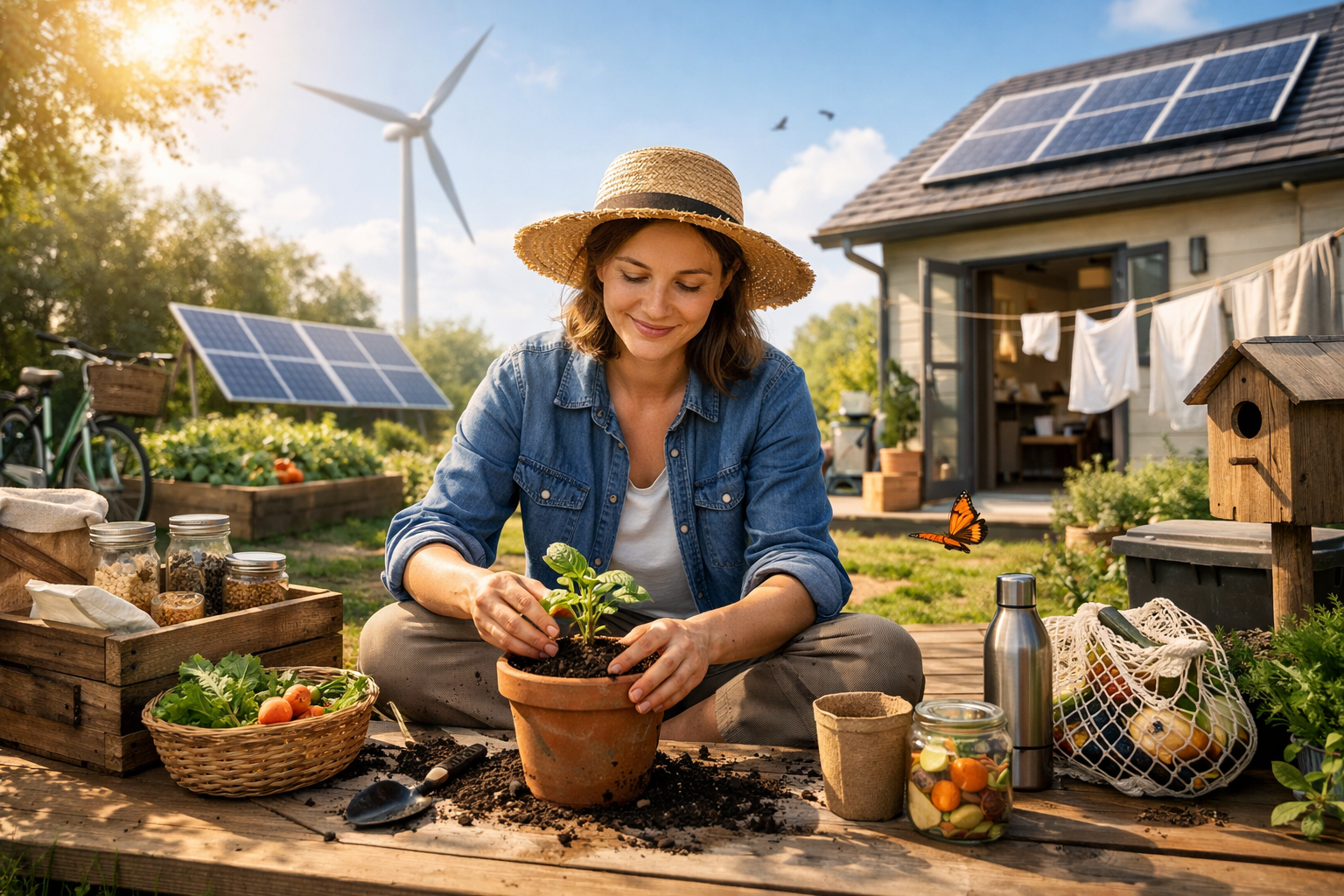
Remote work, when possible, also contributes to lower transportation emissions. Reducing commuting frequency has measurable environmental advantages.
Building Sustainable Habits That Last
Sustainability succeeds when it becomes habitual rather than occasional. A Beginner eco-friendly guide should emphasize consistency over intensity. Drastic changes often lead to burnout, while gradual shifts create long-term success.
Start with one or two manageable habits. For example, carry a reusable water bottle daily and refuse single-use plastic straws. Once these actions become automatic, add another small change.
Track progress informally by observing waste output or monthly utility bills. Visible improvements reinforce commitment. Financial savings from lower energy or water bills provide additional motivation.
Community involvement strengthens accountability. Joining local clean-up initiatives or sustainability groups reinforces shared responsibility. Collective action amplifies individual efforts and spreads awareness.
Education is continuous. Stay informed about environmental issues and evolving sustainable technologies. Understanding global environmental challenges strengthens personal commitment and decision-making quality.
Mindset Shift: From Convenience to Responsibility
True sustainability requires a shift in perspective. Convenience often drives modern consumption patterns, but environmental responsibility requires thoughtful pauses before action. Every purchase, disposal decision, or travel choice has consequences.
Adopting a long-term mindset helps guide decisions. Consider product durability, repairability, and lifecycle impact. Choosing quality over quantity reduces waste and resource extraction.
Embrace imperfection. Sustainability is not about achieving zero waste instantly. It is about reducing negative impact consistently and responsibly.
Teaching these values to family members or children creates intergenerational impact. Sustainable living becomes normalized when practiced collectively.
Ultimately, an effective Beginner eco-friendly guide transforms environmental awareness into daily action. It bridges knowledge and behavior in simple, realistic steps.
Conclusion
A practical Beginner eco-friendly guide begins with awareness and grows through small, consistent actions at home, in shopping habits, and in transportation choices. Sustainable living does not demand perfection but requires intentional decisions that reduce waste, conserve energy, and lower environmental impact. By building manageable habits and adopting a responsibility-driven mindset, anyone can create meaningful environmental change over time.
FAQ
Q: What is the first step in following a Beginner eco-friendly guide? A: Start by reducing single-use items and improving energy efficiency at home, as these changes are simple and create immediate impact.
Q: Do I need to spend more money to live sustainably? A: Not necessarily; many eco-friendly actions, such as reducing consumption and saving energy, lower long-term expenses.
Q: How can beginners avoid feeling overwhelmed by sustainability? A: Focus on one or two small habits at a time and expand gradually instead of attempting major lifestyle changes immediately.
Q: Is recycling enough to live an eco-friendly lifestyle? A: Recycling helps, but reducing consumption and reusing items typically have a greater environmental impact.
Q: How long does it take to see results from sustainable changes? A: Utility savings and reduced waste can be noticeable within weeks, while broader environmental impact accumulates over time.
