
Usha Vance Mocks NY Times on Pregnancy Fashion
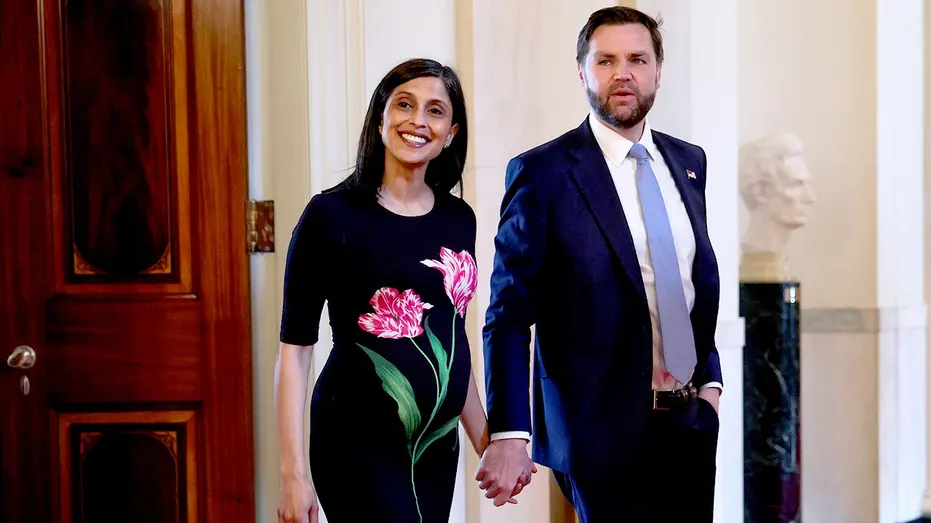
Usha Vance mocks New York Times – Second Lady Usha Vance recently took aim at The New York Times, humorously criticizing its interpretation of her maternity wear as a political statement. The article, titled “The Politics and Power of the Pregnancy Image,” analyzed the fashion choices of three prominent women in the MAGA movement—Vance, press secretary Karoline Leavitt, and podcast host Katie Miller—following their pregnancies. Vance, expecting her fourth child, used social media to highlight the Times’ focus on her attire, suggesting the newspaper had overreached in assigning political weight to a simple outfit.
Maternity Wear as Political Symbolism?
Vanessa Friedman, the Times’ fashion critic, drew attention to Vance’s Instagram post celebrating Father’s Day, which featured a stretchy coral maternity dress. The critic noted the dress’s design and timing, arguing that the administration’s aesthetic choices had created a consistent image aligning with President Trump’s leadership style. This narrative framed the women’s pregnancies as part of a broader strategy to reinforce the White House’s cultural and familial identity through visual cues.
“That three such prominent women in the MAGA movement were pregnant at pretty much the same time was, indubitably, a coincidence. But for an administration that has such an intuitive and strategic understanding of the power of aesthetics, it has also become a telling one,” Friedman wrote in her analysis.
Vance’s maternity wear, in particular, became a focal point for the Times’ argument about the political significance of appearance. While the article praised the administration’s cohesive image, it also raised questions about whether personal fashion choices were being weaponized to amplify ideological messages. Critics have pointed out that this trend of interpreting everyday items as symbols of political identity is a recurring theme in media coverage of the Trump administration.
Vance’s Humorous Defense of Aesthetic Politics
Vance’s response to the Times’ piece was a mix of wit and clarity. On X, she quipped, “Now that we know the political significance of my $8.75 coral maternity dress from Old Navy, can’t wait to hear what the New York Times has to say about my elastic-waistband pants and compression socks!” The post included a screenshot of her receipt, showing the dress was originally priced at $49.99 but discounted to $12.49. By emphasizing the affordability of her outfit, Vance subtly challenged the Times’ claim that her fashion choices carried heavy political implications.
The Times’ focus on pregnancy as a political tool has sparked debates about how media outlets frame personal milestones. While some argue that the article was an astute observation of the administration’s messaging, others believe it reduced individual expression to partisan symbolism. Vance’s reaction has become a case study in how public figures can reclaim their narrative when fashion becomes a political battleground.
Broader Implications for Media and Public Perception
Friedman’s analysis extended beyond Vance, linking the women’s fashion choices to a larger pattern of aesthetic influence within the Trump administration. The article suggested that the White House’s visual strategy was not just about style but about projecting an image of unity and cultural resonance. This approach has been scrutinized in previous coverage, such as when the Times’ “trans dad” piece faced backlash for perceived attempts to redefine traditional roles through media framing.
Vance’s pregnancy, however, has also been a topic of discussion in political circles. Her maternity wear has been interpreted as a symbol of the administration’s emphasis on traditional family values. Yet, her lighthearted defense of her outfit has shifted the conversation, inviting further reflection on the role of media in assigning meaning to personal choices. By sharing her receipt, she turned the Times’ analysis into a humorous commentary on the intersection of fashion and politics.