
Explainer: How air raid sirens and alerts shape daily lives across Middle East
Explainer: How air raid sirens and alerts shape daily lives across Middle East
Since Tehran escalated attacks on Gulf nations like Qatar, the UAE, Saudi Arabia, Kuwait, Bahrain, and Oman—triggered by US-Israeli strikes on Iran—the region has faced a sudden shift in routine. What was once a distant concern for civilians is now a constant backdrop, with residents and visitors adjusting to a new reality marked by unexpected sounds, flashes, and emergency notifications. The governments have swiftly responded, deploying clear communication to guide the public through the crisis.
Authorities in the Gulf states have prioritized public education, offering step-by-step guidance on how to react to incoming threats. Media in Qatar and the UAE have created concise visual resources to help people comprehend the situation and prepare for safety. Euronews correspondents in Doha and Dubai have compiled a summary of these materials, highlighting key aspects of the defense systems in place.
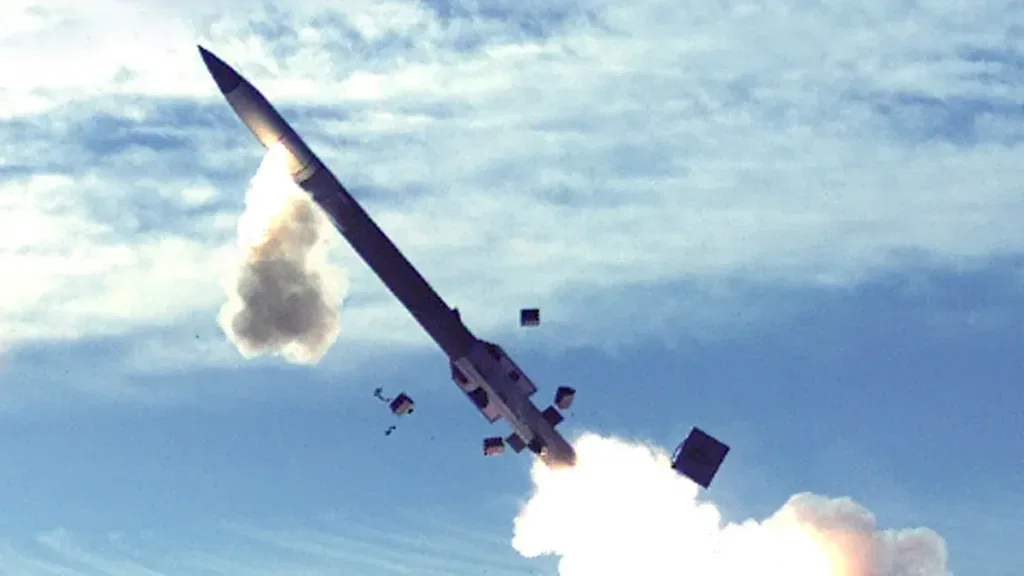
Residents have come to associate the loud booms with the work of air defense systems. These modern networks detect and neutralize missiles and drones before they reach targets, often intercepting threats several kilometers above ground. The explosions, while startling, signal successful defense, ensuring the safety of populations in urban areas.
Missile Defense Systems
Advanced systems such as the Patriot and THAAD have become central to the region’s security strategy. These surface-to-air interceptors are engineered to track and destroy fast-moving threats. The Patriot, renowned for its reliability, is particularly effective against ballistic missiles, which travel at hypersonic speeds—around 3 km/s—covering hundreds of kilometers in minutes. Cruise missiles, in contrast, move at subsonic speeds, flying low to evade radar detection.
Interceptor sizes vary, with Patriot units measuring approximately five meters in length and THAAD interceptors designed for higher altitudes. Ballistic missiles, often as long as a small bus, pose a significant challenge due to their speed and range. Meanwhile, smaller cruise missiles, typically five to seven meters in length, follow a flatter trajectory, making them harder to intercept at close range.
Unmanned Aerial Vehicles
Iran’s military strategy also includes a diverse fleet of drones, such as the Shahed-136 and Shahed-131. These unmanned aerial vehicles, known for their distinctive buzzing sound, have gained attention in conflicts like Ukraine’s 2022 war. The Shahed-136, up to 3.5 meters in length and 2.5 meters in wingspan, can travel 2,000 kilometers at speeds of 150 to 190 km/h. Its smaller counterpart, the Shahed-131, operates on a similar principle but with a shorter range.
“They are frequently called ‘mopeds’ in Ukraine,”
officials noted, highlighting the drones’ audible profile as a unique identifier in combat zones. This integration of drones into air defense has reshaped the landscape of modern warfare, emphasizing speed, maneuverability, and precision in targeting.
