
Pro-monarchy and pro-democracy protesters gather across Europe in support of Iran
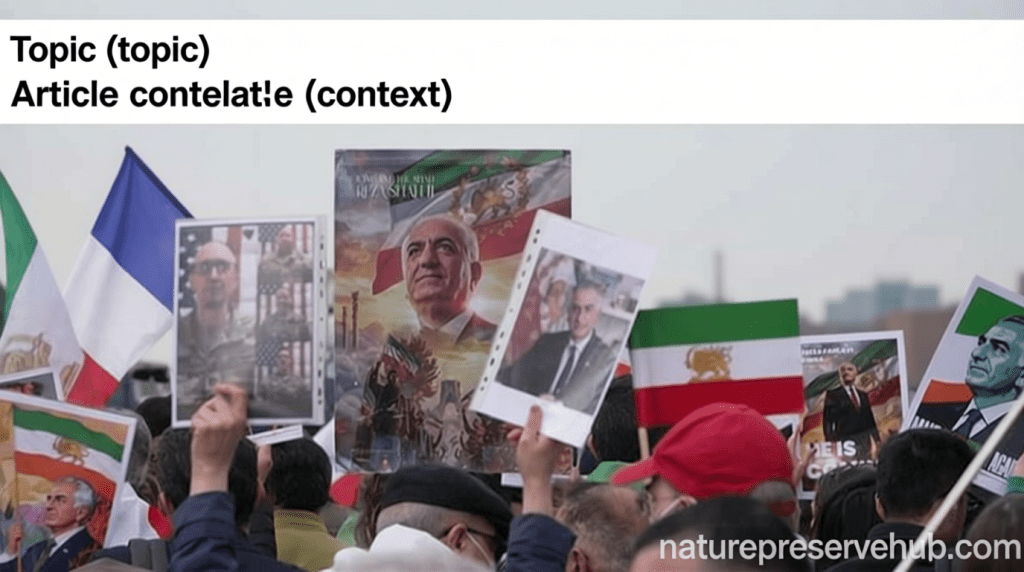
Pro-monarchy and pro-democracy protesters gather across Europe in support of Iran
Across several European cities, demonstrators raised lion-emblazoned banners from pre-revolutionary Iran on Saturday, showing solidarity with the Iranian people during the conflict with the United States and Israel. The gatherings reflected a mix of political sentiments, with some backing the exiled crown prince Reza Pahlavi, the son of Iran’s final monarch, and others championing the current leadership under Supreme Leader Ali Khamenei, who was recently targeted in an Israeli-American strike.
In London, crowds gathered to oppose military action, while a separate group marched in favor of Khamenei. The “Hands Off Iran” protest, attended by an estimated 5,000 to 6,000 participants, echoed demands to halt the bombings, with chants of “stop the bombing now, now, now” reverberating through the streets. Meanwhile, in Paris, two distinct demonstrations emerged: one endorsing Pahlavi’s leadership as a path to transition, and another criticizing that idea.
“I support Pahlavi, who advocates for a revolution,” said Masoud Ghanaatian, a 35-year-old student at a protest near southern Paris. Participants waved flags of the pre-revolution era alongside U.S. and Israeli banners, carrying images of the late shah’s son. “He’s a democrat and can lead a smooth shift, promising fair elections.”
Stockholm saw pro-Pahlavi rallies, where attendees held portraits of the crown prince and his late father. In Amsterdam, marchers followed a canal route, displaying flags of the U.S., Israel, and pre-revolution Iran, urging the government to welcome Pahlavi and shut down the Iranian embassy.
Shortly after dawn in Britain, activists assembled at an air force base in Fairford, southwest of London, waving signs like “Hands off Iran” and “Peace.” The U.S. President, Donald Trump, pledged to aid Iran’s economic recovery if the nation installs a leader deemed “acceptable” by him. Iran’s UN envoy, Amir Saeid Iravani, countered, insisting that the choice of a successor would be guided by Iran’s constitutional processes and the people’s will, free from foreign influence.
Iravani emphasized that the selection of Iran’s leadership will occur “strictly in accordance with our constitutional procedures and solely by the will of the Iranian people, without any foreign interference,” according to his statement.
