
Explainer: Who is Mojtaba Khamenei and how did he succeed his father?
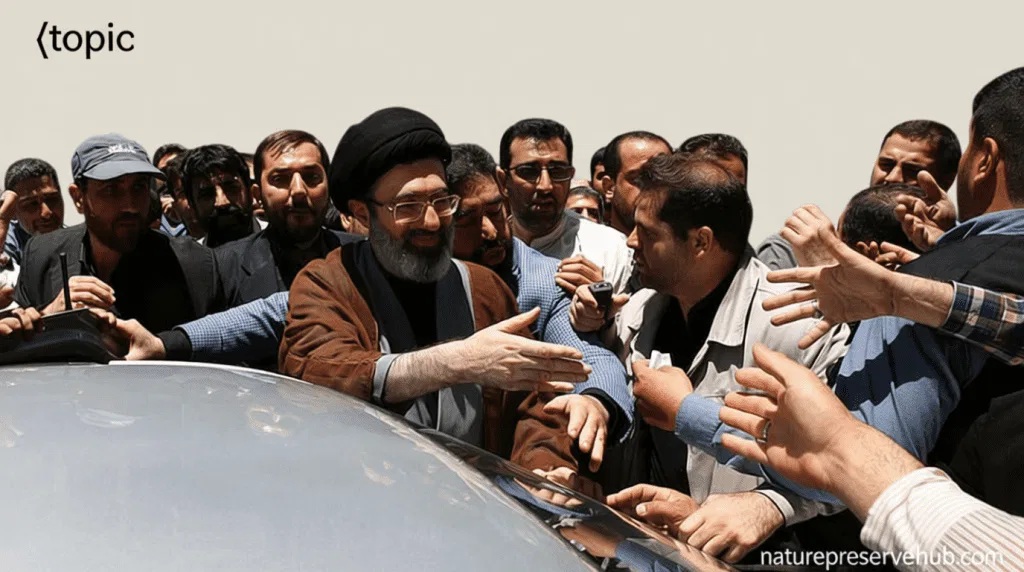
Explainer: Who is Mojtaba Khamenei and how did he succeed his father?
In March 2026, Iran’s Assembly of Experts officially confirmed Mojtaba Khamenei as the next leader, succeeding Ali Khamenei as the third Supreme Leader amidst rising tensions in the Iran war. The appointment came after an Israeli airstrike targeting the supreme leader’s offices in Tehran killed Ali Khamenei at 86, along with his wife, Zahra Haddad Adel, who hailed from a family deeply entwined with theocratic governance.
Mojtaba Khamenei, a figure shrouded in secrecy, has remained largely out of public view since the attack. While his brothers have traditionally occupied roles tied to cultural and administrative functions within the regime, Mojtaba’s influence extends into covert power structures and critical security institutions. His ascension marks a shift from familial ties to a more independent political trajectory.
Born in 1969 in Mashhad, Mojtaba’s path to leadership was shaped by early exposure to conflict. At age 17, he was deployed during the Iran-Iraq War, serving in the Habib ibn Mazaher Battalion of the 27th Mohammad Rasulullah Division. This unit, known for its ideological fervor, became a crucible for future security commanders, including Qasem Soleimani and Ahmad Kazemi, whose careers were forged in its ranks.
Unlike his siblings, Mojtaba’s career diverged from the conventional roles of a “supreme leader’s son.” While his brothers focused on cultural or bureaucratic tasks, he embedded himself in the military and intelligence apparatus. This strategic immersion cultivated networks that later enabled his rise to the top echelons of power, aligning him with the Islamic Revolutionary Guard Corps (IRGC) and other key institutions.
Recent Western media scrutiny has centered on Mojtaba’s financial footprint. Reports suggest he may hold significant wealth, with assets spanning Europe and private holdings in cities like London and Vienna. However, the exact control over these resources remains unclear due to opaque financial systems linked to Iran’s leadership.
Inside Iran, Mojtaba is not publicly labeled a businessman or “billionaire.” Analysts attribute his economic influence to his political position and connections with state-backed entities rather than personal enterprise. His ideological stance, meanwhile, remains ambiguous, with some viewing him as a hardline security strategist and others noting his lack of public policy statements.
Mojtaba’s wartime experience, though brief, symbolized a key rite of passage for his generation. The Iran-Iraq War holds enduring political significance, and many leaders have leveraged their military service to solidify authority. Mojtaba’s participation in this conflict helped forge bonds with IRGC commanders, reinforcing his ties to the security sector.
After graduating from the Alavi School in Tehran, Mojtaba entered Qom seminary, studying under influential clerics such as Mohammad-Taghi Mesbah-Yazdi and Mahmoud Hashemi Shahroudi. His father, Ali Khamenei, also served as a mentor, shaping his religious and political foundation. These formative years laid the groundwork for his eventual role in the country’s highest leadership.
