
Oil prices fall as Trump floats possible sanctions relief
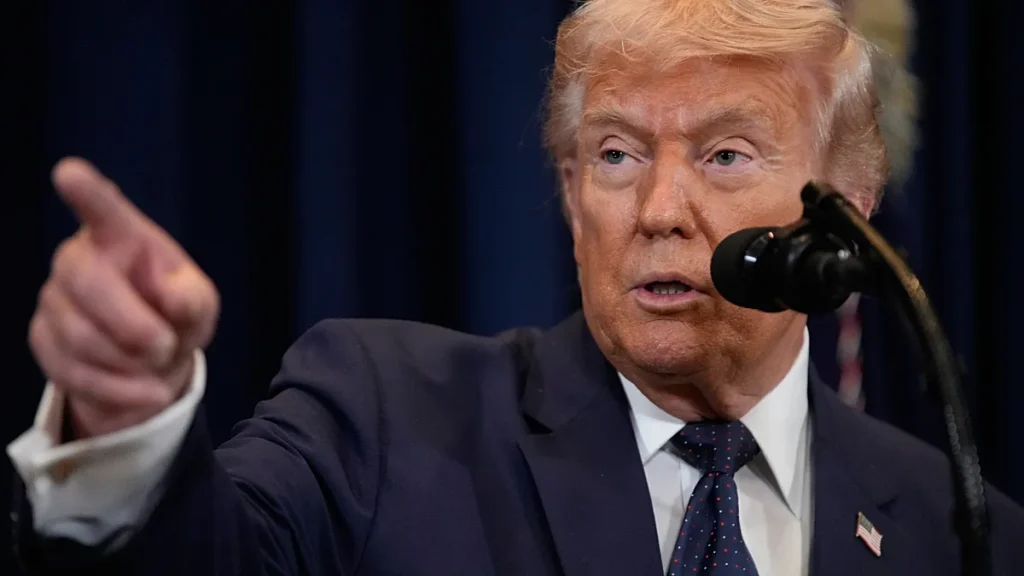
Oil Prices Fall Amid Trump’s Potential Sanctions Relief
Following remarks by US President Donald Trump on Monday, global oil prices experienced a significant decline. Trump suggested the conflict with Iran might not last long and hinted at the possibility of easing sanctions on certain nations to stabilize crude markets.
Sanctions Waivers and Market Reactions
He mentioned Washington was exploring ways to suspend oil-related sanctions on specific countries, though he did not specify which ones. The U.S. sanctions currently target Iran, Venezuela, Russia, Syria, and North Korea in energy trade.
“In some countries, we’re going to take those sanctions off until this straightens out,” Trump stated during a press briefing.
Meanwhile, Trump engaged in a call with Russian President Vladimir Putin to discuss the ongoing war and other diplomatic matters. The price drop saw WTI crude and Brent futures fall over 9%, with Brent hovering near $90 and WTI at $85.40 per barrel.
Geopolitical Context and Market Volatility
Prices had earlier spiked to a level not seen since 2022, nearing $120 a barrel, after Iran’s Assembly of Experts named Mojtaba Khamenei as its new supreme leader. This move was interpreted as a sign of Tehran’s resolve, ten days into the war initiated by the U.S. and Israel.
“We took a little excursion to the Middle East to get rid of some evil. And, I think you’ll see it’s going to be a short-term excursion,” Trump remarked to Republican lawmakers at his Miami-based golf club.
Despite the possibility of escalation if Iran disrupts oil supplies, investors responded positively, pushing major European stock markets higher. The FTSE 100 in London rose 1.1%, the CAC 40 in Paris gained 1.9%, and the DAX in Frankfurt climbed 2%. Indices in Madrid, Milan, and the Stoxx 600 also saw gains of 2.5% and 1.7%, respectively.
Asian Markets and Economic Signals
Asian stock indices rebounded on Tuesday, recovering from previous day declines. The Nikkei 225 in Tokyo surged 2.9%, supported by revised economic data showing Japan’s growth reached 1.3% in the final quarter of last year, surpassing initial projections of 0.2%. South Korea’s Kospi and Australia’s S&P/ASX 200 also rose, with gains of 5.4% and 1.1%.
“Today is the rebound—obviously [after] positive comments from President Trump overnight. We’re starting to see the light at the end of the tunnel for the war,” noted Neil Newman, strategist at Astris Advisory Japan.
Meanwhile, Hong Kong’s Hang Seng and the Shanghai Composite posted gains of 2.1% and 0.6%, respectively. Share prices have fluctuated closely with oil, which has been volatile due to Middle Eastern tensions. Analysts warn that prolonged high crude prices could lead to stagflation, where economic growth slows while inflation remains high.
Strait of Hormuz and Currency Markets
The focus remains on the Strait of Hormuz, a critical oil route where a fifth of global shipments pass daily. Iran has threatened to block vessels through the strait, risking a price surge to $150 or more if disruptions persist. Trump separately indicated he was “thinking about taking it over,” as reported by CBS.
On the currency front, the yield on the 10-year U.S. Treasury dropped to 4.10% from 4.15% late Friday. It had briefly risen above 4.20% on Monday morning due to oil price concerns but fell as crude markets stabilized later in the day.
