
Strait of Hormuz Faces Unprecedented Challenges Amid Rising Tensions
Shipping giant warns Strait of Hormuz – As geopolitical instability intensifies in the Persian Gulf, maritime operators are warning of a sustained disruption in the strategic waterway known as the Strait of Hormuz. A major shipping company, Hapag-Lloyd, has described the current situation as a “new normal,” emphasizing the growing risks and evolving regulatory landscape that threaten the region’s vital shipping lanes. This assessment comes amid escalating military activity and conflicting directives that have thrown the strait into disarray, forcing companies to adapt to an increasingly unpredictable environment.
Iran’s Oil Movement Signals Shift in Dynamics
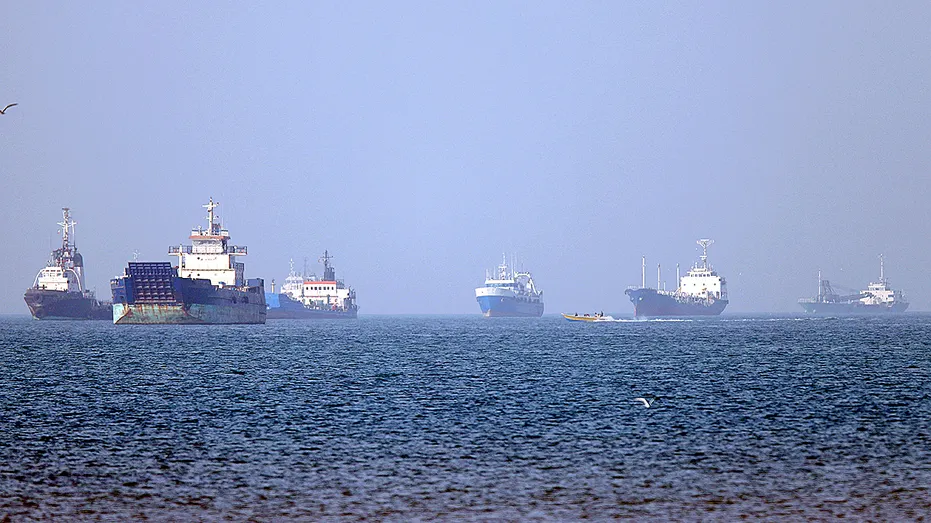
Amid the chaos, Tehran has taken a significant step by initiating the transfer of millions of barrels of crude oil from Kharg Island, marking a notable resumption of its export operations. According to maritime intelligence firm Windward AI, the movement represents a synchronized effort between Iranian authorities and the country’s energy infrastructure. The firm reported that the T-Jetty and Western Terminal on Kharg Island were simultaneously active for the first time in several days, while the East Waiting Area housed 28 tankers, 27 of which were dark, indicating the restart of the crude oil export cycle.
“At Kharg, the T-Jetty and Western Terminal loaded simultaneously for the first time in days; the East Waiting Area holds 28 tankers, 27 dark, signaling the Iranian crude export cycle restarting,” Windward AI stated in a post on X.
This development underscores Iran’s determination to maintain its energy exports despite the current turmoil. The outbound cargo, estimated at 4.12 million barrels, includes a mix of crude oil and other liquid hydrocarbons, with approximately 3.91 million barrels designated as crude oil, as noted by analytics firm Vortexa. While the scale of the shipment is impressive, the timing and method of its delivery highlight the precarious state of operations in the region.
Military Strikes and the Struggle for Control
The situation has been further complicated by a series of military strikes that have intensified the conflict’s impact on the strait. On June 26, U.S. Central Command (CENTCOM) launched attacks against Iranian targets, including Qeshm Island, following the destruction of a vessel in the waterway. This prompted Iran’s Islamic Revolutionary Guard Corps (IRGC) to retaliate, targeting U.S. military installations in Kuwait and Bahrain. The back-and-forth exchanges have created a climate of uncertainty, with ships now navigating a dual system of routes that are divided between Iran-controlled northern passages and U.S.-secured southern lanes.
“The strait remains split between the Iran-controlled northern route and a U.S.-protected southern ‘highway,’ with pre-war routes rendered unusable due to the risk of mines,” Lloyd’s List observed, describing the fractured infrastructure as a “confused, two-tier system.” This split has not only disrupted traditional shipping paths but also increased the likelihood of accidental or intentional confrontations between vessels and military assets.
Global Chokepoint and Calls for Stability
The Strait of Hormuz, a critical global chokepoint, has become a focal point for both economic and military concerns. Hapag-Lloyd’s spokesperson, Hanja Maria Richter, highlighted the need for a coordinated approach to mitigate risks. “We have to acknowledge that this is for some months the new normal in the Persian Gulf region,” she said, stressing that the situation has been fluid since the onset of the conflict.
“The situation has been fluid for us since the beginning of the conflict,” Richter explained, before adding that constant vigilance is essential for operating in the region.
Richter emphasized that Hapag-Lloyd conducts regular risk assessments with security partners, authorities, and personnel on board vessels. “It is a region in conflict, so we consider this with every single ship we move,” she said, underscoring the company’s proactive stance in safeguarding its operations. The firm’s ability to navigate the initial bottleneck has been a point of relief, though the long-term stability of the strait remains uncertain.
Iran’s Role in Reopening the Waterway
Iran’s Foreign Minister, Abbas Araghchi, reiterated the country’s responsibility for managing and fully reopening maritime traffic through the strait under recent agreements. This claim aligns with Iran’s assertion that it controls the northern routes, which are now key to its export strategy. However, the U.S. continues to enforce a protective presence along the southern routes, creating a de facto division of control.
“Passage through the Strait of Hormuz demands coordination with the IRGC,” stated Iranian state television, reinforcing the idea that Iran’s military force plays a central role in ensuring the waterway’s functionality. This coordination, however, is complicated by the competing interests of regional actors and the potential for sudden escalations in hostilities.
Call for Caution in the Face of Uncertainty
Experts have urged extreme caution regarding Iran’s strategic influence, particularly in relation to its proxy forces like Hezbollah, which has been linked to U.S. casualties in past conflicts. The current crisis has intensified scrutiny on Iran’s ability to manage the strait without disrupting global energy supplies. Hapag-Lloyd’s spokesperson expressed concern over the potential weaponization of the strait, warning against the imposition of fees for passage through international waters.
“It would be fundamentally wrong to impose fees for passage through international waters,” Richter said. “Fees for infrastructure such as the Suez Canal or the Panama Canal are a different matter, as they reflect major infrastructure investments. That is not the case with the Strait of Hormuz.”
Her remarks come as a broader call for stability, with Hapag-Lloyd emphasizing that the safety of its crews is its top priority. Despite the challenges, the company has managed to move its affected vessels out of the Persian Gulf, though the ongoing conflict continues to test the resilience of maritime operations in the area. The situation remains volatile, and the interplay between military actions and commercial interests could shape the strait’s future for months to come.
With tensions at a peak, the Strait of Hormuz stands as a symbol of the broader geopolitical struggle in the region. As Iran and its allies assert control over key routes, the U.S. and its allies maintain a defensive posture, ensuring the free flow of goods while preparing for possible further confrontations. The combination of military strikes, shifting alliances, and conflicting directives has created a scenario where the strait’s functionality is both a strategic asset and a potential flashpoint.
Maritime operators, including Hapag-Lloyd, are now accustomed to the heightened risk environment, with regular assessments and contingency planning becoming standard practice. The company’s ability to adapt to the chaos demonstrates the resilience of the global shipping industry, even as it grapples with the implications of a prolonged conflict. The question remains: can the Strait of Hormuz endure this new era of uncertainty, or will it become a permanent battleground for international trade and security?