
Boy, 2, pulled alive from rubble six days after Venezuela’s devastating twin earthquakes
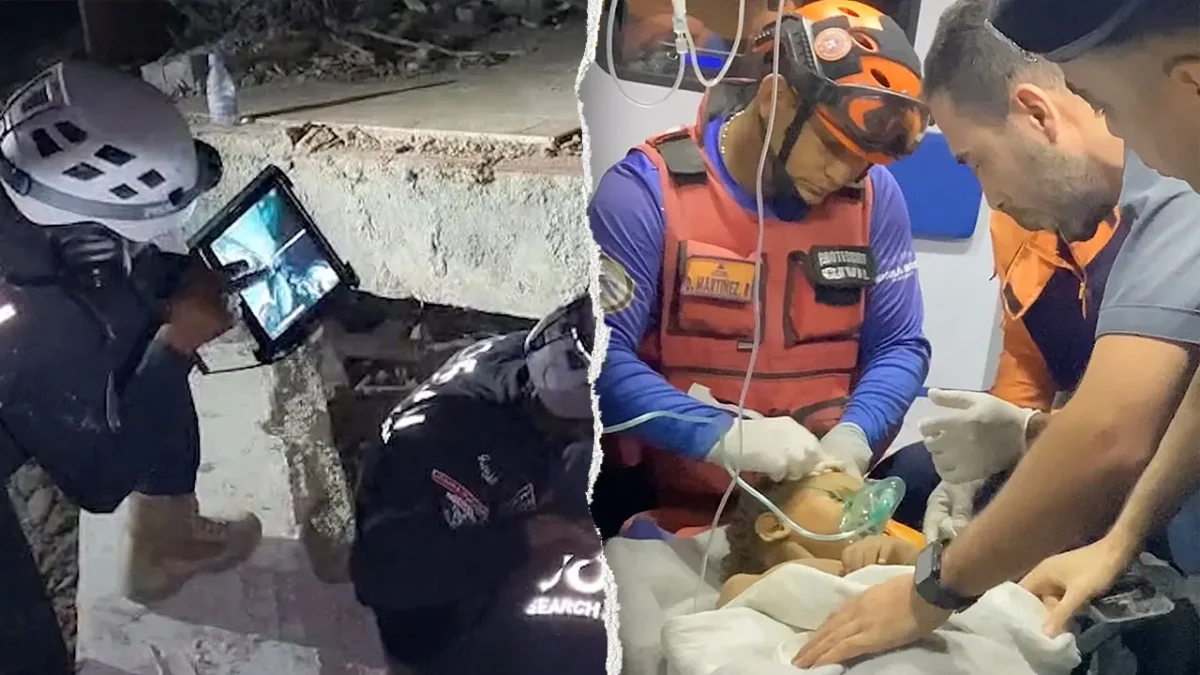
Boy 2 pulled alive from rubble – In a remarkable turn of events, a two-year-old child was successfully rescued from the debris of a collapsed structure in Venezuela after being entombed for six consecutive days. The operation, which took place on Tuesday, marked the first documented instance of a survivor being retrieved on the sixth day of search and rescue efforts following last week’s catastrophic seismic activity. The child, later identified as Klieber Moran, had been trapped beneath the rubble in the city of La Guaira, a region that bore the brunt of the earthquakes’ destructive power.
The rescue was carried out by international emergency teams, including those from Jordan, who worked tirelessly to locate and extract the boy from the wreckage. Acting President Delcy Rodríguez highlighted the collaboration in a Telegram post, emphasizing that the successful operation was a testament to the combined efforts of local and foreign responders. She described the moment of the child’s retrieval as a “glimmer of hope” amidst the devastation, noting the emotional weight of the event for both the community and the rescue workers.
“The child was found alive after six days of relentless searching, a miracle that fills us with renewed optimism,” said Rodríguez in her statement. The president also mentioned that Moran had been transported to a medical facility for immediate care, underscoring the urgency of the situation as the search for other survivors continued.
The twin earthquakes that struck Venezuela last week have left a trail of destruction across the country, particularly in La Guaira. Initial reports indicated that the tremors, measuring at least 6.1 on the Richter scale, caused significant damage to infrastructure, including residential buildings and commercial structures. The disaster has led to widespread displacement, with hundreds of families forced to seek shelter in temporary locations. Rescue operations have been ongoing since the events, with teams working in challenging conditions to locate those still trapped.
Klieber Moran’s survival has captured the attention of the global community, serving as a beacon of hope amid the tragedy. His condition, though stabilized, remains critical, with medical teams monitoring for potential injuries. The child’s rescue has also sparked discussions about the effectiveness of search-and-rescue strategies in such scenarios. Experts have noted that the six-day period without a major breakthrough underscored the complexity of the operation, as teams had to navigate unstable structures and limited resources.
The Trump administration has pledged $150 million in humanitarian aid to support Venezuela’s recovery efforts. This financial commitment comes alongside the deployment of U.S. Navy warships to the region, which will assist in delivering supplies and facilitating rescue operations. The aid package includes provisions for medical equipment, food, and shelter, aiming to address the immediate needs of affected populations. The U.S. government has also expressed its readiness to provide further assistance, emphasizing the importance of international cooperation in disaster relief.
As the search for additional survivors continues, the incident involving Klieber Moran has become a symbol of resilience. His survival has not only inspired hope for others still missing but has also highlighted the importance of sustained rescue efforts. Authorities have called for increased coordination between national and international agencies to maximize the chances of finding more individuals in the rubble. Meanwhile, the community in La Guaira has rallied together, offering support to the families of those who lost loved ones and celebrating the boy’s miraculous recovery.
The twin earthquakes have tested the limits of Venezuela’s emergency response capabilities, but the rescue of the two-year-old boy demonstrates the progress made in recent years. The operation involved advanced technology, such as ground-penetrating radar and drones, which have been integrated into search-and-rescue protocols. These tools have proven invaluable in identifying potential survivors in collapsed buildings, even after prolonged periods of entrapment.
International aid has been a critical component of the response, with several countries and organizations offering assistance. Jordan’s involvement in the rescue has been particularly notable, with their expertise in disaster relief having been deployed in multiple crises. The collaboration between nations has underscored the interconnected nature of global emergencies and the shared responsibility in addressing them. As the situation evolves, the focus remains on ensuring that all survivors receive the necessary care and that the recovery process is as efficient as possible.
Local residents have shared stories of the earthquakes’ impact, describing the chaos that followed the initial tremors. Many have expressed gratitude for the efforts of the rescue teams, which have worked around the clock to save lives. The successful extraction of Klieber Moran has provided a renewed sense of purpose, motivating the teams to continue their work despite the challenges. The event also serves as a reminder of the vulnerability of infrastructure in earthquake-prone regions, prompting calls for improved building codes and disaster preparedness measures.