
No timeframe for ending US war against Iran, says Pete Hegseth
No Set End Date for the U.S. War in Iran
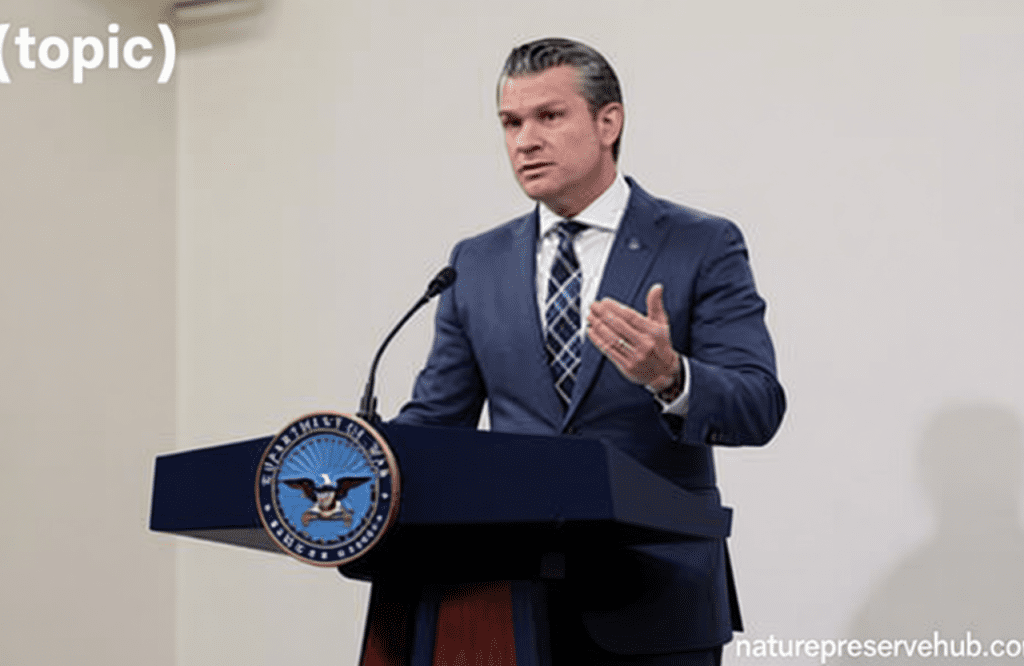
U.S. Defense Secretary Pete Hegseth stated on Thursday that there is no definitive timeline for concluding the conflict with Iran, and he did not dispute claims that the Pentagon might seek additional $200bn in taxpayer support. The military operation between the U.S. and Israel has been escalating for three weeks, with attacks spreading beyond initial targets.
President Donald Trump warned on Wednesday of a potential “massive destruction” of the Gulf’s largest gasfield after Israeli strikes on an Iranian site prompted Tehran to increase attacks on oil and gas infrastructure. Hegseth, addressing reporters at the Pentagon, hinted that Thursday would see the most intense U.S. assault to date. “To date, we have struck over 7,000 targets across Iran’s military network,” he explained. “Today will be the largest strike package yet… death and destruction from above.”
Despite soaring oil prices and declining public approval for Trump, Hegseth refused to outline a strategy for withdrawal. “We wouldn’t set a timeframe for ending the war,” he said, emphasizing that the campaign remains “on track” and will be decided by the president. “Ultimately, it will be the president’s choice to determine when we have achieved our goals.”
Military Expansion and Strategic Objectives
The campaign has expanded significantly, with U.S. aircraft and naval forces targeting multiple vessels, including mine-layers and submarines, in the Gulf. These actions aim to secure the critical strait of Hormuz, which Iran had previously blocked. Hegseth dismissed concerns about mission creep, calling it a “media invention.” He reiterated that the focus remains on dismantling Iran’s missile capabilities, weakening its defense industries, and preventing it from obtaining nuclear weapons.
“Our objectives, as outlined by our America-first leader, remain unchanged,” he asserted. “These are not the media’s goals, nor Iran’s, but our own—precisely as they were from the start.”
Funding Requests and Media Criticism
Hegseth also responded to reports that the Pentagon has requested more than $200bn in additional funds from Congress. According to The Guardian, the first six days of the conflict cost nearly $13bn. “The $200bn figure could shift,” Hegseth noted. “Money is needed to defeat adversaries.” He added that the military is seeking congressional backing to ensure continued funding for ongoing operations and future efforts.
Geographical Reach and Allied Involvement
General Dan Caine, a senior U.S. military official, confirmed that the campaign is advancing deeper into Iranian territory. Long-range strikes are now targeting underground facilities, drone bases, and coastal missile sites with specialized munitions. Caine highlighted the growing scope of the conflict, noting that A-10 aircraft are being deployed in the Gulf to intercept fast-moving Iranian vessels, while Apache helicopters strike militia groups in Iraq.
He mentioned that allied forces are also engaging Tehran’s drone fleet, countering the threat with similar systems. Hegseth concluded his remarks with a religious appeal, urging Americans to pray for troops “on bended knee with your family, in your schools, in your churches, in the name of Jesus Christ.”
