
Denmark’s Frederiksen bruised in election, as voters put Trump’s Greenland ambitions to the side
Denmark’s Frederiksen Bruised in Election, as Voters Put Trump’s Greenland Ambitions to the Side
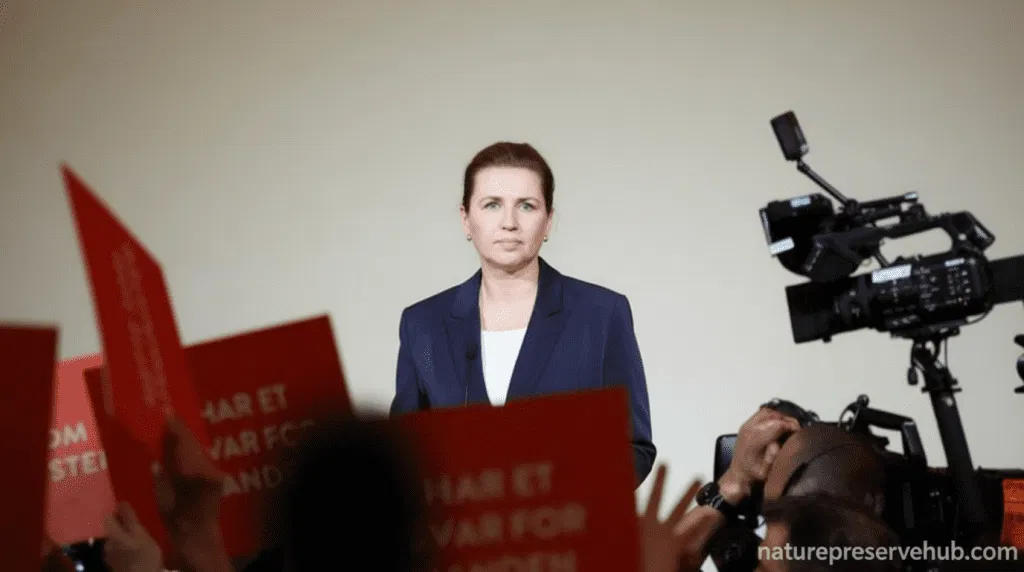
Denmark’s recent election on Tuesday resulted in a deadlock, casting doubt on the future of Prime Minister Mette Frederiksen. The campaign centered on everyday concerns instead of her management of the U.S. President Donald Trump’s aspirations for Greenland. Official results indicated that Frederiksen’s center-left Social Democrats lost support compared to the 2022 election, as did her coalition partners. Neither the left nor the right blocs secured a parliamentary majority, leaving former Prime Minister Lars Løkke Rasmussen, head of the centrist Moderate party, in a pivotal role.
Uncertain Future for Frederiksen
Rasmussen, who holds 14 seats in the 179-member parliament, could decide whether Frederiksen remains in power. Despite her resolute stance on Trump’s push for Greenland, voters seemed more preoccupied with domestic matters. Frederiksen expressed readiness to continue her leadership, stating,
“The world is unsettled. There are strong winds around us,” she said. “Denmark needs a stable government, a competent government. We are ready to take the lead.”
Rasmussen urged rivals to moderate their positions, emphasizing unity:
“Denmark is a small country of 6 million people in a world of 8 billion, which is in upheaval — and there is war in Iran, and there is war in Ukraine,” he said. “We are one tribe. We must come together. We must not be divided.”
Frederiksen’s allies faced challenges, as the Liberal party’s Defense Minister, Troels Lund Poulsen, refused to join her government again. The Social Democrats remained the largest party, but their vote share dropped to 21.9%, significantly lower than the 27.5% recorded in 2022. Frederiksen, 48, is renowned for her strong support of Ukraine during its conflict with Russia and her strict migration policies, which have been a hallmark of Danish politics.
Early Election and Strategic Hopes
Frederiksen called the election several months ahead of schedule, hoping her stance on Greenland would bolster her appeal. She anticipated a decline in support, comparing this result to the 25.9% her party received in 2019 when she first became prime minister. “I have been in charge of this wonderful country for nearly seven years,” she noted. “We have weathered the pandemic; we have had to deal with war. We have been threatened by the American president, and in those nearly seven years, we have seen a four percent decline.”
While Greenland’s status as a Danish territory was a major topic in recent months, it became less prominent during the campaign. There is widespread agreement on its role within the kingdom, though Frederiksen had warned in January that an American takeover would undermine NATO. Trump’s retreat from imposing tariffs on Denmark and other European nations eased tensions, leading to technical discussions on an Arctic security pact. Denmark’s Folketing, a single-chamber parliament elected every four years, holds 175 seats for Denmark’s lawmakers, with two seats each allocated to Greenland and the kingdom’s representatives.
The election outcome reflects a broader trend toward coalition governance under Denmark’s proportional representation system, which historically favors alliances among left or right blocs. Social Democrat lawmaker Morten Klessen acknowledged the government’s focus on European challenges, including Ukraine, may have cost some domestic votes. “There’s been a lot of trouble in Europe, and I think our government has had a lot of focus on Ukraine,” he said. “But we need Mette Frederiksen in Europe for solidarity.”
