
ESPN Must Hold Stephen A Accountable for Racial Remarks
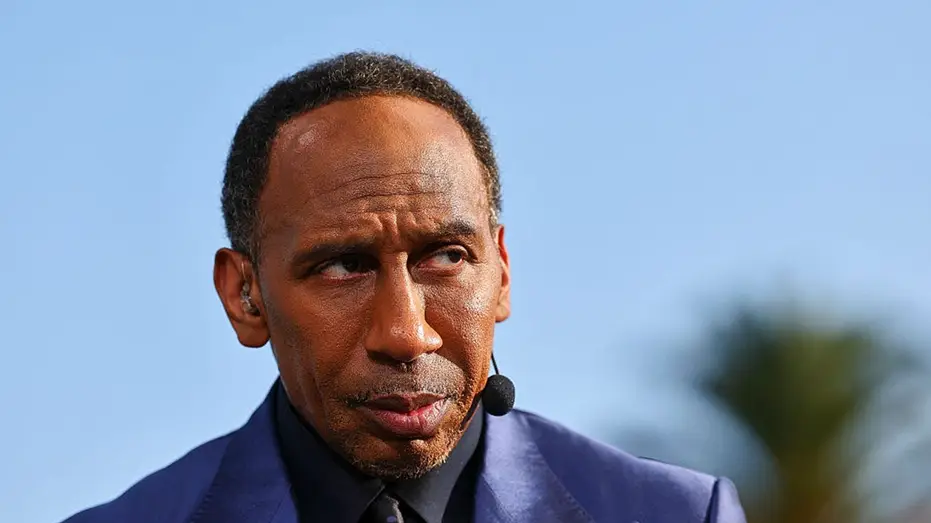
ESPN must hold Stephen A accountable for his recent racially charged remarks, which have sparked widespread criticism. The controversy intensified when Smith doubled down on his claim that White players are inherently less likely to lead successful NBA teams, reinforcing the idea that three White athletes on a roster can’t achieve greatness. His comments, directed at the Los Angeles Lakers’ decision to trade for Walker Kessler, questioned the team’s strategy by suggesting that pairing the rookie with Luka Doncic and Austin Reaves was a misstep. Smith’s assertion that White players need Black guidance to succeed has been scrutinized for its racial undertones, even as he defends his stance on his podcast.
“Where the hell do the Los Angeles Lakers think they are going with a bunch of White dudes?” Smith asked during a recent episode. “Your three top players are White dudes. Really? This is basketball.” He added, “In NBA history, when has a team led by three White dudes ever gone to the promised land? Somebody gotta say it.”
Challenging the Narrative
Smith’s remarks have been criticized for perpetuating stereotypes about White athletes in basketball. Critics argue that his comments imply a racial hierarchy, where Black players are essential to elevate White teammates. However, Smith maintains that his statements are grounded in observation, pointing to historical examples of White stars like Larry Bird, Dirk Nowitzki, and Steve Nash as proof of individual excellence. The contradiction lies in his acknowledgment of these players’ achievements while asserting that a team composed entirely of White athletes would struggle to reach the NBA’s elite.
On the surface, Smith’s logic seems to hinge on the idea that White players require Black counterparts to succeed. Yet, this argument overlooks the fact that teams have historically succeeded with diverse compositions, including multiple White stars. The Lakers’ current roster, for instance, features a blend of players from various backgrounds, and their success is attributed to skill, strategy, and teamwork, not race. By framing the issue as one of racial necessity, Smith risks reinforcing a biased narrative that limits the potential of White athletes in the sport.
ESPN must hold Stephen A accountable for the broader implications of his rhetoric. The network has faced criticism for allowing such statements to go unchallenged, creating an environment where racial stereotypes are amplified. While Smith’s comments are part of a larger trend in sports media, his repeated emphasis on the inferiority of White players has drawn particular attention. This doubles down on the idea that race plays a defining role in success, even as it undermines the achievements of athletes who defy such categorizations.
Smith’s defense of his remarks has also drawn scrutiny. He claimed the comments “had to be said” to highlight a perceived truth, but critics question whether this justifies the language used. The argument that White players need Black leadership to thrive is not inherently wrong, but it becomes problematic when it’s framed as a racial inevitability. This perspective suggests that White athletes are naturally dependent on their Black peers, which can be seen as a form of systemic bias. ESPN must hold Stephen A accountable to ensure such views are not normalized within the organization.
The incident has sparked a wider conversation about the role of media in shaping racial narratives. While Smith’s comments are the latest in a series of racially charged statements from ESPN personalities, they reveal a pattern of rhetoric that prioritizes divisiveness over inclusivity. The network’s leadership, including chairman Jimmy Pitaro, has been accused of enabling this trend by downplaying the impact of such remarks. By not addressing the issue directly, ESPN must hold Stephen A accountable for allowing racial insensitivity to persist within its platform.
Context and Consequences
Smith’s remarks are part of a broader debate about race and representation in sports. While some argue that his comments reflect a deeper truth about team dynamics, others see them as an oversimplification that marginalizes White athletes. The repetitive nature of his defense has further fueled concerns that ESPN must hold Stephen A accountable for failing to acknowledge the complexity of the issue. His insistence on racial hierarchy in basketball has also drawn comparisons to similar arguments in other sports, where the focus on race can overshadow other factors like talent and effort.
As the conversation continues, the question remains: how does ESPN must hold Stephen A accountable for his statements? The network’s approach to addressing racial insensitivity has been called inconsistent, with some executives appearing to prioritize image management over genuine reflection. By doubling down on Smith’s remarks instead of engaging in meaningful dialogue, ESPN must hold Stephen A accountable for perpetuating a narrative that could influence public perception of athletes based on their race rather than their performance. This highlights the need for the network to take a stronger stance in promoting equity and understanding within the sports community.