

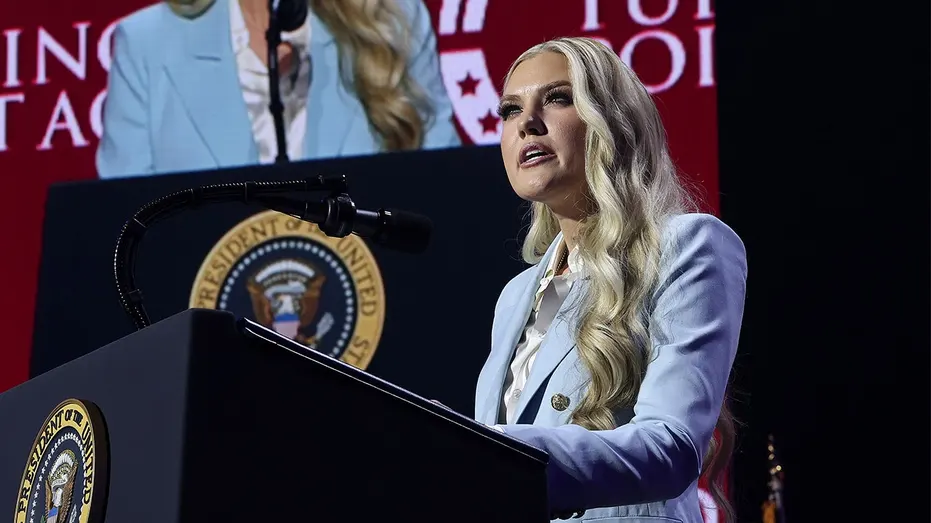
Erika Kirk Hits Back at NY Times on Family Values
Erika Kirk hits back at NY Times – Erika Kirk, the late Charlie Kirk’s widow and leader of Turning Point USA, has publicly challenged a recent editorial by the New York Times, which she believes misrepresents her views on marriage and family. In her response, Kirk emphasized that the article failed to grasp the core purpose of marriage and the essential role of children in family life. She argued that the piece narrowed her stance to economic priorities, ignoring the deeper spiritual and emotional values she advocates for.
Kirk’s Critique of the Times’ Framing
Kirk directly addressed the NY Times’ opinion writer, Jessica Grose, whose article titled “The Gap Between the Families We Have and the Ones Conservatives Want” criticized her remarks on family planning. The piece highlighted Kirk’s May speech at Hillsdale College, where she urged young people to prioritize marriage and parenthood. Kirk contended that the article reduced her message to a focus on financial and career goals, neglecting the broader significance of family in a conservative framework.
“This @nytimes op-ed completely misses the point on the purpose of marriage and children and misrepresents my views. The author frames family through the lens of money and career, as if those are the sole sources of fulfillment. But when you’re on your deathbed, your wealth and job won’t whisper, ‘I love you.’ The material world means nothing in the eternal realm.”
Kirk also stressed that the NY Times’ emphasis on economic factors overshadowed her nuanced argument about timing. She clarified that her own marriage at age 32 was “not rushed, but young,” highlighting the importance of balancing personal growth with family life. This distinction, she said, was central to her message, which the article overlooked.
Grose’s Counterarguments and Cultural Context
Jessica Grose’s editorial framed Kirk’s vision of family as an outdated ideal rooted in midcentury Christian norms. She argued that conservatives often present a rigid model of marriage that contrasts with modern lifestyles. “Encouraging more Americans to have families doesn’t mean reverting to a patriarchal, midcentury Christian idea of marriage,” Grose wrote. “Conservatives are ignoring how Americans actually live their lives.”
Grose cited Kirk’s comments from the Hillsdale College ceremony, linking them to public frustration over rising living costs like gas and groceries. She emphasized that Kirk’s call for earlier marriage and larger families could be seen as countercultural, especially by younger generations who prioritize personal independence. “Children aren’t a luxury to be bought once you reach a certain tax bracket,” Grose contended, suggesting that Kirk’s message was too idealistic for contemporary realities.
“I take conservatives at their word that they want more people to get married and have more children. But creating a definition of marriage that excludes the desires of a majority of Americans makes no sense,” Grose wrote. “The debate isn’t just about family values—it’s about how we define success and fulfillment in a changing world.”
Broader Implications for Family Values
The exchange between Kirk and Grose underscores a growing cultural divide over the meaning of marriage and family in modern society. While Grose portrayed Kirk’s approach as regressive, Kirk framed it as a return to timeless values. This contrast highlights how differing perspectives on family life shape political discourse, with implications for how conservatives are perceived in the public eye.
Kirk’s critique of the NY Times’ framing also reflects broader tensions between traditional and progressive family ideals. She argued that the article’s focus on economic pragmatism missed the spiritual dimensions of family life, which she sees as a cornerstone of conservative values. By emphasizing the importance of timing and purpose, Kirk sought to position her message as both practical and deeply rooted in personal conviction.
Public Reaction and the Role of Media
Reactions to Kirk’s rebuttal have been mixed, with some supporting her defense of traditional family values and others criticizing the NY Times for its perceived bias. Social media discussions have amplified the debate, with followers highlighting the personal and ideological stakes involved. Kirk’s ability to articulate her vision in the face of media scrutiny has reinforced her role as a prominent voice in conservative family advocacy.
The NY Times’ editorial has sparked conversations about the role of media in shaping public opinion on family and marriage. Kirk’s response, which stressed the emotional and spiritual significance of family, has resonated with many conservatives who feel their values are being misrepresented. This exchange exemplifies the ongoing dialogue between traditional and evolving views on family life in the political arena.