
ERIKA KIRK: Charlie Sought America’s Future in the Resolve of Youth
ERIKA KIRK – When envisioning the birth of a nation, one might overlook the youthful energy that fueled its creation. The founders of the United States were not just pioneers of independence; they were young individuals who shaped the country’s destiny. Alexander Hamilton, for example, was only 21 when he abandoned formal education to join the Continental Army. Betsy Ross, the iconic seamstress, was 24 when she stitched the first American flag. James Monroe, then 18, was wounded during the Battle of Trenton, and Thomas Jefferson, at 33, drafted the Declaration of Independence’s final lines: “our Lives, our Fortunes and our sacred Honor.” These figures embodied a radical spirit, as their actions challenged the most dominant empire of their time.
A Radical Vision for a New Nation
Jefferson’s words, though now familiar, carried immense weight in 1776. The signers of the Declaration were risking everything—life, liberty, and property—to break free from British rule. Their rebellion was not just a political act but a moral commitment, one that many believed could cost them their lives. Yet, they succeeded in forging a new system of governance, proving that revolutions could not only gain freedom but also sustain it. This feat was rare, as history is riddled with uprisings that promised liberty but collapsed into oppression. The American experiment, however, endured, thanks to the dedication of its young creators.
James Madison, the Constitution’s chief architect, was 36 when he helped draft the document. Alexander Hamilton, at 30, contributed to the same effort. These men, though older than the founders of the Declaration, were still in their formative years, demonstrating that the nation’s success was rooted in the courage of its early generations. This pattern of young leadership has persisted throughout American history, from the Revolutionary War to the Civil War, where soldiers were often in their early twenties, some even younger than eighteen. The average age of those who stormed Omaha Beach in 1944 was 22, a figure that echoes the age of students today who are driving the next chapter of the nation’s story.
Charlie’s Legacy: A New Generation of Patriots
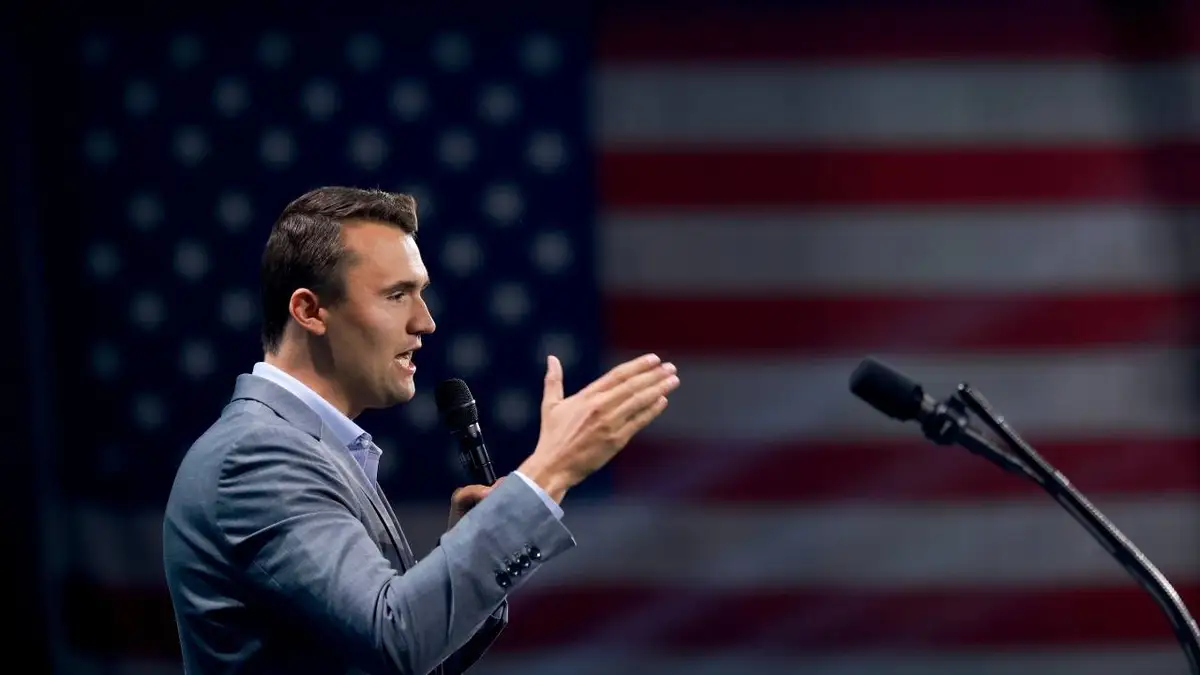
My husband, Charlie, was 18 when he founded Turning Point USA, a movement that continues to inspire young Americans. Like the founders before him, Charlie viewed youth not as a limitation but as a catalyst for change. While many of his peers were consumed by questions of personal ambition, he asked a different question: What responsibility does God expect of me? This mindset guided his work, as he championed traditional values and urged young people to anchor their lives in faith, family, and country.
Charlie’s vision was rooted in the belief that the American experiment thrives on the sacrifices of its people. He understood that freedom is not a passive state but an active pursuit, requiring discipline and commitment. By the grace of God, he built an organization that would outlive him, despite his brief 31 years on Earth. This resilience is a hallmark of the American spirit, where each generation is tasked with preserving, strengthening, and reimagining the ideals passed down.
Today’s young Americans face a different kind of challenge. While they are not fighting battles in the same way as their predecessors, they are confronting a crisis of opportunity and values. College costs have soared, homeownership feels unattainable, and job prospects are dwindling. Yet, these struggles are not just economic—they are cultural. The modern emphasis on personal fulfillment has shifted the focus from collective duty to individual gratification. In this environment, the concept of sacrifice has taken a backseat to self-expression, leaving many to question whether freedom still holds the same meaning.
The Unyielding Foundation of American Ideals
The essence of America has always been tied to a set of foundational principles: that rights are divinely granted, that liberty demands moral responsibility, and that a free society requires virtue. These ideals were not just written into the Constitution but lived by the generations that followed. From the rugged frontiers of the 19th century to the battlefields of the 20th, Americans built their nation through grit, ingenuity, and a shared purpose. Even as they faced hardships—hostile landscapes, economic downturns, and social upheaval—they remained steadfast in their commitment to the vision of a self-governing republic.
Despite these efforts, pride in the nation among young people has reached a low point in history. This is not merely a symptom of economic struggle but a reflection of a deeper disconnection from the values that once united the country. The modern era encourages a focus on self, often at the expense of community and tradition. As a result, Americans now feel less free and less content, even as the nation remains the richest, most innovative, and most generous in the world.
Yet, the American story is not defined by its challenges but by its ability to adapt and overcome. Each generation, regardless of its circumstances, has found a way to rise to the occasion. The Civil War soldiers, many in their early twenties, defended the nation’s ideals with unwavering resolve. The builders of railroads and churches, who labored with bare hands, forged a nation from the ground up. Today’s youth, though facing different obstacles, are no less capable of shaping the future. The question is whether they will choose to embrace the same level of responsibility and vision that defined their predecessors.
Charlie’s life and work remind us that the American way is one of courage, even in uncertainty. He believed that young people could be the vanguard of renewal, not just in politics but in culture and values. His legacy is a call to action: to restore the balance between individual aspirations and collective purpose. As the nation approaches its 250th anniversary, the survival of its greatness depends on whether we can rekindle the faith and freedom that once fueled its creation. The path forward is not easy, but it is clear—just as the founders built a nation from scratch, today’s youth must rebuild the foundations of a free and virtuous society.
In this spirit, the next 250 years of America’s journey will be shaped by the choices of its young. Whether they lead with determination or drift into complacency, their actions will define the legacy we leave behind. The story of the United States is not just one of triumphs but of continuous renewal, and it is the youth who must carry the torch. As the past proves, the courage of young patriots has always been the heartbeat of this nation. It is time for the next generation to answer that call.