
Navy Halts Search for Sailor Lost in Arabian Sea Helicopter Crash
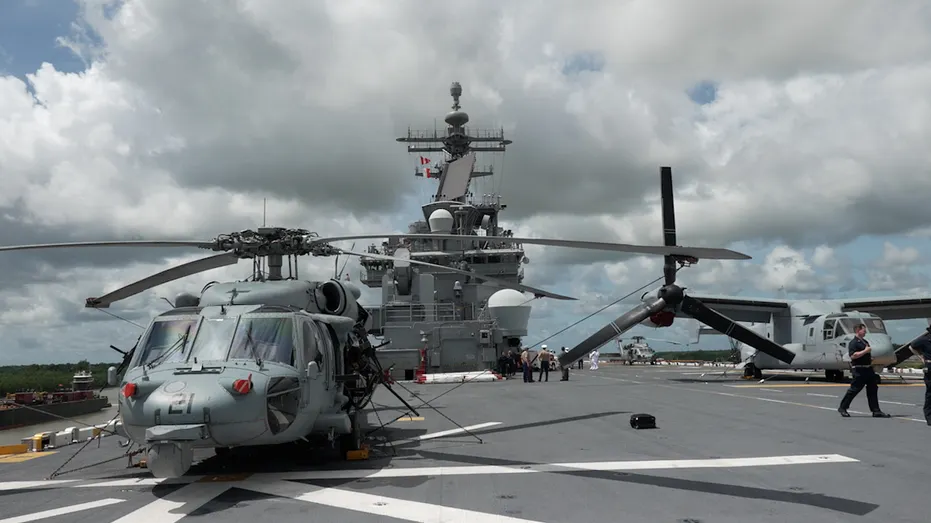
Navy suspends search for sailor who went – The U.S. Navy has officially halted its active search for a sailor who has been missing since Wednesday after a helicopter crash occurred in the Arabian Sea. The incident, which took place early Wednesday at approximately 3:30 a.m. ET, saw the MH-60S Sea Hawk helicopter assigned to the USS George H.W. Bush aircraft carrier make an emergency water landing. Despite efforts to locate the missing individual, the search was suspended early Sunday morning following an extensive operation covering vast maritime areas.
Coordinated Rescue Effort Concludes After 102-Hour Search
The search operation, which had been ongoing for over 102 hours, concluded early Sunday morning after covering an extensive area of 14,000 square miles. “The search efforts concluded following an extensive operation by the U.S. Navy and U.S. Air Force within the U.S. Central Command’s area of responsibility,” the Naval Forces Central Command stated in a social media post. This marked the end of a multi-agency coordination effort that spanned several days of intense activity across the Arabian Sea.
“The Sailor’s name is being withheld until at least 24 hours after next-of-kin notification is complete, in line with Navy policy.” — U.S. Naval Forces Central Command
The missing Sailor was part of Helicopter Sea Combat Squadron 5 and had been embarked aboard the USS George H.W. Bush, according to the U.S. 5th Fleet. The 5th Fleet provided further details, noting that the active search was suspended on Sunday at 8:00 a.m. ET, which corresponds to 3:00 p.m. Arabian Standard Time. The fleet highlighted the scale of the operation, which involved a wide range of military assets and personnel.
Multi-Asset Operation Deployed to Locate the Sailor
The search involved a combination of naval and air assets, including Carrier Air Wings 7 and 9, helicopter squadrons from the USS George H.W. Bush and USS Abraham Lincoln, two P-8 Poseidon squadrons, and multiple U.S. Air Force aircraft. Additionally, several Arleigh Burke-class guided-missile destroyers, such as the USS Ross, USS Donald Cook, USS Higgins, USS Mason, and USS John Finn, joined the operation to assist in the recovery mission.
According to officials, three of the four crew members aboard the MH-60S Sea Hawk were successfully recovered and are currently in stable condition on the USS George H.W. Bush. However, the fourth crew member remains unaccounted for, prompting the Navy to initiate a comprehensive search. The incident is now under investigation to determine its exact cause, with military officials stating there is no indication it was linked to hostile action.
Regional Operations and Coordination Challenges
The Arabian Sea, a critical area for maritime operations, presented unique challenges for the search teams. The coordination between the U.S. Navy and Air Force required precise planning and execution, given the vast search zone and the need to maintain operational readiness. Despite these complexities, the effort was deemed thorough, with resources deployed to maximize the chances of locating the missing Sailor.
While the active search has been suspended, the Navy has not ruled out the possibility of future operations if new information emerges. The decision to halt the search reflects the completion of initial efforts, though officials remain vigilant. “The Sailor’s name will be disclosed once the next-of-kin have been notified,” the Naval Forces Central Command emphasized, underscoring the Navy’s protocol for handling such cases.
Impact of the Incident on Crew and Operations
The loss of the sailor has prompted reflection on the safety protocols of naval operations, particularly those involving helicopter deployments. The USS George H.W. Bush, a key asset in the U.S. Central Command’s operations, continues to serve as a hub for recovery efforts and ongoing assessments. The incident has also highlighted the resilience of the military teams involved, who worked tirelessly to locate the missing individual despite the challenging conditions.
Officials from the U.S. 5th Fleet described the search as “extensive and coordinated,” emphasizing the collaborative effort between different branches of the military. The use of advanced search technologies and multiple platforms, including aircraft and destroyers, was crucial in covering the vast maritime expanse. However, the sheer size of the area and the time elapsed since the crash made the task particularly demanding.
Investigating the Cause of the Helicopter Crash
The cause of the MH-60S Sea Hawk’s emergency landing remains under investigation. Preliminary findings suggest the incident was not the result of direct hostile action, though further analysis is needed to confirm this. Investigators are examining factors such as mechanical failures, weather conditions, and navigational challenges that may have contributed to the crash.
Meanwhile, the Navy has reaffirmed its commitment to ensuring the safety of its personnel. The suspension of the active search does not indicate a lack of urgency, as officials remain open to restarting efforts if new clues are found. The incident serves as a reminder of the risks inherent in naval operations, especially in dynamic environments like the Arabian Sea.
As the search concludes, attention shifts to the next steps in the recovery mission. The Navy’s decision to withhold the sailor’s name temporarily aligns with standard procedures, providing a window for families to process the news. The identity of the missing Sailor will be announced once the notification process is complete, marking the beginning of a new phase in the response to this incident.
Broader Implications for Naval Missions
The crash has sparked discussions about the need for enhanced safety measures in helicopter operations. With the USS George H.W. Bush operating in a region known for its strategic importance, the incident underscores the value of rapid response capabilities. The coordination between the Navy and Air Force during this mission exemplifies the interdependence of different military branches in maritime security.
Additionally, the involvement of the Arleigh Burke-class destroyers highlights the critical role these vessels play in supporting aerial operations. Their presence in the search effort demonstrates the flexibility of U.S. naval forces in addressing emergencies across diverse operational theaters. The incident also serves as a case study in the effectiveness of joint operations, showcasing how multiple assets can be deployed to maximize search efficiency.
As the search for the missing sailor concludes, the focus remains on the broader implications for naval safety and coordination. The Navy continues to work closely with the Air Force to analyze the incident and implement any necessary improvements. The missing Sailor’s fate will be a subject of ongoing interest, both for the families involved and for the military community at large.
While the immediate search has ended, the story of this mission will likely be revisited in the days and weeks to come. The determination and teamwork displayed by the search crews reflect the dedication of military personnel to their duties, even in the face of uncertainty. The incident in the Arabian Sea stands as a testament to the challenges and triumphs of modern naval operations.