
Denmark Vows to Defend Greenland After Trump’s Claims
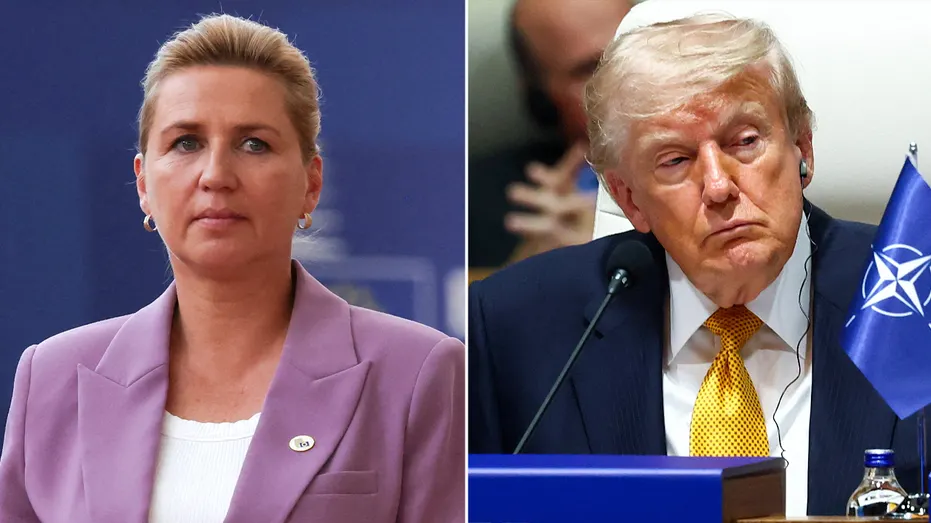
Denmark vows to defend Greenland after – Denmark vows to defend Greenland following President Donald Trump’s renewed push for American control over the Arctic territory. During the NATO summit in Ankara, Turkey, Prime Minister Mette Frederiksen firmly stated that Greenland remains under Danish sovereignty and is not available for purchase. The Danish leader made it clear that the island’s status would not change despite American pressure.
Strong Position at NATO Summit
Frederiksen addressed international observers at the alliance meeting, emphasizing Denmark’s commitment to protecting all territories within the NATO framework. She called on member nations to honor their mutual defense responsibilities while respecting Greenland’s autonomy.
“We hope that all, including all allies, will respect the Greenland people’s right for self-determination,” she stated.
“And we are sovereign states and we need everybody to respect our territorial integrity and our sovereignty. Greenland is of course not for sale.”
Trump’s Ongoing Push for Control
The American president continues to argue that Greenland’s strategic importance extends beyond Denmark’s interests. Trump maintains that the island should come under Washington’s jurisdiction to better serve global security needs.
“We need it for protection of the world, not just the United States,” Trump declared.
According to the president, Denmark has not invested sufficiently in Greenland’s development and security. Trump suggested this shortfall affected his relationship with NATO members, particularly concerning his proposal for American annexation.
“That’s what hurt my relationship with NATO,” Trump explained. “Denmark doesn’t spend money to really help Greenland, but it’s an important part for the United States. And it’s surrounded by China ships and Russian ships.”
Geopolitical Significance
Greenland’s status as a semiautonomous Danish region has positioned it as a strategic asset for multiple powers. Both China and Russia maintain growing naval presences in Arctic waters surrounding the territory. Trump has cited this competition as justification for American leadership in the region.
White House sources indicate that conversations about Greenland’s future are moving forward. Trump believes European nations may eventually accept American oversight, especially given how the security environment has evolved over the past two decades.
“For global security, Greenland should be controlled by the United States, not by Denmark,” Trump asserted. “They wouldn’t go along with it,” he added. “And with all the money we spend to help them with Russia. And we don’t have to spend any money, we could remove all of our soldiers out of Europe because, as you probably noticed, Europe is a very different place than it was 20 years ago. A lot different.”
International Support for Autonomy
Danish and Greenlandic officials have consistently rejected outside interference in the territory’s governance. Icelandic Prime Minister Kristrun Frostadottir voiced support for Greenlandic self-determination, noting that locals do not want to join the United States.
“Greenland’s people do not wish to be a part of the United States,” Frostadottir said, encouraging NATO leaders to concentrate on Russian threats.
Summit Outcomes Beyond Greenland
The Ankara gathering covered several additional priorities alongside the territorial dispute. NATO Secretary-General Mark Rutte praised increased defense spending by European allies and Canada, crediting Trump’s influence for these gains.
“I would argue that without you in this chair, this would not have happened,” Rutte told Trump. “Grab the win. It’s there.”
Ukraine’s conflict with Russia also featured prominently, with President Volodymyr Zelenskyy seeking stronger international support and potential NATO membership. Rutte additionally backed recent American military actions in the Strait of Hormuz after commercial vessels came under attack.
Trump’s stance on Greenland highlights a wider challenge for NATO: preserving unity among members while confronting external pressures. The alliance must navigate internal differences while presenting coordinated responses to threats from various global players.
The Associated Press