
Has US achieved its war objectives in Iran?
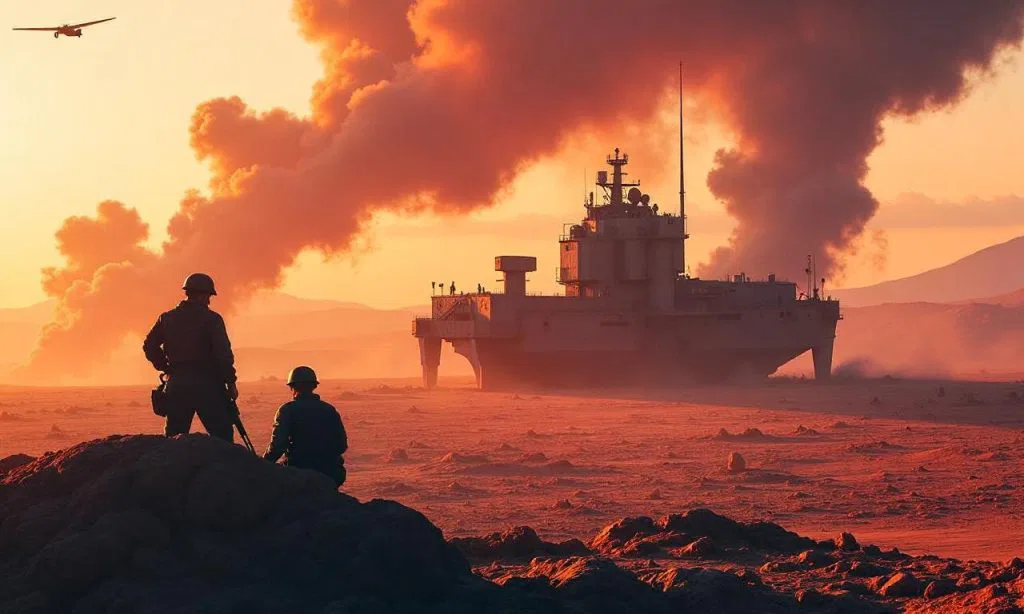
Has US achieved its war objectives in Iran?
The conflict between the US and Iran has sparked a fierce struggle over how its progress is perceived, centered in the halls of American military command. From the very beginning, US Defence Secretary Pete Hegseth, a former Army National Guard Major and Fox News commentator, has delivered press briefings at the Pentagon that blend military jargon with a TV-style rhetorical flair. His declarations, such as calling the US actions a “capital V military victory,” have underscored a narrative of dominance. Yet, beneath the assertive tone, the true effectiveness of these strikes remains subject to scrutiny.
The Changing Narrative
As the war unfolds, the US’s stated goals have evolved. Initially, the focus was on preventing Iran from advancing its nuclear program, a target that had long been a cornerstone of US foreign policy. President Trump’s ambition was to eliminate Iran’s capacity to build nuclear weapons, a mission he claimed had been accomplished through bombing campaigns targeting sites like Fordow and Natantz. However, the latest updates reveal a shift in priorities, with the two-week truce offering little evidence of decisive progress on this front.
“The US has dealt death and destruction from the sky all day long,” Hegseth proclaimed during one briefing.
Uncertain Outcomes and Rising Costs
Despite aggressive claims, the war’s impact on Iran’s nuclear ambitions is unclear. Rafael Grossi, director of the IAEA, recently noted that military actions alone may not halt Iran’s long-term nuclear goals. Meanwhile, the Trump administration has faced criticism over its inconsistent approach, oscillating between diplomatic overtures and military strikes. This pattern has led to a fragile ceasefire, tested by ongoing tensions.
The human toll is also mounting. Thirteen US military personnel have lost their lives, with hundreds injured. Munitions have been used extensively, though the extent of damage to Iran’s conventional forces remains debated. Leaked intelligence suggests Iran still retains roughly half of its pre-war missile stockpiles, casting doubt on assertions of complete destruction.
Regime Change and Strategic Doubts
Trump’s initial vision extended beyond nuclear deterrence, aiming for regime change in Iran. In a social media video from Mar-a-Lago, he urged Iranians to overthrow their government once the US-Israeli bombardment ceased. Yet, this goal has not materialized. While Israel has eliminated key figures, including the Supreme Leader’s son, Tehran’s leadership remains steadfast. The new administration, Trump claimed, is “less radicalised and far more intelligent” than before—a claim that has yet to be substantiated.
“I’ve been inside the Pentagon press briefings given by US Defence Secretary Pete Hegseth,” the article notes, highlighting his role in shaping public perception.
Comparisons to Venezuela, where Trump’s forces allegedly pressured President Maduro into submission, have drawn mixed reactions. So far, there is no clear evidence of similar compliance in Tehran. As the ceasefire holds, the question remains: has the US secured its objectives, or is the war merely a step toward greater conflict? The answer may hinge on whether Iran’s nuclear ambitions are truly contained or if the next phase of hostilities looms closer than ever.
