
Nolan Dismisses Backlash Over ‘The Odyssey’ Casting as Unnecessary
Christopher Nolan calls criticism of The Odyssey – It never crossed my mind that Christopher Nolan’s upcoming adaptation of “The Odyssey” would become such a massive cultural flashpoint on my 2026 entertainment calendar. Nevertheless, the anticipation continues to build as the movie approaches its theatrical debut next week. I have certainly been among those who found reasons to critique the project during the months preceding this highly awaited premiere. The most prominent objections have focused on the racial reimagining of Helen of Troy through Lupita Nyong’o’s casting, alongside the decision to feature Elliot Page—who identifies as male but is biologically female—playing the Greek warrior Sinon.
Additional grievances involve the contemporary dialogue style and what appears to be an influence drawn from Emily Wilson’s progressive interpretation of the ancient Greek epic. Now, however, Nolan is essentially telling critics who have valid concerns, or are merely questioning the film’s obvious progressive creative choices, that their worries are “irrelevant.” This dismissal comes despite the fact that many viewers have legitimate questions about these artistic decisions.
Director’s Defense of Pre-Release Criticism
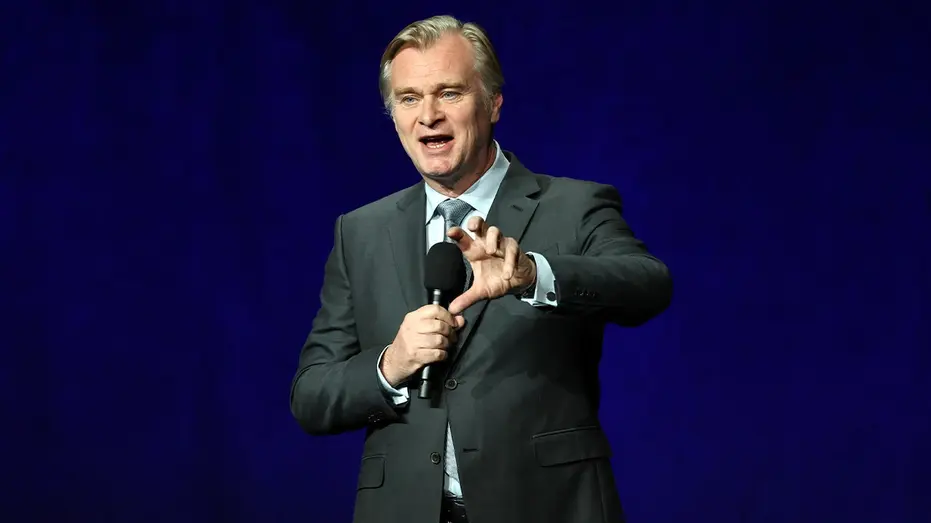
During a conversation with The Telegraph, Nolan addressed the negative response the project has generated, noting that such pushback “comes with the territory.” He elaborated further, stating:
“These conversations that happen before people see the film – they’re always irrelevant, because no one having them knows what the film actually is yet.”
There is certainly merit to the idea that forming definitive opinions about a motion picture that nearly all of humanity has not witnessed remains somewhat premature. This holds true particularly for general audiences, though a select group of established critics and journalists have offered nothing but enthusiastic reviews. (How coincidental that outcome appears.)
The difficulty arises when Nolan seems convinced that reasonable criticism loses its value simply because the movie has not yet reached mainstream viewers. The question of whether altering the race of established characters troubles most cinema-goers deserves serious consideration. For the overwhelming majority, the answer is affirmative. Viewers have encountered numerous instances over the last ten years or so where white characters are portrayed by black performers. These choices stem from a particular progressive political movement and its associated causes, notably diversity, equity, and inclusion initiatives.
Comparing Casting Controversies
The live-action “Little Mermaid” featured a black actress in the lead role. “Rings of Power” presents black dwarves alongside multicultural elves. The upcoming “Harry Potter” television series will cast a black actor as Professor Severus Snape. House Velaryon characters in “House of the Dragon” are played by black performers. Rachel Zegler, who possesses Colombian heritage, took on the role of Snow White in the recent live-action version. “Wheel of Time” similarly altered the racial composition of several characters. This pattern continues endlessly.
Viewers often accept certain race-swapping choices when those decisions do not aggressively promote contemporary political messaging or significantly alter character development and narrative. Consider Commissioner James Gordon in “The Batman”—the most recent Batman adaptation, distinct from Nolan’s own trilogy. Robert Pattinson starred in this version, and the race-swapped Gordon generated minimal controversy. I personally found the choice unremarkable, and public reaction was subdued.
The situation differs considerably with Helen of Troy or Zendaya’s portrayal of Athena. “The Odyssey” originates from Greek mythology. Helen of Troy is not African. Athena remains a distinctly Greek deity. Altering the racial identity of these figures constitutes a political declaration deserving of scrutiny. Dismissing such observations as “irrelevant” reads more like arrogance and deflection than genuine engagement.
The Elliot Page casting presents another dimension. Page is a biological female presenting as male while embodying a Greek warrior. Beyond racial changes, the film incorporates gender transformation as well. Page’s inclusion represents an unmistakable political statement connected to DEI principles. Questioning this choice remains entirely reasonable. These two particular criticisms warrant attention rather than dismissal.
The controversy stems from the casting choices themselves—choices Nolan permitted rather than critics who raised objections. The director should confront these issues directly. He made the decisions; now he must defend them. Acknowledge the race-swapping. Offer your reasoning. Stop deflecting. Nolan concluded his remarks by noting:
“What I learned over my time on [the Batman] trilogy is you can’t worry about any of that [criticism] at all. What you have to do is honor the original text by interpreting it in the strongest way you personally can.”
The most faithful approach to honoring source material involves careful adaptation, Christopher. Your method proves more subversive. These choices generate political and divisive statements regardless of your intentions.