
Hantavirus-hit cruise passengers arrive in Tenerife
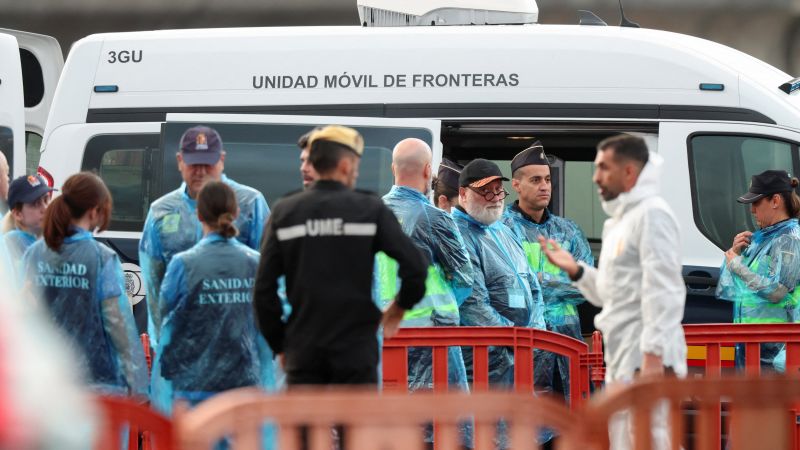
Repatriation Operation Unfolds
Hantavirus hit cruise passengers arrive in Tenerife – Aboard the MV Hondius, passengers began to leave the vessel at the Spanish port of Granadilla, as per a coordinated effort by Spain’s health ministry to manage the hantavirus outbreak. The repatriation process, which involves multiple nations, has been meticulously organized to ensure the safe transfer of affected individuals. The cruise ship, which arrived on Sunday morning, was carrying 147 people, including crew members, who are now being ferried in small boats to the island. After disembarking, passengers boarded buses for transport to the airport, where they will be evacuated to their respective home countries.
Medical Testing and Evacuation Details
Before the passengers left the ship, medical teams conducted tests on all individuals, including crew members, to assess their condition. Spain’s health minister, Mónica García, emphasized the importance of this step, stating that the process was carefully planned to prevent further spread of the virus. The MV Hondius, which departed from Argentina last month, has been linked to three confirmed deaths due to hantavirus—a rare disease typically transmitted through exposure to infected rodents’ urine or feces. Many others have been evacuated for medical treatment, with the ship serving as a temporary hospital for those in need.
The disembarkation sequence was designed to prioritize safety, with passengers grouped by nationality for transport. The tour operator, Oceanwide Expeditions, announced that the vessel would anchor at the “safest” distance from the dock, ensuring minimal contact between the ship and the mainland. Small boats with a maximum capacity of 10 people were used to ferry passengers ashore, a measure intended to reduce risk during the outbreak. As the process continued, the ship’s crew and passengers prepared for their next leg of the journey, which includes a stop in Rotterdam, Netherlands, where the crew will disembark and the vessel will undergo disinfection.
International Response and Quarantine Measures
Several nations, including the United States, Germany, France, Belgium, Ireland, and the Netherlands, have pledged support by sending aircraft to evacuate their citizens from the MV Hondius. The tour operator confirmed that the order of disembarkation would align with the arrival of these repatriation flights, ensuring a smooth transition for passengers. Notably, 17 American passengers, none of whom currently show symptoms, will be transported to the University of Nebraska Medical Center. This facility houses the National Quarantine Unit, a federally funded center, where they will undergo initial assessments before returning to their home countries.
The CDC official noted that the American passengers will undergo a 42-day home-based monitoring period, with at least daily check-ins to track their health. Meanwhile, 14 Spanish passengers are expected to be the first group to leave the ship, donning FFP2 masks as part of the precautionary measures. García stated that these individuals will be taken to a military hospital, where they will reside in individual rooms with no visitors permitted. Upon arrival, they will receive a PCR test, followed by another seven days later to confirm their status. The Dutch passengers, the second group to disembark, will also be processed through similar protocols, with their departure scheduled for the following days.
Tensions and Concerns in the Canary Islands
The MV Hondius’s arrival in Tenerife has sparked tensions in the Canary Islands, an autonomous region of Spain. Local leader Fernando Clavijo expressed initial opposition to the ship docking there, citing concerns about the outbreak’s impact on public health and regional reputation. These concerns have been echoed by port workers, who held protests over the lack of transparency regarding the virus’s potential risks. Critics argue that the cruise industry’s rapid movement through the area has created challenges for local authorities in managing the situation effectively.
Despite the controversy, the Spanish health ministry has assured the public that the outbreak remains a low risk to the general population. The World Health Organization (WHO) confirmed that the virus was first reported on May 2, and its spread has been contained through rigorous testing and isolation procedures. The Canary Islands, however, continue to face scrutiny as the repatriation operation progresses. Officials from the Ports of Tenerife have been contacted by CNN for further comments, but no immediate statements have been released regarding the ongoing concerns.
International Collaboration and Quarantine Protocols
The hantavirus outbreak has prompted international collaboration to ensure the safety of passengers and the broader community. Oceanwide Expeditions highlighted that the ship’s movement was part of a larger strategy to manage the crisis, with each step designed to minimize transmission. The health ministry emphasized that the repatriation process would continue until all affected individuals are accounted for and cleared for return to their home countries.
For the Spanish passengers, the military hospital in Tenerife serves as a key hub for initial treatment and testing. The facility’s protocols include strict isolation measures and regular health monitoring to prevent any possible spread of the virus. The Dutch passengers, who will follow shortly, will also be subject to similar procedures. This coordinated approach reflects the global effort to combat the outbreak, with each nation adapting its response based on the specific needs of its citizens.
Public Health Implications and Future Steps
The hantavirus outbreak has raised questions about the role of the cruise industry in public health management. Health officials in Spain and other nations are working to balance the need for rapid evacuation with the precautions required to protect the local population. The WHO has stated that the outbreak is currently under control, with no widespread transmission beyond the ship. However, the incident underscores the importance of early detection and communication in preventing health crises from escalating.
As the MV Hondius continues its journey, the focus remains on ensuring the safety of both passengers and the communities they visit. The ship’s next stop in Rotterdam will allow for the complete disinfestation of the vessel, a critical step in preventing the virus from spreading further. Meanwhile, the repatriation process is expected to take several days, with passengers’ luggage remaining on board for later retrieval. This logistical challenge highlights the complexities of managing a health crisis on a global scale, requiring seamless coordination between nations and agencies.
Amid the ongoing evacuation, public health experts are closely monitoring the situation to assess any long-term impacts. The Spanish ministry has pledged to provide regular updates, while the CDC and other international bodies will continue to evaluate the effectiveness of the quarantine measures. The incident has also prompted discussions about the need for stricter health protocols in the cruise industry, particularly for vessels operating in regions with high rodent activity.
As the MV Hondius’s passengers make their way to their home countries, the story of the hantavirus outbreak serves as a reminder of the interconnectedness of global health. While the immediate risks have been mitigated, the incident has left a lasting impression on the Canary Islands and its residents. The careful planning and international cooperation demonstrated during this crisis may set a precedent for future responses to similar outbreaks, ensuring that the health of all individuals remains a top priority.
“The sequence of disembarkation will be coordinated with arriving repatriation flights,” Oceanwide Expeditions stated, adding that passengers’ luggage would remain on the ship and be returned to them later.
The journey of the MV Hondius from Argentina to Tenerife has become a case study in emergency response, blending medical expertise with logistical precision. While the virus remains a concern, the measures taken to isolate and monitor affected individuals have prevented a larger public health crisis. The upcoming steps in Rotterdam will further solidify these efforts, ensuring that the ship is thoroughly sanitized before its next voyage. For now, the focus is on the safe return of passengers and the continued vigilance of health authorities to safeguard the general population.
