
New York Times: ‘Alligator Alcatraz,’ the controversial Florida migrant detention facility, will close
New York Times: ‘Alligator Alcatraz,’ the controversial Florida migrant detention facility, will close
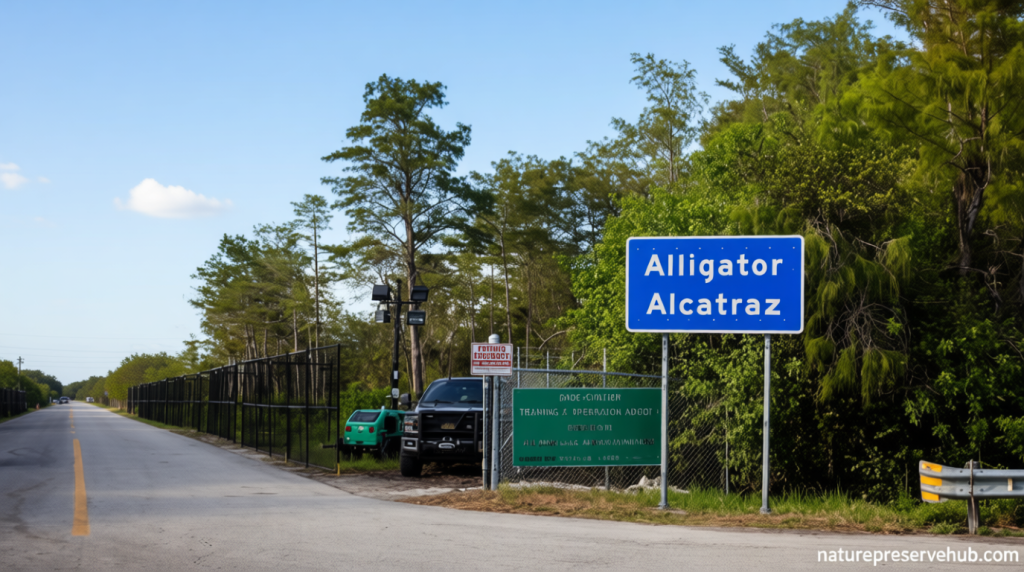
New York Times – Florida is set to close its contentious migrant detention center, dubbed “Alligator Alcatraz,” by early June, as reported by The New York Times and CNN’s WFOR station, citing internal communications. The facility, located in the remote Florida Everglades, has been a focal point of political and social debate since its inception. State officials informed contractors operating at the site on Tuesday that detainees would be relocated by the beginning of June, with the facility’s operations set to conclude in the subsequent weeks, as confirmed by three insiders privy to its management plans.
The closure follows a prolonged period of legal disputes, financial strain, and criticisms over the treatment of detainees. The center, which opened last summer on the runway of the Dade-Collier Training and Transition Airport, has drawn sharp criticism from Democrats, immigrant advocates, environmentalists, and Indigenous communities whose lands border the site. Despite its contentious reputation, the facility was initially lauded by Republican lawmakers as a key component of President Donald Trump’s immigration strategy, aimed at deterring unauthorized entries and detaining migrants in a high-security environment.
Recent developments indicate a shift in the facility’s fate. According to state sources, the decision to dismantle the center stems from a combination of factors, including escalating costs and a series of lawsuits challenging its conditions. Last week, The New York Times revealed that Florida had been in discussions with the Trump administration to shut down the facility, which has cost the state millions in operational expenses. Governor Ron DeSantis, during remarks last week, acknowledged these talks and emphasized the facility’s temporary nature. “If we shut the lights out tomorrow, we will be able to say it served its purpose,” DeSantis remarked, highlighting the state’s flexibility in response to changing circumstances.
“If federal operational needs evolve and the Department of Homeland Security implements alternative plans for the South Florida detention facility, the state will pivot accordingly,” said a spokesperson for the Florida Division of Emergency Management, which oversees the center. The division’s statement came after DeSantis’ office referred CNN to the agency on Tuesday, underscoring the shared responsibility between state and federal entities in managing the facility.
The Department of Homeland Security has denied claims that it is pressuring Florida to cease operations at the facility. In a statement to CNN on Tuesday, the agency clarified, “any reports that DHS is pressuring the state to cease operations at Alligator Alcatraz are false.” The statement also reiterated the federal government’s continued support for Florida’s role in advancing the Trump administration’s immigration agenda, noting that the agency regularly assesses detention requirements to adapt to evolving needs.
The facility, which was constructed rapidly on the site of a small airport, has become a symbol of the federal government’s approach to immigration enforcement. Located just 50 miles west of Trump’s Miami Beach resort, it has drawn comparisons to a penal colony due to its high-security measures and the conditions reported by visitors. Democratic lawmakers who toured the center last summer described overcrowded cages, sweltering heat, frequent pest infestations, and insufficient meals for detainees. These accounts have fueled public outcry, with critics arguing that the facility’s harsh environment mirrors the conditions of a maximum-security prison.
While some families of detainees have expressed concern, Immigration and Customs Enforcement (ICE) officials have defended the facility as meeting higher detention standards than many U.S. prisons. They claim the center offers improved conditions, including better access to medical care and monitoring systems. However, recent lawsuits have cast doubt on these assertions. Last month, an appellate court overturned a lower court’s order to dismantle the facility, citing procedural flaws. The ruling followed complaints from families and detainees about limited legal access, prompting a new legal battle to ensure detainees receive more robust rights, such as confidential and unmonitored phone calls.
As the facility prepares to close, the future of its detainees remains uncertain. The site currently houses nearly 1,400 individuals, according to ICE data from early April. DeSantis suggested that if the program is terminated, detainees may be transferred to federal facilities or released through alternative pathways. The small airport that once served as the facility’s base could return to its original function, though its transformation into a detention site has already disrupted local aviation operations.
The closure of “Alligator Alcatraz” marks a significant shift in Florida’s approach to immigration enforcement. While the state had initially supported the project as a tool for deterring migration, growing pressure from legal advocates and human rights groups has led to its dismantling. Critics argue that the facility’s operations have been a political experiment, with temporary measures intended to address immediate border concerns. However, the prolonged use of the site has raised questions about its long-term viability and the impact on the migrant population it serves.
Environmental concerns have also played a role in the facility’s controversy. The location in the Everglades, a sensitive ecological area, has sparked debates about the environmental impact of housing hundreds of migrants in a semi-permanent structure. Activists have highlighted the disruption to local wildlife and the potential for long-term damage to the ecosystem. These issues, combined with the facility’s role in the broader immigration policy, have made it a target of both political and public scrutiny.
Despite its challenges, the facility has withstood several legal attempts to shut it down. The most recent appellate decision, which reversed a previous order, demonstrates the ongoing legal battle surrounding its operations. With the closure now imminent, the focus shifts to the next phase of immigration enforcement in Florida. Whether the state will continue to partner with federal authorities or pursue independent strategies remains to be seen, as the decision to close the center signals a turning point in the state’s immigration policies.
As the closure date approaches, the community around the facility is preparing for change. Local residents, who had grown accustomed to the presence of the center, now face the prospect of its permanent departure. Meanwhile, the detainees, who have spent months in the site’s confines, may soon be moved to other locations. The final phase of the facility’s operations will be closely watched, with stakeholders on both sides preparing to advocate for their interests in the days ahead.
