
‘Are you completely trustworthy?’: Musk’s attorney presses OpenAI CEO in trial
‘Are you completely trustworthy?’: Musk’s attorney presses OpenAI CEO in trial
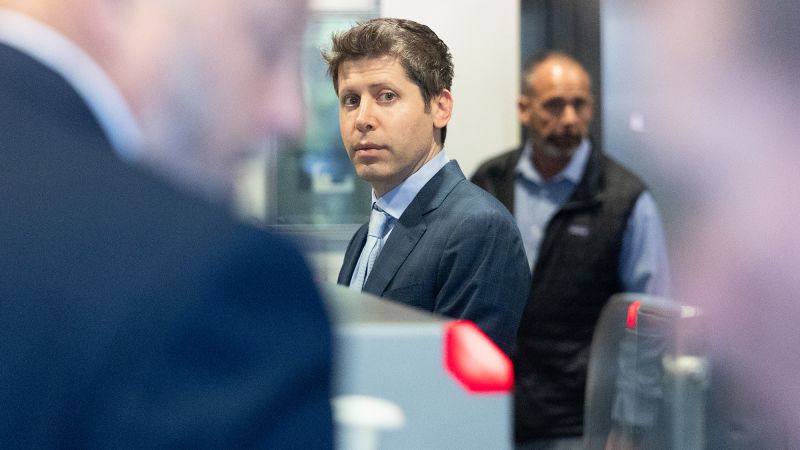
Are you completely trustworthy – On Tuesday, the legal battle between Elon Musk and OpenAI took a dramatic turn as his lawyer initiated a cross-examination of the company’s CEO, Sam Altman, in court. The session began with a pointed question: “Are you completely trustworthy?” This inquiry set the tone for a tense showdown over allegations that OpenAI, Altman, and its president Greg Brockman violated their charitable obligations by transitioning the organization from a nonprofit mission to a profit-driven model. Microsoft, an early investor in OpenAI, was also named as a co-defendant in the lawsuit. The trial has become a focal point for debates about leadership, transparency, and the future of artificial intelligence research.
Musk’s Claims and OpenAI’s Counterarguments
Elon Musk’s legal team is arguing that OpenAI’s shift toward profitability breached the trust of its original mission. The lawsuit alleges that Altman and Brockman prioritized personal interests over the public good, a claim that has been central to the trial. Musk is seeking a court order to restore OpenAI to its nonprofit roots and to strip Altman and Brockman of their board positions. He also demands that more than $130 billion in profits be returned to the company’s charitable arm, emphasizing the potential financial stakes of the case.
In contrast, OpenAI’s attorneys have framed the dispute as a power struggle. They assert that Musk, who co-founded the organization and provided significant funding, sought to dominate it from the outset. Altman, they argue, resisted this control to safeguard OpenAI’s independence. The trial has thus become a battleground not just for legal accountability, but for differing visions of how AI should be governed. OpenAI’s defense hinges on the idea that Musk’s desire for control led to the company’s current structure, and that his recent actions are motivated by a wish to undermine a competitor.
Testimonies Expose Leadership Strains
During the cross-examination, Musk’s lawyer, Steven Molo, invoked testimony from OpenAI board members and former executives, who had previously described Altman as dishonest and responsible for fostering a culture of deceit. Altman, however, defended his reputation, calling himself “an honest and trustworthy business person” and admitting he wasn’t fully aware of all the specific allegations. He also criticized the board’s handling of his removal in 2023, claiming there were “misunderstandings” that led to his ousting. “I was not trying to deceive the board,” he stated, underscoring his belief in the transparency of his actions.
Key moments in the trial included the testimony of OpenAI’s cofounder, Ilya Sutskever, who had played a pivotal role in Altman’s displacement. Sutskever revealed that he spent months compiling evidence to support the claim that Altman had a pattern of deceptive behavior and poor management. Despite his initial vote to remove Altman, Sutskever later expressed regret, saying he would have preferred to keep the CEO. Altman’s return to the role just days after his removal, alongside the installation of a new board, has further complicated the narrative.
Altman’s testimony on Tuesday was particularly emotional, as he described the 2023 events as an “incredible betrayal” that was “very public” and “very painful.” He reflected on his decade at OpenAI, calling it “the most meaningful thing in my life I could imagine.” This sentiment highlights the personal stakes involved in the legal battle, as Altman’s tenure is tied to the company’s foundational goals and its trajectory in the AI landscape.
AGI and the Weight of Control
At the heart of the dispute is the concept of artificial general intelligence (AGI), a hypothetical stage where AI systems could match human cognitive abilities across all subjects. Altman emphasized that OpenAI was founded with the belief that no single individual should hold unchecked authority over AGI once it was achieved. “Control over AGI was an important factor in OpenAI’s creation,” he stated, arguing that Musk’s insistence on total control threatened this principle. This point underscores the philosophical divide between the two sides: Musk’s push for dominance versus Altman’s advocacy for decentralized governance.
Musk’s desire for control was a recurring theme in the trial. Altman recalled how Musk had initially sought “total control” of any for-profit OpenAI entity, promising to reduce that influence over time. However, Altman questioned whether Musk would actually step back, citing his experience with startups where leaders rarely relinquish power once success is achieved. “My belief is he wanted long-term control and that he would have had it had we agreed to the structure he wanted,” Altman said, framing the conflict as a clash between Musk’s ambitions and the company’s mission.
Legacy and Future of OpenAI
One of the most memorable exchanges in the trial came when Altman recounted an earlier conversation with Musk about the company’s future. During this discussion, Musk had responded to a question about what would happen to OpenAI after his death by suggesting it might be passed on to his children. Altman called this moment a “hair-raising” revelation, expressing his unease with Musk’s vision for the company’s long-term stewardship. “I didn’t feel comfortable with that,” Altman said, highlighting the tension between Musk’s personal goals and OpenAI’s public mission.
The trial has also shed light on Musk’s evolving relationship with the organization. Altman suggested that Musk’s resignation from OpenAI was driven by his loss of confidence in the company’s trajectory. He pointed to an email Musk had written, stating that OpenAI was not a “serious counterweight” to Google’s DeepMind, which had been regarded as the leading AI research lab at the time. This criticism underscores the competitive pressures facing OpenAI, particularly as it seeks to remain a dominant force in the AI industry.
The broader implications of the case extend beyond the courtroom. A ruling in Musk’s favor could force OpenAI to abandon its plans for an initial public offering (IPO), which has been a critical milestone for the company’s growth. The potential for a nonprofit reorganization adds another layer to the debate over the balance between profit and public benefit in AI development. For now, the trial continues to unfold, with both sides presenting compelling arguments about the past, present, and future of OpenAI.
As the trial progresses, the focus remains on the core issue: whether Altman and the other cofounders acted in the best interests of the organization’s mission or pursued personal ambitions at its expense. The outcome could reshape not only OpenAI’s internal structure but also the landscape of AI innovation, influencing how future technologies are developed and governed. For Altman, the proceedings are a test of his integrity, while for Musk, they represent a chance to reclaim control over the company he once helped build. The tension between these perspectives continues to drive the narrative of this high-stakes legal battle.
