
Should you worry about the Ebola outbreak? Here’s what the numbers tell us
Ebola Outbreak Update: Assessing the Numbers and Risks
Should you worry about the Ebola – Health officials have raised alarms over a growing Ebola situation in the Democratic Republic of Congo (DRC) and Uganda, emphasizing its rapid spread and potential for regional impact. The World Health Organization (WHO) issued a statement on Wednesday, labeling the outbreak as a “public health emergency of international concern.” While the global threat is deemed low, the situation remains critical within the affected countries. The strain responsible, known as Bundibugyo, has not yet been linked to a specific cure or vaccine, adding to the urgency of the crisis.
Central to the outbreak is the Bundibugyo strain, which has no established treatment or vaccine. This has heightened concerns among medical professionals, who are working to contain the virus amid rising cases. The WHO’s declaration highlights the strain’s ability to infect healthcare workers and the challenges posed by its transmission dynamics. As of Tuesday, the DRC reported at least 148 deaths associated with the outbreak, though only 51 cases have been officially confirmed. A total of 575 suspected cases are being tracked, with over 800 contacts under observation.
American involvement in the outbreak has drawn attention. At least one U.S. citizen, working in the DRC, tested positive for the virus, according to the Centers for Disease Control and Prevention (CDC). German authorities confirmed the patient’s arrival in Berlin on Wednesday, where they are receiving treatment at Charité University Hospital. The patient, Dr. Peter Stafford, a burn care specialist, is reported to be in stable condition. His transfer to Germany marks a key step in managing the spread of the virus outside the region.
Dr. Tedros Adhanom Ghebreyesus, WHO’s top official, highlighted several troubling aspects of the outbreak. He noted that the delay in identifying the disease allowed it to spread unchecked, creating a “critical four-week detection gap.” This period stretched from April, when the first known patient fell ill, to May, when the outbreak was officially recognized. The rapid progression of the virus, combined with the movement of people within the affected area, has compounded the challenge of containment.
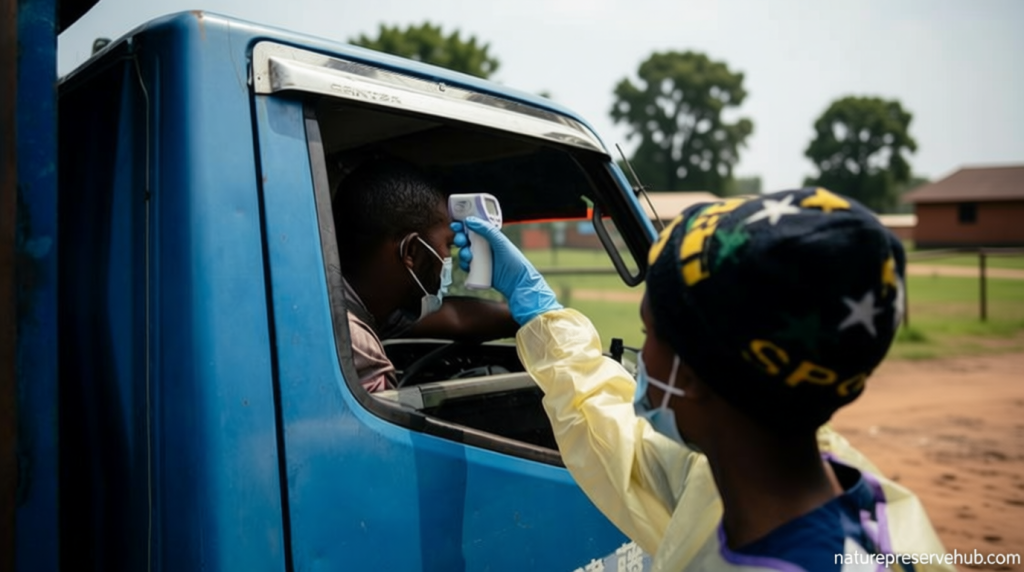
Meanwhile, Uganda reported two confirmed cases of Ebola, both linked to the DRC. The first patient, who had been treated at a Ugandan facility, later succumbed to the illness. The second case is believed to have been imported from the DRC. Ugandan health authorities have implemented strict control measures, including disease surveillance and travel screenings. These actions aim to prevent further spread, especially as the country prepares for potential local transmission.
Transmission of Ebola occurs through direct contact with bodily fluids from an infected person, such as blood, saliva, or vomit. The virus can also spread via contaminated objects or surfaces, as well as through fecal matter. The incubation period, the time between exposure and symptom onset, ranges from two to 21 days. However, individuals are not contagious until they display symptoms, which typically include fever, weakness, and gastrointestinal issues.
Dr. Anne Ancia, WHO’s representative in the DRC, acknowledged the difficulty in gauging the full extent of the outbreak. “We have significant uncertainty about the number of infections and how far the virus has spread,” she stated. This uncertainty is compounded by the fact that many cases remain unconfirmed, with health officials relying on suspected infections to monitor the situation. The presence of asymptomatic contacts, such as Dr. Rebekah Stafford, the wife of Dr. Peter Stafford, and Dr. Patrick LaRochelle, adds to the complexity. These individuals are continuing to follow quarantine protocols while their status is evaluated.
“Potential spread of Ebola warrants serious concern,” said Dr. Tedros Adhanom Ghebreyesus. His remarks underscore the need for swift action, particularly as the virus continues to move through the region. The WHO’s assessment of high national and regional risk contrasts with its lower global concern, a balance based on current containment efforts and international preparedness.
Global efforts to curb the outbreak include limiting travel from the DRC and implementing rigorous screening processes. Countries have also mobilized resources to support local health systems, which are under pressure to manage the crisis. The CDC confirmed that six high-risk contacts of the American patient are en route to Europe for observation, with five heading to Germany and one to the Czech Republic. These measures aim to isolate potential carriers and monitor their health closely.
The outbreak’s origin is still under investigation, with WHO officials suggesting it began “a couple months ago.” The initial alert was received on May 5, when health workers in the DRC’s Ituri province reported a cluster of deaths in Mongbwalu. Four healthcare professionals died within four days, prompting an immediate response. An investigation team was dispatched to the area on May 12, and samples were collected for testing. This timeline highlights the importance of early detection in mitigating the virus’s spread.
Despite the challenges, experts remain optimistic about the situation’s manageability. The WHO’s classification of the outbreak as an international emergency reflects its severity but also signals a coordinated global response. As the strain continues to spread, the focus remains on identifying and isolating cases, while ensuring healthcare workers have the necessary protection. The ongoing efforts to track suspected infections and monitor contacts are critical in preventing a larger-scale epidemic.
