
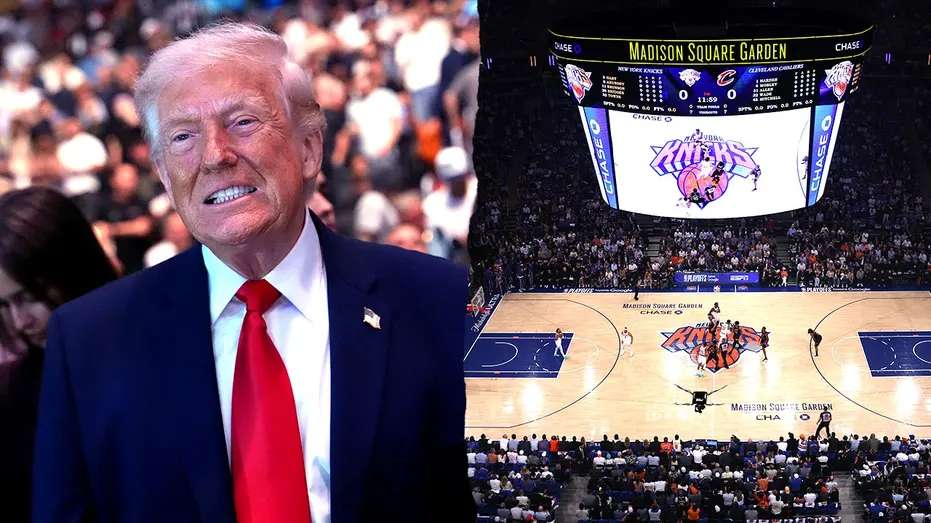
Whoopi Goldberg Defends Trump’s Attendance at Knicks’ NBA Finals Game
Whoopi Goldberg defends Trump attending Knicks – On Monday, Whoopi Goldberg took to the stage of “The View” to publicly support President Donald Trump and New York City Mayor Zohran Mamdani for their presence at Game 3 of the NBA Finals. The event, held at Madison Square Garden, drew criticism from some fans who felt the two political figures should not have been invited to the Knicks’ home game. Goldberg, however, argued that both men were entitled to attend as dedicated supporters of the team. “Any long-time Knicks fan deserves to be there,” she stated, emphasizing that their fandom was a valid reason for inclusion.
“You earned the right as a Knicks fan. I don’t have to like you,” Goldberg said, her tone firm but lighthearted. “I think anybody who’s a Knicks fan should be there.”
Goldberg’s defense came after the show featured clips of fans expressing discontent over Trump and Mamdani’s attendance. She dismissed these reactions, highlighting their shared status as New Yorkers. “Trump and Mayor Mamdani are Knicks fans and have been,” she explained. “There’s nothing either one of them can do to change what’s happening in this city for this team.” Her comments sparked a broader discussion about the role of politics in sports events, particularly in a city with a passionate basketball culture.
Goldberg began her segment by celebrating the Knicks’ return to Madison Square Garden, a venue that holds deep historical significance for the team. “Tonight, tonight, tonight! Come on, Knicks! Come on, Knicks! Come on, Knicks!” she exclaimed, rallying the audience with energy. “We earned this bad boy. We earned this!” The Knicks, who had secured a 2-0 series lead against the San Antonio Spurs, were in a strong position to claim their first championship in nearly three decades. For many New Yorkers, the Finals represented a long-awaited opportunity to witness their team’s triumph.
“I’ve been a Knicks fan for a long time and also a Jim Dolan fan,” Trump said, referencing the team’s owner. “He’s a nice guy. The answer is, yes, he’s invited me, and I’m going.”
During the broadcast, the show aired a clip of Trump addressing the issue, stating that his invitation to the game was a personal gesture from Dolan. This moment underscored the connection between the political figure and the Knicks’ ownership, which some fans viewed as a strategic move to bolster the team’s morale. However, not all viewers shared Goldberg’s enthusiasm. A segment featured a fan expressing frustration, claiming that Trump and Mamdani’s presence could negatively impact the Knicks’ performance. “I think I speak for all New Yorkers when I say that Mayor Mamdani and President Trump should stay away,” the fan said. “We don’t want you here.”
Goldberg quickly countered this argument, asserting that the pair’s attendance would not hinder the team’s chances. “You know what, I don’t think anything can jinx anything,” she said, her confidence unwavering. “I think these guys are on a mission.” Her statement hinted at a belief that the presence of Trump and Mamdani could energize the crowd, creating an atmosphere of support that might translate into a better performance for the Knicks. However, co-host Alyssa Farah Griffin raised a counterpoint, suggesting that Trump could be held accountable if the team faltered. “If I were advising him, I would be like, do not go,” she said, “because if they lose tonight, everybody is going to—” before Sunny Hostin interjected with a sharp remark: “The jinx!”
Hostin’s comment ignited a debate about the influence of political figures on sports outcomes. She argued that Trump’s attendance might bring “bad juju,” a term often used to describe the belief that negative energy could affect a team’s performance. Meanwhile, Goldberg defended the idea that fans should remain focused on the game rather than the personalities in the stands. “All we need to concentrate on is putting our energy and good energy towards them, towards the Knicks,” she said, urging the audience to keep their attention on the team’s efforts. Her message aimed to shift the narrative from political controversy to collective support for the Knicks’ success.
The situation took an interesting turn as the Knicks’ lead in the series became a focal point for both supporters and critics. With the team poised to make history, the game carried weight beyond just the sport itself. Trump’s attendance, as a guest of the team’s owner, was seen by some as a way to rally local pride, while others viewed it as an attempt to capitalize on the Knicks’ momentum. Mamdani, on the other hand, was expected to attend separately and had publicly stated he would not sit beside Trump, indicating a balance between political alignment and personal preference.
Security concerns surrounding Trump’s visit were a significant factor in the decision to invite him. Officials had initially planned a watch party outside Madison Square Garden, but the threat of potential disruptions led to its cancellation. Enhanced screening measures were introduced for fans attending the game, reflecting the heightened vigilance in the wake of recent political events. These precautions highlighted the tension between the team’s desire to celebrate their progress and the need to ensure a safe environment for all attendees.
Goldberg’s appearance on the show brought attention to the broader cultural impact of the NBA Finals in New York. The game, which marked the first Finals in the city since 1999, was a moment of renewed hope for Knicks fans. For many, it was a chance to reconnect with a team that had once dominated the league but had since struggled with consistent success. The presence of Trump and Mamdani added an extra layer of excitement, with their fandom serving as a reminder of the deep-rooted connection between politics and sports in the city.
Despite the controversy, the focus remained on the Knicks’ performance. Their 2-0 lead in the series placed them in a strong position to clinch the championship, and fans were eager to see if the team could maintain its momentum. Goldberg’s defense of Trump and Mamdani’s attendance underscored her role as a voice for New Yorkers, advocating for the inclusion of those who had long supported the team. Her words, while polarizing, contributed to the vibrant discourse around the event, blending sports and politics in a way that reflected the city’s unique identity.
As the NBA Finals progressed, the debate over the political figures’ presence continued to evolve. While some fans viewed their attendance as a positive, others saw it as a distraction. Regardless of the differing opinions, the game itself remained the central attraction, with the Knicks and Spurs locked in a battle for the city’s title. For Goldberg, the episode was an opportunity to reaffirm the value of fandom and the importance of unity, even in the face of disagreement.
Goldberg’s comments also highlighted the dynamic nature of New York City’s political landscape. Mamdani, the mayor-elect, had previously expressed optimism about the Knicks’ chances, predicting a “June banner” for the team if they could secure a victory. This prediction, paired with Trump’s attendance, illustrated how political figures could intertwine with the city’s cultural events, amplifying the significance of the game beyond the basketball court.
Ultimately, the discussion around Trump and Mamdani’s presence at the Knicks’ Finals game underscored the intersection of sports and politics in New York. Whether seen as a symbol of unity or a political move, their attendance added a unique dimension to the event, ensuring that the NBA Finals would not only be a showcase of talent but also a stage for public discourse. As the game approached, the question of how their presence would affect the outcome remained a topic of conversation, reflecting the city’s enduring passion for both basketball and its political figures.