
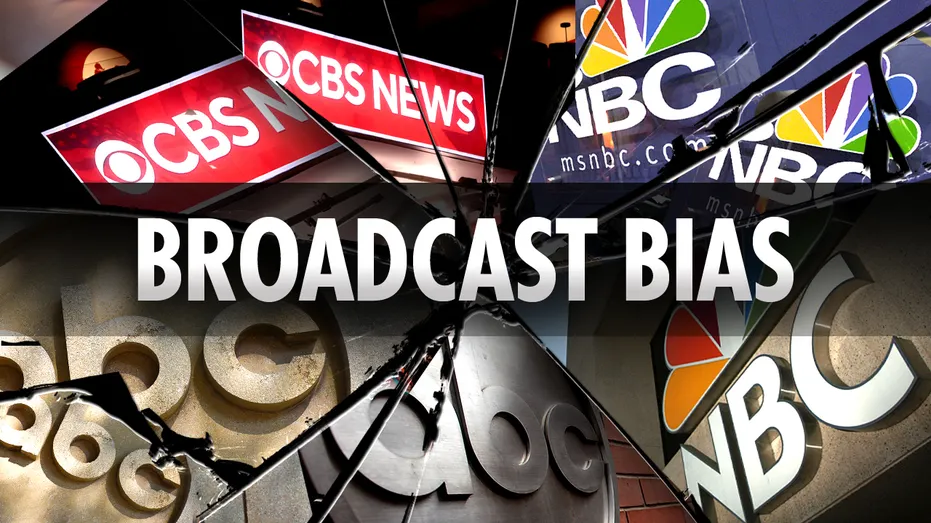
BROADCAST BIAS: Platner’s Nomination Exposes Media Double Standards… Again
BROADCAST BIAS – In the midst of a heated Senate race in Maine, Graham Platner, a prominent radical leftist, has emerged as the Democratic candidate with surprising ease. Yet, his journey to the nomination has been marred by a series of controversies that have raised questions about the media’s role in shaping public perception. The latest developments have once again highlighted the perceived inconsistency in how news outlets cover Democratic and Republican candidates, sparking discussions about biased reporting and selective scrutiny.
A Tarnished Image
Platner’s campaign, like many others, has faced challenges from the outset. One of the earliest controversies arose last year when it was revealed he had a Nazi tattoo on his chest. While the symbol in question was not the swastika, it was the “Totenkopf,” a chilling emblem associated with the S.S. troops that enforced brutal conditions in Holocaust death camps. This detail, though significant, was largely overshadowed by the broadcast networks for months. Even when a story on National Public Radio briefly mentioned the tattoo, it seemed to be more of an afterthought than a central focus. The title of the show, “All Things Considered,” felt increasingly ironic in light of this omission.
“Platner’s well-documented controversies—including past offensive social media posts about sexual assault, rural white voters, and the tipping habits of black people—haven’t scared off high-profile endorsements,” said Steve Mistler of Maine Public Radio, citing support from figures like Massachusetts Senator Elizabeth Warren. The media narrative painted Platner as a rising figure with populist appeal, despite his accumulated baggage.
Scandals Unearthed
As the primary approached, a new scandal emerged on May 31, adding more complexity to the race. Platner was accused of engaging in sexting with multiple women during his early marriage. The revelation came after his wife, Amy, alerted campaign staff about the potential fallout, and the information was subsequently leaked to The Wall Street Journal. This incident, which could have damaged his credibility, was met with mixed reactions from the media. Network hosts, in particular, seemed to exploit the situation with pointed questions.
On CBS, Margaret Brennan asked, “Does he pass the character test?” The implication was clear: the answer was no. Meanwhile, NBC’s Kristen Welker posed a more subtle query: “Does Graham Platner pose a headache for Democrats?” Her phrasing suggested a sense of inevitability, as if the controversy was already a given. ABC’s Jonathan Karl voiced deeper concerns, questioning whether the accumulated scandals might jeopardize the Democrats’ chances in the Senate race. “Do you have concerns with the weight of all these controversies that it may jeopardize Democratic hopes to get that Senate seat in Maine?” he asked, underscoring the growing unease.
Comparisons to Republican Scandals
Platner’s situation is not unique, but it has drawn attention due to the media’s apparent double standard. In midterm election years, broadcast networks typically focus on Republican candidates who can be used to highlight partisan issues. For instance, in 2010, Christine O’Donnell became a symbol of Republican missteps, while Todd Akin faced scrutiny in 2012 over his comments on abortion. Similarly, Herschel Walker’s controversies in 2022 were amplified to undermine Democratic efforts. Platner, however, has not received the same level of attention, despite his own set of scandals. Had he been a Republican, the media might have treated his conduct with greater scrutiny.
The latest twist came on June 5 when the New York Times reported that several ex-girlfriends of Platner had described his behavior as toxic, even abusive. This story, coupled with the earlier sexting scandal, has further complicated his image. CBS evening anchor Tony Dokoupil, often labeled as a pro-Trump figure, echoed the Democratic narrative, stating: “Graham Platner, if you don’t know, is an oyster farmer and the centerpiece of the Democrats’ plans to retake the U.S. Senate. He is also a changed man, he says, full of regret about his past. The trouble is that past keeps coming up.”
Contradictions in Coverage
Meanwhile, the media’s handling of the tattoo controversy has drawn criticism. While some outlets hesitated to emphasize its significance, others seemed to downplay its impact. For example, on June 6, ABC’s Selina Wang reported on Platner’s alleged violent behavior, including incidents of grabbing shoulders and twisting arms. Yet, when discussing the Nazi tattoo, she described it as “a tattoo resembling a Nazi symbol,” suggesting a lack of urgency in its presentation. Platner himself claimed he had only recently become aware of its historical context, a claim that seems at odds with the initial revelation.
NBC’s coverage of domestic violence allegations against Platner was similarly cautious. The network’s Monica Alba concluded her report with Platner’s denial of any physical abuse, noting, “Platner, while saying in the past he was not a perfect boyfriend, denies ‘anything alleging physicality.'” This framing left the door open for debate, even as the allegations were presented. On the same day, the “CBS Mornings” co-host Gayle King remarked on the state of Maine’s voters, stating they had “heard a lot of negative stories about Platner’s relationship with women,” though the context of these stories remained underexplored.
Spin and Subtlety
The media’s tendency to frame narratives has been a consistent theme in Platner’s campaign. On the “PBS NewsHour,” David Brooks was unflinching in his assessment, calling Platner a “moral degenerate” and linking his behavior to his Reddit posts. “A pathetic empty guy who postures in a way that’s kind of repulsive,” Brooks remarked, emphasizing the cumulative effect of his scandals. In contrast, his counterpart Jonathan Capehart argued that Democrats needed to keep Platner as a strategic asset, stating, “Democrats needed to keep him to beat Republican Sen. Susan Collins and make life difficult for President Donald Trump.” This divergence in tone highlights the media’s dual focus: amplifying Republican missteps while downplaying Democratic controversies.
Despite the media’s efforts to balance the narrative, the underlying bias remains evident. The coverage of Platner’s scandals has been uneven, often prioritizing sensationalism over substantive analysis. This pattern mirrors past instances where Republican candidates received more intense scrutiny, even when their scandals were comparable in severity. As the primary day approaches, the question lingers: Will the media’s selective focus influence voter perception, or will the scandals ultimately shape the outcome?
WATCH: Maine Voters Divided on Platner as Scandals Shadow Democratic Primary CLICK HERE FOR MORE FOX NEWS OPINION WATCH: Shaheen Dodges Reporter’s Platner Questions as Aide Creates Donut Distraction
In the broader context, the media’s approach to covering candidates like Platner reflects a broader trend of partisan bias. While Republicans are often held to higher standards, Democrats appear to face a more lenient narrative, even when their candidates’ behavior is scrutinized. The coverage of Platner’s scandals has been a case study in this dynamic, with each new revelation met with a mix of spin, subtlety, and strategic emphasis. As the election looms, the challenge for Democrats will be to navigate these biases and present a cohesive case for Platner’s viability, even as the media continues to dissect his past.
The role of media in shaping political discourse is undeniable. Whether through selective reporting, framing of controversies, or strategic questions, the way news is presented can influence public opinion. Platner’s campaign, however, has become a test case for how the media treats Democratic and Republican candidates differently. His journey from an oyster farmer to a Senate hopeful, despite a litany of scandals, underscores the power of narrative and the persistence of bias in political coverage.