
Interesting Facts About Nocturnal Animals You Didn’t Know
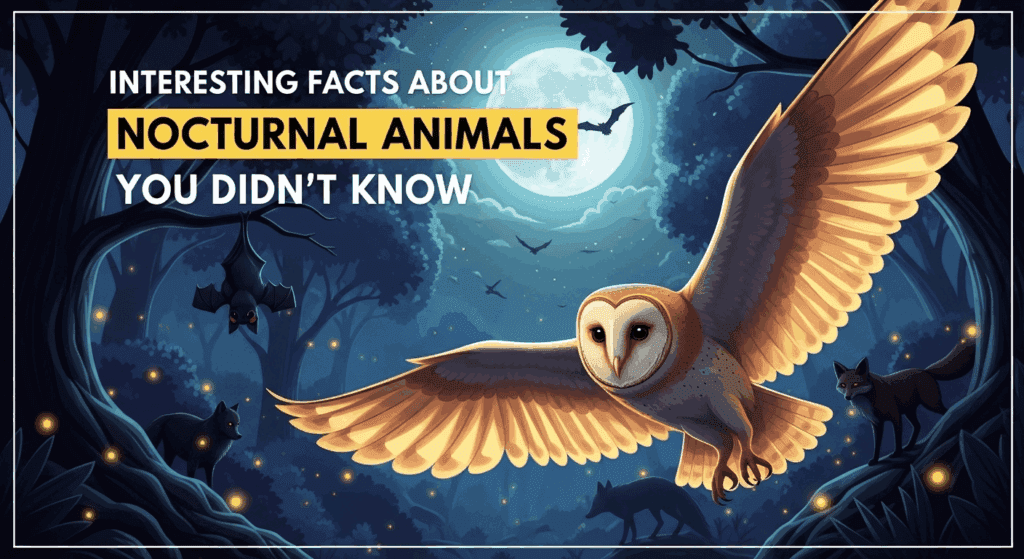
When the sun sets and the world is cast in shadows, a new kingdom of creatures awakens. Most of us are familiar with the daytime, or diurnal, world, but the night holds a bustling, hidden ecosystem teeming with life. This is the domain of nocturnal animals, creatures who have masterfully adapted to thrive in low-light conditions. From the silent flutter of an owl's wings to the faint chirp of a bat's echolocation, the night is filled with activity. Exploring the interesting facts about nocturnal animals reveals a story of incredible evolution, unique survival strategies, and sensory superpowers that seem almost magical. These animals are not just avoiding the sun; they are conquering the darkness.
Interesting Facts About Nocturnal Animals You Didn't Know
The Real Reasons for a Nighttime Lifestyle
Why do some animals choose to live their lives in the dark? The answer is a complex blend of survival, competition, and environmental advantage. Nocturnality is not a random choice but a highly evolved strategy that allows countless species to flourish. This adaptation has occurred independently in various animal groups, from mammals and birds to insects and amphibians, proving its effectiveness as a survival blueprint.
Understanding this choice requires us to look beyond the simple day/night cycle. It involves dissecting the intricate web of interactions within an ecosystem. For many animals, the night offers a cloak of invisibility, a cooler environment, and a smorgasbord of food that is unavailable or fiercely contested during the day. It's a strategic move in the grand chess game of life, where every advantage, no matter how small, can mean the difference between survival and extinction.
- Beating the Heat and the Competition
One of the most significant advantages of a nocturnal lifestyle, especially in hot climates, is thermoregulation. By being active at night, animals can avoid the scorching heat of the sun, which helps conserve precious energy and water. Deserts, for instance, are notoriously harsh during the day but become much more hospitable after sunset. Animals like the fennec fox, with its large ears that help dissipate heat, are prime examples of creatures who hunt in the cool of the night to survive extreme temperatures.
Furthermore, the night offers a less crowded marketplace for resources. By operating on a different schedule, nocturnal animals can avoid direct competition with their diurnal counterparts for food, water, and territory. A hawk and an owl might hunt similar prey, such as mice, but they do so at different times, effectively sharing the resource without direct conflict. This "time-sharing" reduces ecological pressure and allows a greater diversity of species to coexist in the same habitat.
- A Cloak of Darkness for Predator and Prey
Darkness is the ultimate camouflage. For many prey animals, the night provides a crucial shield against predators that rely on sight to hunt. Small rodents, rabbits, and deer are often most active under the cover of darkness to minimize their risk of being spotted. Their own senses, like hearing and smell, are heightened, giving them a fighting chance to detect a predator before it’s too late.
Conversely, for many predators, the night is the perfect time to hunt. The darkness helps them ambush unsuspecting prey. Predators like leopards, owls, and many species of snakes use the low-light conditions to their advantage, relying on stealth and surprise. Their adaptations, such as silent movement and superior night vision, turn the darkness from a hindrance into a powerful weapon, making them the undisputed kings of their nightly domain.
The Super Senses of the Night: Beyond Human Perception
To not just survive but thrive in the dark, nocturnal animals have evolved an incredible array of sensory adaptations. These "super senses" are far beyond the capabilities of humans and are finely tuned to interpret the world through sound, sight, smell, and touch in ways we can barely imagine. These adaptations are a testament to the power of natural selection, showcasing how life can innovate to conquer even the most challenging environments.
These sensory tools are not just passive receivers of information; they are active systems for hunting, navigating, and communicating. From eyes that can gather the faintest photons of light to ears that can pinpoint the rustle of a leaf from a hundred feet away, these animals paint a detailed picture of their surroundings using data that is completely invisible to us.
- Eyes That See in the Dark: The Power of the Tapetum Lucidum</strong>
Many people assume nocturnal animals have “night vision,” but the reality is far more fascinating. Many vertebrates, including cats, dogs, deer, and raccoons, possess a special reflective layer behind their retina called the tapetum lucidum. This structure acts like a mirror, reflecting any light that passes through the retina back through it a second time. This process effectively doubles the amount of light available to the photoreceptor cells, granting them significantly better vision in low-light conditions. It’s this very layer that causes the familiar “eyeshine” when a light is shone on them at night.
Furthermore, the retinas of nocturnal animals are typically packed with a higher concentration of rod cells compared to cone cells. Rod cells are responsible for detecting light and shadow (monochromatic vision) and are extremely sensitive to low light levels. Cone cells, which detect color, require much more light to function. By prioritizing rods over cones, these animals trade vibrant color vision for a much brighter, clearer image in the dark.
- Hearing the Unseen: Echolocation and Asymmetrical Ears
For some animals, hearing is even more important than sight. Bats are the most famous masters of this sense, using a sophisticated biological sonar system called echolocation. They emit high-frequency sound pulses and listen for the echoes that bounce back. By interpreting the timing, direction, and quality of these echoes, a bat can create a detailed “sound map” of its surroundings. This allows it to navigate complex environments like caves and dense forests, and even to detect, track, and identify an insect as small as a mosquito in complete darkness.
Owls, on the other hand, have taken a different but equally brilliant approach to auditory hunting. Many owl species have asymmetrically placed ears—one ear is higher on the head than the other. This subtle difference means that sound reaches each ear at a slightly different time and intensity. Their brain processes this minuscule discrepancy to triangulate the exact location of a sound source with incredible precision, both horizontally and vertically. This 3D auditory map allows them to pinpoint the location of a mouse rustling under deep snow, guided by sound alone.
- The World of Scent and Touch
In the darkness, the senses of smell (olfaction) and touch become paramount. Many nocturnal mammals, such as raccoons, badgers, and opossums, have an exceptionally keen sense of smell. They use it to locate food, identify predators, find mates, and mark their territory. Their elongated snouts are packed with millions of olfactory receptors, allowing them to detect scents that are completely undetectable by humans.
Touch is also a critical tool. The long whiskers, or vibrissae, found on many nocturnal mammals are not just hair; they are highly sensitive tactile organs. Each whisker is connected to a cluster of nerves and muscles, providing real-time feedback about the animal's immediate surroundings. They can detect changes in air currents, which helps them navigate in the dark and avoid obstacles without needing to see them. For an animal like a raccoon, its paws are also incredibly sensitive, possessing a dense network of nerves that allow it to identify objects by touch alone, a useful skill when foraging for food in murky water at night.
Iconic Creatures of the Night and Their Secrets
The nocturnal world is vast and diverse, filled with creatures both familiar and strange. By looking closely at a few iconic examples, we can truly appreciate the range of adaptations that make life in the dark possible. Each of these animals has mastered the night in its own unique way, carving out a niche with a specialized set of skills.
These creatures have long captured the human imagination, often becoming symbols of mystery, wisdom, or mischief in folklore and culture. But behind the myths lies a fascinating biological reality. Their abilities are not magic but the result of millions of years of evolution, a fine-tuning process that has created some of the most efficient and specialized hunters and survivors on the planet.
- The Owl: Silent Hunter of the Skies
Owls are perhaps the ultimate nocturnal predators. Their success is built on a foundation of stealth and sensory perfection. One of their most remarkable traits is their ability to fly almost completely silently. This is thanks to the unique structure of their flight feathers. The leading edges of their primary feathers have a comb-like serration that breaks up the turbulence of air flowing over the wing, while the trailing edges have a soft, fringe-like texture that muffles the sound of the air passing behind it. This acoustic stealth allows them to approach prey without being heard.
Combined with their incredible hearing and powerful vision, this silent flight makes them exceptionally lethal hunters. An owl's large, forward-facing eyes give it excellent binocular vision and depth perception, crucial for pinpointing prey. And while they cannot rotate their heads a full 360 degrees (a common myth), they can turn their necks up to 270 degrees in either direction without moving their shoulders, thanks to a unique bone and circulatory system structure. This gives them an enormous field of view without needing to move their body and risk making a sound.
- The Bat: Misunderstood Master of Echolocation
Bats are often feared and misunderstood, but they are one of the most ecologically vital and fascinating groups of nocturnal animals. As the only mammals capable of true flight, they have conquered the night sky. Their most famous adaptation is, of course, echolocation. However, the diversity within bats is staggering. There are over 1,400 species, and their diets vary widely. While many are insectivores, consuming thousands of insects in a single night and acting as a natural pest control, others are frugivores or nectarivores.
These nectar-feeding bats play a critical role as pollinators for hundreds of plant species, including commercially important ones like agave (the plant used to make tequila), mangoes, and bananas. These plants have often co-evolved to have flowers that open at night, are pale in color, and emit a strong, musky scent to attract their bat pollinators. By moving pollen from flower to flower, bats ensure the reproductive success of these plants, highlighting their importance in maintaining healthy ecosystems.
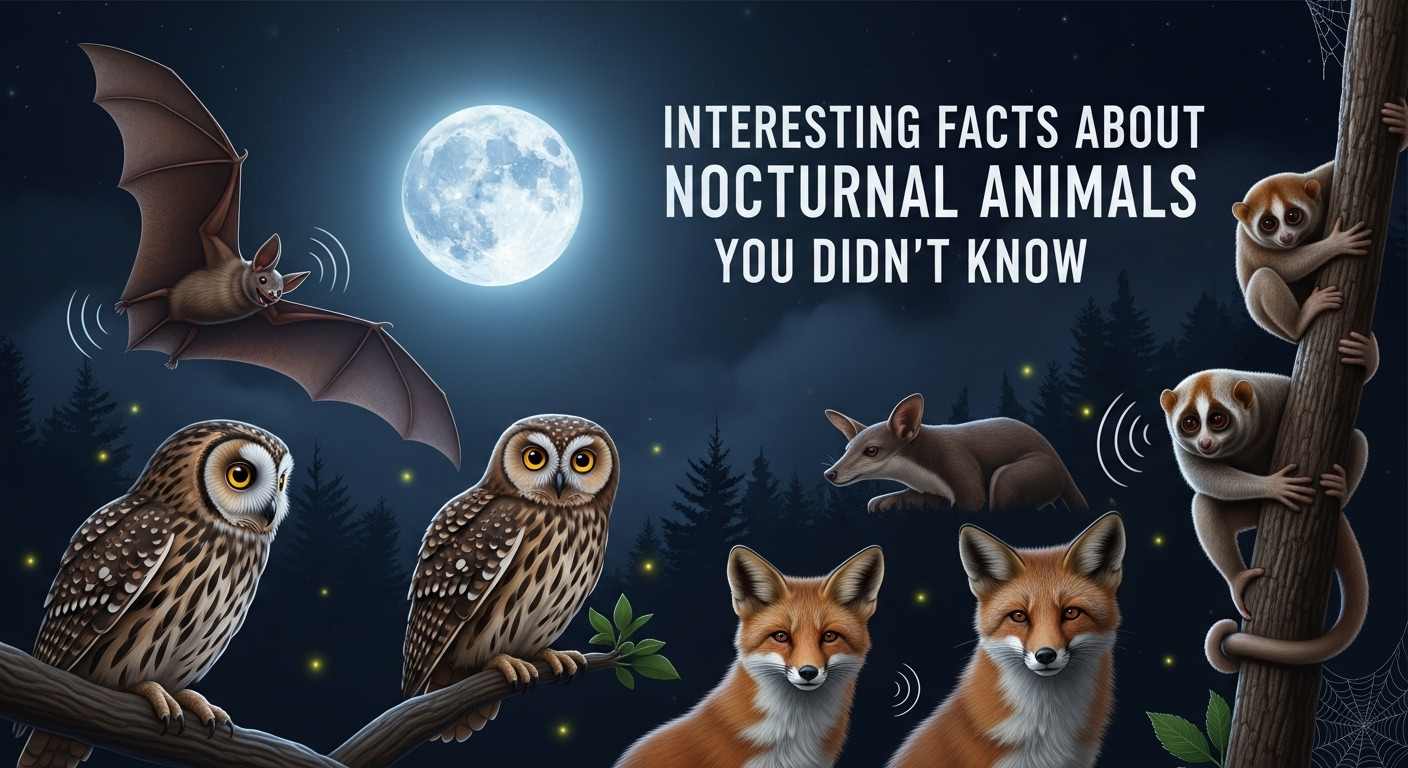
- The Raccoon: Cunning Urban Survivor
The raccoon is a perfect example of a nocturnal animal that has not only survived but thrived alongside human development. A key to their success is their incredible intelligence and problem-solving ability. Studies have shown that raccoons can remember solutions to tasks for up to three years. This cognitive prowess, combined with their natural curiosity, allows them to overcome challenges like locked trash cans and complex latches.
Their most remarkable physical tool is their paws. A raccoon's front paws are almost as dexterous as human hands, and they are packed with mechanoreceptors. They possess a thin layer of skin on their paws that becomes even more pliable when wet, enhancing their sense of touch. They often "douse" their food or objects of interest in water not to clean them, but to gather more tactile information. This allows them to identify food items and manipulate objects with extraordinary skill, even in complete darkness.
Glowing in the Dark: The Magic of Bioluminescence
Not all light at night comes from the moon and stars. Some animals create their own. This phenomenon, known as bioluminescence, is one of nature's most enchanting displays. It is a chemical reaction that occurs within a living organism, producing light with very little heat. While most common in the deep sea, it has also evolved in several terrestrial creatures, where it serves a variety of purposes, from communication and mating to defense and luring prey.
This "living light" is not just beautiful; it's a highly efficient form of energy conversion. The chemical reaction typically involves a light-producing molecule called luciferin and an enzyme called luciferase. When they react with oxygen, light is produced. Different species have evolved their own unique versions of luciferin and luciferase, resulting in different colors and patterns of light.
- Fireflies and the Language of Light
Fireflies (which are actually beetles, not flies) are the most famous example of terrestrial bioluminescence. The flashes of light they produce are a complex form of communication, primarily used for mating rituals. Each species of firefly has its own unique flashing pattern—a specific sequence, duration, and color of light flashes. Males fly around flashing their species-specific signal, and interested females, usually perched on vegetation, will flash a response.
This light-based language is a delicate and precise system. However, it's not all about romance. In some species, like those from the Photuris genus, predatory females will mimic the flash pattern of another species to lure in unsuspecting males, which they then capture and eat. Some firefly larvae also glow, which is believed to be a warning signal to predators that they are unpalatable.
- Beyond the Firefly: Other Glowing Creatures
While fireflies are well-known, they are not the only land-dwellers that can glow. Certain species of fungi, for example, exhibit a faint, continuous glow often referred to as “foxfire.” This eerie light, visible in damp, decaying wood in forests at night, is thought to attract insects. These insects then help to disperse the fungus’s spores to new locations, aiding its reproduction.
Other glowing land animals include various species of millipedes, centipedes, and glowworms (which are the larvae of fungus gnats, not worms). Many of these creatures glow as a form of aposematism—a warning to predators that they are toxic or distasteful. In the absolute darkness of a forest floor or a cave, a sudden flash of light can also startle a potential predator, giving the glowing creature a chance to escape.
Day vs. Night: Comparing Animal Activity Schedules
To fully appreciate nocturnal animals, it's helpful to understand them in the context of other activity schedules. Biologists generally classify animals into three main groups based on when they are most active. This categorization helps us understand how different species share resources and interact within their environment.
| Activity Pattern | Peak Activity Time | Key Characteristics | Animal Examples |
|---|---|---|---|
| Nocturnal | Night | Active after sunset and before sunrise. Often have adaptations for low light, such as large eyes, keen hearing, or echolocation. Avoids daytime heat and predators. | Owl, Bat, Raccoon, Badger, Moth, Fennec Fox, Aardvark |
| Diurnal | Day | Active during the daylight hours. Often rely heavily on vision and have color perception. Can tolerate higher temperatures. | Human, Squirrel, Hawk, Butterfly, most Songbirds, Deer |
| Crepuscular | Twilight (Dawn & Dusk) | Active during the low-light hours of dawn and dusk. This is a strategy to avoid both daytime and nighttime predators, as well as the harshest midday temperatures. | Rabbit, Bobcat, House Cat, some Deer species, Wombat |
Understanding these different timetables reveals the complexity of an ecosystem. A single forest can be home to a diurnal squirrel, a crepuscular rabbit, and a nocturnal owl, all sharing the same space but living in different "time zones." This temporal partitioning is a key factor that allows for high levels of biodiversity, as it minimizes direct competition and allows each species to thrive in its preferred conditions. The transition periods of dawn and dusk are often periods of high activity, as diurnal animals are settling down and nocturnal animals are just beginning to stir.
This intricate scheduling highlights that an ecosystem is not just a static place but a dynamic, 24-hour theater of life. The departure of the day shift signals the arrival of the night shift, each with its own cast of characters uniquely suited for their roles. The crepuscular animals act as the bridge between these two worlds, taking advantage of the fleeting moments when light and dark meet.
Frequently Asked Questions (FAQ)
Q1: What is the largest nocturnal animal in the world?
A1: The largest strictly nocturnal animal is widely considered to be the Aardvark. Native to Africa, these unique mammals can weigh up to 80 kg (180 lbs) and are solitary, nighttime foragers that use their powerful claws and long snouts to dig for ants and termites. While some larger animals like tigers or hippos can be active at night, they are not exclusively nocturnal in the same way an aardvark is.
Q2: Why do some animals' eyes glow in photos or when a light is shined on them?
A2: That glowing effect is called "eyeshine" and is caused by the tapetum lucidum</strong>, a reflective layer behind the retina in the eyes of many nocturnal and crepuscular animals. This layer acts like a mirror, reflecting light back through the retina to enhance night vision. The color of the eyeshine (which can be green, blue, yellow, or white) depends on the mineral composition of the reflective crystals and the angle of the light.
Q3: Are all owls and bats nocturnal?
A3: While the vast majority are, there are exceptions. The Northern Hawk-Owl and the Northern Pygmy-Owl are diurnal, meaning they hunt during the day. Similarly, while most of the 1,400+ bat species are nocturnal, some species that live on isolated islands with no avian predators have been observed to be active during the day. These exceptions show how adaptable life can be, changing its schedule when environmental pressures allow.
Q4: How do nocturnal animals navigate without moonlight?
A4: They use a combination of their highly developed senses. Even on a moonless, overcast night, there is some ambient light from stars, which animals with sensitive eyes can use. Others rely almost entirely on non-visual senses. Bats use echolocation, many rodents and mammals use their whiskers and sense of smell to follow familiar trails and detect obstacles, and owls use their asymmetrical hearing to navigate and hunt by sound alone. They essentially "see" the world through a mosaic of sensory inputs.
Conclusion
The world of nocturnal animals is a profound testament to the adaptability and ingenuity of life. Far from being a desolate and empty time, the night is a vibrant stage where some of nature's most incredible dramas unfold. From the silent, deadly grace of an owl to the complex sonar mapping of a bat, these creatures have evolved superpowers that allow them to master the darkness. They have turned what we perceive as a limitation—the absence of light—into their greatest advantage.
By understanding the interesting facts about nocturnal animals, we gain a deeper appreciation for the complexity of the natural world. We learn that survival is a game of strategy, where timing is everything. We also recognize our own impact, as the spread of artificial light threatens to erase the darkness that these animals depend on. The next time you look out into the night, remember the hidden world that is just waking up, a world of enhanced senses, silent hunters, and glowing communicators, all playing their part in the endless, beautiful cycle of life.
***
Summary of the Article
This article, titled "Interesting Facts About Nocturnal Animals You Didn't Know," provides an in-depth exploration of the world of creatures active at night. It begins by explaining the primary reasons for nocturnality, including avoiding daytime heat, reducing competition for resources, and using darkness as a cover from predators or as an advantage for hunting. The piece then dives into the "super senses" that enable these animals to thrive, such as the light-amplifying tapetum lucidum in their eyes, the sophisticated echolocation of bats, and the asymmetrical hearing of owls for 3D sound mapping. The article spotlights iconic nocturnal animals like the silent-flying owl, the ecologically vital bat, and the intelligent urban-adapting raccoon, detailing their unique skills. It also covers the enchanting phenomenon of bioluminescence as a form of communication and defense, seen in fireflies and other glowing organisms. A comparative table clarifies the differences between nocturnal, diurnal, and crepuscular activity patterns. The article concludes with a frequently asked questions (FAQ) section and a final summary emphasizing the wonder of these adaptations and the conservation challenges they face from human impact like light pollution.
