
Climate Change vs Global Warming: What’s the Difference?
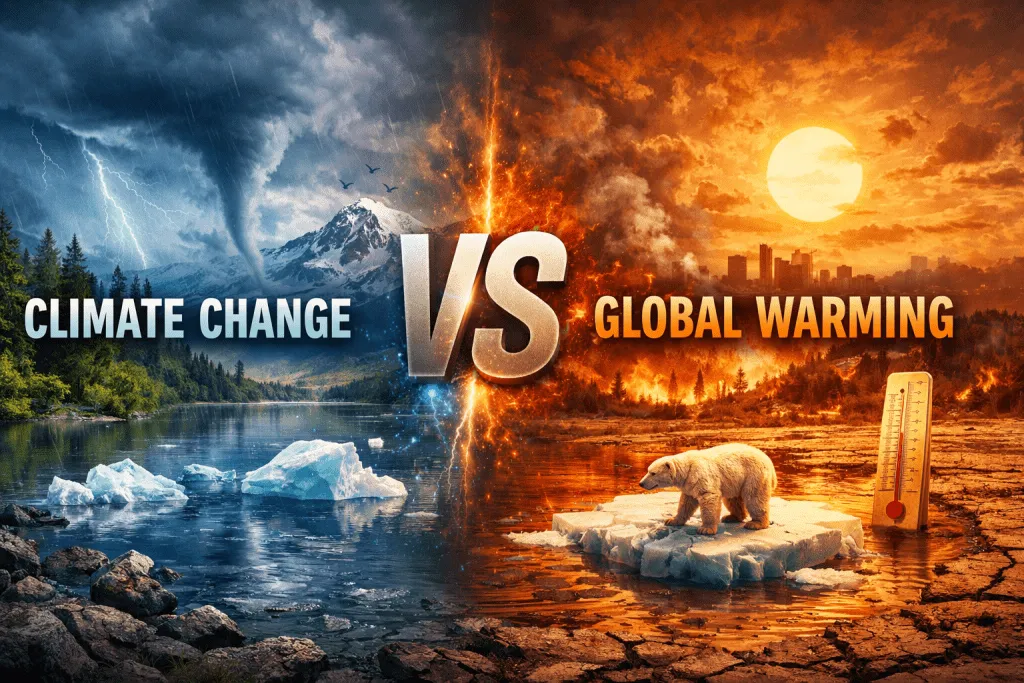
People often use climate change and global warming as if they mean the same thing. They are closely related, but they are not identical. The simplest way to understand Climate change vs global warming is this: global warming is the long-term rise in Earth’s average temperature, while climate change is the broader set of changes happening to the planet’s climate system because of that warming.
This difference matters because it changes how we interpret real-world impacts. Global warming explains why the planet is getting hotter overall. Climate change explains why weather patterns, oceans, seasons, rainfall, storms, droughts, and ecosystems are shifting in complex ways across different regions.
Climate Change vs Global Warming: The Core Definitions
To understand Climate change vs global warming, start with the most direct definitions. Global warming refers specifically to the increase in global average surface temperature, mainly since the late 19th century. This rise is strongly linked to human activities, especially burning fossil fuels like coal, oil, and gas.
Climate change is the wider umbrella term. It includes global warming, but also covers the long-term changes in climate patterns that result from warming. These patterns include changes in rainfall, the timing of seasons, ocean circulation, and the frequency of extreme weather.
A useful comparison is to think of global warming as the “fever” and climate change as the “symptoms.” The fever is measurable and global. The symptoms vary by region and can include stronger storms in one area and more drought in another.
Why Global Warming Happens: The Greenhouse Effect Explained
The reason global warming is happening is not mysterious, but it is often misunderstood. The Earth naturally has a greenhouse effect, where gases like carbon dioxide and methane trap some heat from the sun. Without it, the planet would be too cold for modern life.
The problem is that human activity has dramatically increased the concentration of these gases. Burning fossil fuels releases large amounts of carbon dioxide (CO₂). Agriculture, waste, and energy production also release methane (CH₄), which traps heat even more efficiently than CO₂ over shorter periods.
This extra greenhouse gas buildup thickens the “blanket” around Earth. As a result, more heat stays in the atmosphere and oceans instead of escaping into space. That is global warming in action.
In the Climate change vs global warming discussion, global warming is the primary driver. It is the engine powering many climate changes, even when those changes do not look like “warming” at first glance.
How Climate Change Shows Up: More Than Just a Hotter Planet
Climate change is bigger than rising temperatures because the climate system is interconnected. When the planet warms, it changes how air moves, how oceans circulate, and how moisture behaves. This affects weather patterns, sometimes in ways that seem counterintuitive.
One major impact is shifting precipitation. Warmer air holds more water vapor, which can lead to heavier rainfall and stronger floods in some regions. At the same time, higher temperatures can dry out soil faster, making droughts worse elsewhere.
Another major effect is the increase in extreme weather events. Climate change can raise the likelihood of heatwaves, intensify hurricanes by warming ocean surfaces, and contribute to more intense wildfire seasons. These are not isolated events but part of a broader trend.
Climate change also includes long-term shifts, not just disasters. Winters can become shorter, spring can arrive earlier, and growing seasons can change. In the context of Climate change vs global warming, this is why climate change is considered the broader and more accurate term for describing what is happening globally.
The Role of Oceans, Ice, and Sea Level Rise
A large part of global warming happens in the oceans. The oceans absorb most of the extra heat trapped by greenhouse gases. This leads to warmer sea temperatures, which can disrupt marine ecosystems and influence weather patterns on land.
Warmer oceans also contribute to sea level rise. There are two main reasons for this. First, water expands when it warms, a process called thermal expansion. Second, land ice—such as glaciers and ice sheets—melts and adds more water into the ocean.
Melting ice is also connected to climate change beyond sea levels. Ice reflects sunlight, and when it disappears, darker ocean water absorbs more heat. This feedback loop accelerates warming, especially in polar regions.
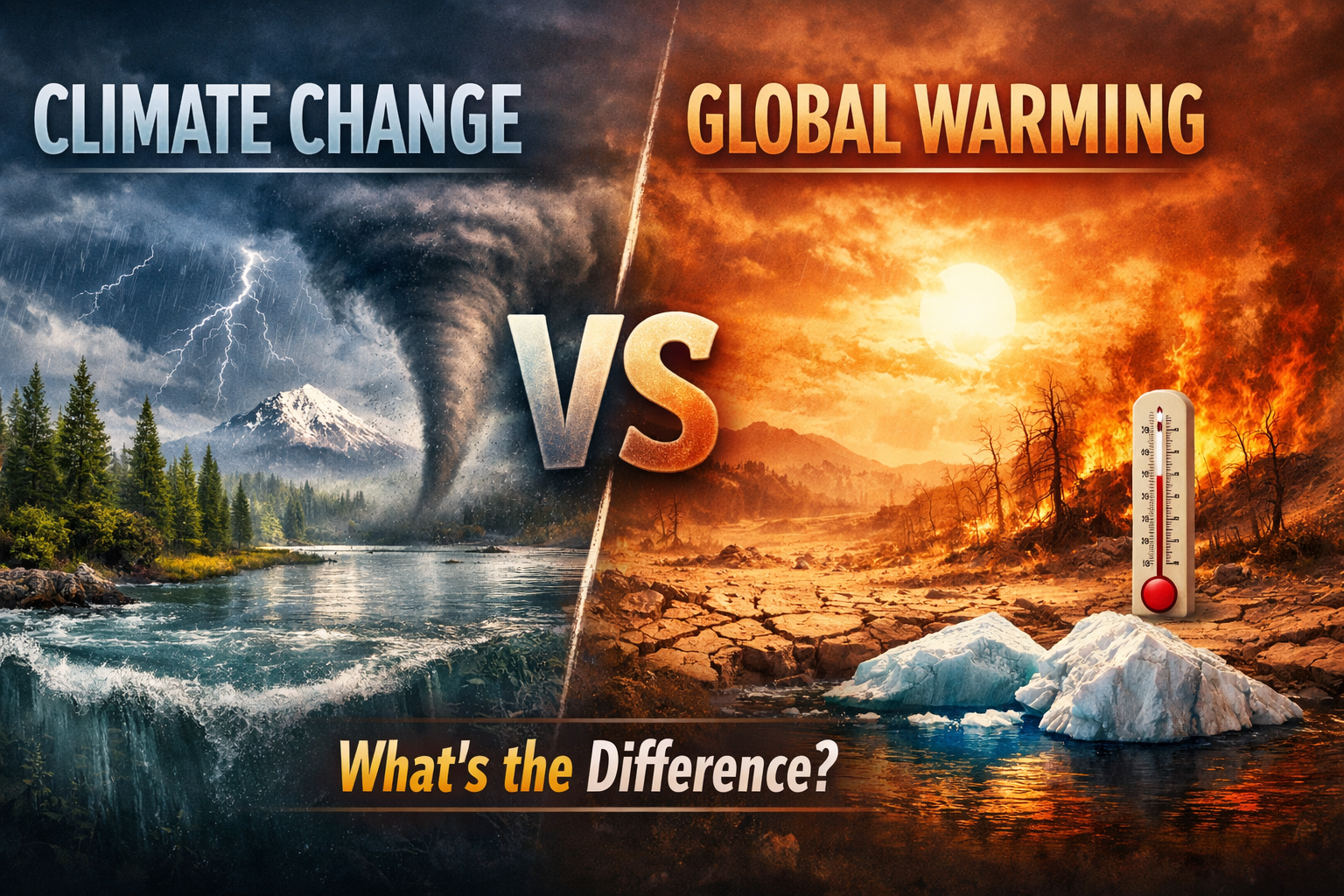
In the Climate change vs global warming framework, global warming is the heating of the atmosphere and oceans. Climate change includes the cascading effects, such as melting ice, rising seas, coastal flooding risks, and changing ocean chemistry.
Human Causes vs Natural Climate Variability
Earth’s climate has always changed over long timescales. Natural factors like volcanic eruptions, changes in solar activity, and slow shifts in Earth’s orbit have influenced climate for millions of years. This fact is often used to confuse the conversation, but it does not contradict modern climate science.
The key difference today is speed and cause. The current warming trend is happening rapidly compared to most natural climate shifts. The strongest evidence shows that the dominant cause is human-driven greenhouse gas emissions, not natural cycles.
Natural variability still exists, and it affects short-term weather and regional patterns. For example, phenomena like El Niño and La Niña can temporarily warm or cool parts of the planet. However, these cycles operate on top of a long-term warming trend that continues upward.
This is why Climate change vs global warming is not a debate about whether climate shifts happen naturally. It is about the modern reality that human activity is now the main driver of the changes we are seeing.
Why the Difference Matters in Real Life
The difference between climate change and global warming is not just academic. It changes how people interpret evidence. If someone expects “global warming” to mean every place should always get hotter, they may misunderstand cold snaps or unusual storms.
Climate change explains why a warming planet can still produce intense winter storms in some regions. Warming can disrupt atmospheric circulation patterns, affecting where cold air travels. The global average temperature can rise even while certain regions experience short-term cold events.
This distinction also affects policy, planning, and communication. If a city is planning infrastructure, the relevant issue is not just warmer temperatures. It is also stronger rainfall, flooding risk, heatwaves, drought, wildfire conditions, and sea level rise.
Using the right language helps people focus on the full picture. In many contexts, climate change is the more useful term because it captures the broad scope of impacts. In the Climate change vs global warming discussion, global warming is the core driver, but climate change is the lived reality.
Conclusion
Global warming is the long-term increase in Earth’s average temperature, mainly caused by human-produced greenhouse gases. Climate change includes global warming but also describes the wider changes to weather patterns, oceans, ice, sea levels, and ecosystems that result from a warming planet. Understanding Climate change vs global warming helps clarify what is happening, why it is happening, and why the impacts look different across regions.
FAQ
Q: What is the simplest difference between climate change and global warming? A: Global warming is the rise in Earth’s average temperature, while climate change includes global warming plus broader shifts in weather patterns and climate systems.
Q: Is climate change only caused by humans? A: Climate change can happen naturally, but the current rapid warming trend is primarily driven by human greenhouse gas emissions.
Q: Why do people say “climate change” instead of “global warming”? A: “Climate change” is broader and covers impacts beyond temperature, such as droughts, floods, sea level rise, and stronger storms.
Q: Can a warming planet still have cold weather? A: Yes. Weather varies day to day, and climate change can disrupt atmospheric patterns, causing regional cold events even while the global average warms.
Q: Which term is more accurate today: climate change or global warming? A: Both are accurate, but climate change is often more complete because it includes the full range of environmental impacts caused by warming.
