
A Guide to Different Methods of Forest Conservation
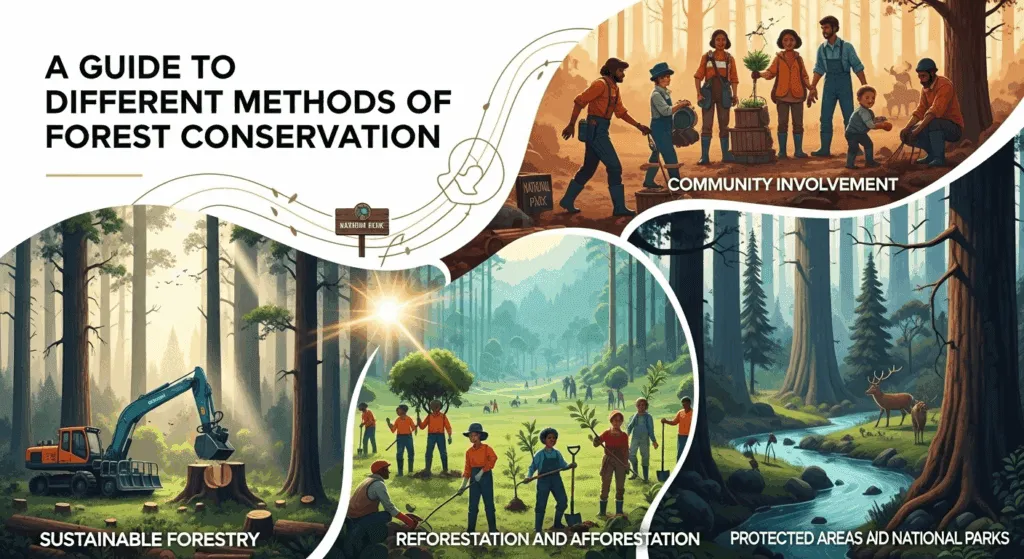
Forests are the lifeblood of our planet, the vast, green lungs that breathe life into our atmosphere and harbor an incredible diversity of life. Yet, these vital ecosystems are facing a silent, creeping crisis: deforestation. Every year, millions of hectares are lost to agriculture, logging, and urbanization, pushing countless species toward extinction and destabilizing our climate. The challenge is immense, but so is our capacity for action. Understanding the different methods of forest conservation is the first critical step toward protecting these irreplaceable natural treasures for future generations. This guide will explore the multifaceted strategies, from protecting what we have to restoring what we’ve lost, offering a comprehensive look at the tools at our disposal in this crucial fight.
The Crucial Importance of Forest Ecosystems
Before diving into conservation methods, it's essential to understand what's at stake. Forests are far more than just collections of trees; they are complex, dynamic ecosystems that provide essential services, often called ecosystem services, that are fundamental to human well-being and planetary health. Their most well-known role is acting as massive carbon sinks. Through photosynthesis, forests absorb vast amounts of carbon dioxide (CO2), a primary greenhouse gas, from the atmosphere, storing it in their biomass (trunks, leaves, roots) and soil. This process of carbon sequestration is a powerful natural defense against climate change.
Beyond climate regulation, forests are the primary custodians of terrestrial biodiversity. It is estimated that forests are home to over 80% of all land-based species of animals, plants, and insects. This incredible biodiversity is not just beautiful; it is the foundation of resilient ecosystems. Each species plays a role, from pollinators that support agriculture to predators that control pest populations. The intricate web of life within a forest ensures its stability and ability to recover from disturbances. When we lose forests, we don't just lose trees; we lose this entire web of life, triggering a cascade of extinctions.
Economically and socially, forests are a lifeline for billions of people. They provide essential resources such as timber, fuel, food, and medicinal plants. For over 1.6 billion people, including many of the world's most impoverished communities and indigenous groups, forests are a direct source of livelihood. They also play a critical role in regulating water cycles, preventing soil erosion, and purifying water sources, benefits that directly support agriculture and human settlements downstream. The loss of forests, therefore, is not just an environmental issue but a profound humanitarian and economic crisis.
Proactive Conservation: Protection and Preservation Strategies
The most effective and cost-efficient method of forest conservation is to protect existing forests before they are degraded or destroyed. These proactive strategies focus on preventing deforestation and maintaining the ecological integrity of intact forest landscapes, particularly old-growth forests which are exceptionally rich in carbon and biodiversity.
- #### Establishing and Managing Protected Areas
Establishing protected areas like national parks, wildlife sanctuaries, and nature reserves is a cornerstone of forest conservation. These are legally defined geographical spaces recognized, dedicated, and managed to achieve the long-term conservation of nature. By restricting or prohibiting destructive activities such as logging, mining, and agricultural expansion, these areas serve as safe havens for wildlife and allow natural ecological processes to continue undisturbed.
The effectiveness of a protected area, however, depends heavily on strong management and enforcement. A "paper park"—an area protected by law but with no on-the-ground resources for enforcement—offers little real protection against illegal logging, poaching, or encroachment. Successful protected areas require adequate funding, well-trained rangers, community involvement, and clear boundaries. When managed effectively, these areas not only preserve biodiversity but also become hubs for ecotourism, scientific research, and environmental education, providing economic benefits to nearby communities.
- #### Community-Based Forest Management (CBFM)
For centuries, indigenous peoples and local communities have been the de facto guardians of the world’s forests. Community-Based Forest Management (CBFM) is a powerful approach that formally recognizes and empowers local communities to manage and conserve the forests they depend on. This model shifts away from a top-down, centralized government approach to one where local stakeholders have secure land tenure and a direct say in how forest resources are used and protected.
The logic behind CBFM is simple: people who depend directly on the forest for their livelihood have the strongest incentive to manage it sustainably. When communities have legal rights to the forest, they are more likely to protect it from outside threats like illegal loggers and large-scale agricultural companies. This approach often integrates traditional ecological knowledge with modern conservation science, leading to more culturally appropriate and effective management plans. By providing alternative income streams through sustainable enterprises like ecotourism or the sale of non-timber forest products, CBFM helps alleviate poverty, which is a key driver of deforestation.
- #### Proforestation: Letting Existing Forests Grow
While reforestation and afforestation (discussed later) are vital, a newer concept gaining traction is proforestation. This strategy prioritizes protecting existing forests, especially mature and old-growth forests, and allowing them to continue growing to their full ecological potential. Unlike reforestation, which can take centuries to accumulate the carbon and biodiversity of a mature forest, proforestation focuses on maximizing the potential of forests that are already standing.
Older, larger trees sequester and store far more carbon than young, small trees. Intact, mature forests also harbor the highest levels of biodiversity and are more resilient to climate change impacts like drought and fire. Proforestation is therefore considered the most immediate, effective, and low-cost natural climate solution. It doesn’t require the massive investment of planting new trees; it simply requires the commitment to protect what is already there, allowing nature's own processes to do the work of accumulating carbon and fostering complex life webs.
Restorative Approaches: Reforestation and Afforestation
When forests have already been cleared or severely degraded, restorative approaches are necessary to bring them back. These active interventions aim to rebuild forest cover, restore ecological functions, and reconnect fragmented landscapes. The two primary methods in this category are reforestation and afforestation.
- #### Reforestation: Bringing Back What Was Lost
Reforestation is the process of replanting trees and restoring a forest on land that was previously forested but has been cleared, typically due to logging, agriculture, or natural disasters like fire. The primary goal is to return the area to its former forested state, helping to restore biodiversity, improve soil health, prevent erosion, and sequester carbon. There are two main approaches to reforestation: active planting and passive regeneration.
Active planting involves growing seedlings in nurseries and manually planting them in the degraded area. This method allows for control over the species composition and spacing, and can accelerate the recovery process. However, it can be expensive and labor-intensive. Passive or natural regeneration, on the other hand, involves protecting the land from further disturbance (like grazing) and allowing seeds from nearby forests to naturally sprout and grow. This method is less costly and often results in a more natural and diverse forest, but it is only feasible if there are nearby seed sources and suitable soil conditions.
- #### Afforestation: Creating New Forests
Afforestation is the establishment of a forest on land that has not been forested for a long period, such as abandoned agricultural land, grasslands, or even arid areas. While similar to reforestation, its key difference is the creation of a new forest ecosystem where one did not recently exist. The goals of afforestation are often large-scale, such as creating massive carbon sinks to combat climate change, combating desertification (like Africa’s Great Green Wall initiative), or creating commercial timber plantations.
However, afforestation must be approached with caution. Planting monocultures (large stands of a single, often non-native species) can create biologically sterile "green deserts" that offer little value for local wildlife. Planting trees in inappropriate ecosystems, such as natural grasslands or savannas, can actually harm biodiversity and disrupt water cycles. Successful afforestation prioritizes planting a diverse mix of native species that are well-suited to the local climate and soil, creating a resilient and functional ecosystem rather than just a collection of trees.
Comparing Key Restorative Methods
| Feature | Reforestation | Afforestation |
|---|---|---|
| Definition | Re-establishing a forest on land that was recently deforested. | Establishing a forest on land that has not recently been forested. |
| Primary Goal | Ecological restoration, biodiversity recovery, soil stabilization. | Carbon sequestration, combating desertification, timber production. |
| Location | Recently logged areas, abandoned farmland (formerly forest). | Natural grasslands, scrublands, arid regions, abandoned land. |
| Key Challenge | Preventing re-degradation, ensuring species diversity. | Avoiding monocultures, not replacing valuable non-forest ecosystems. |
| Ecological Impact | Generally high positive impact in restoring native ecosystems. | Varies; can be positive if done with native species or negative if not. |
Sustainable Management: Balancing Use and Conservation
Conservation does not always mean sealing forests off from all human activity. Sustainable management recognizes that humans can and should use forest resources, but in a way that does not compromise the forest's long-term health and productivity. This approach seeks a balance between economic needs and ecological integrity.
- #### Sustainable Forestry and Logging Practices
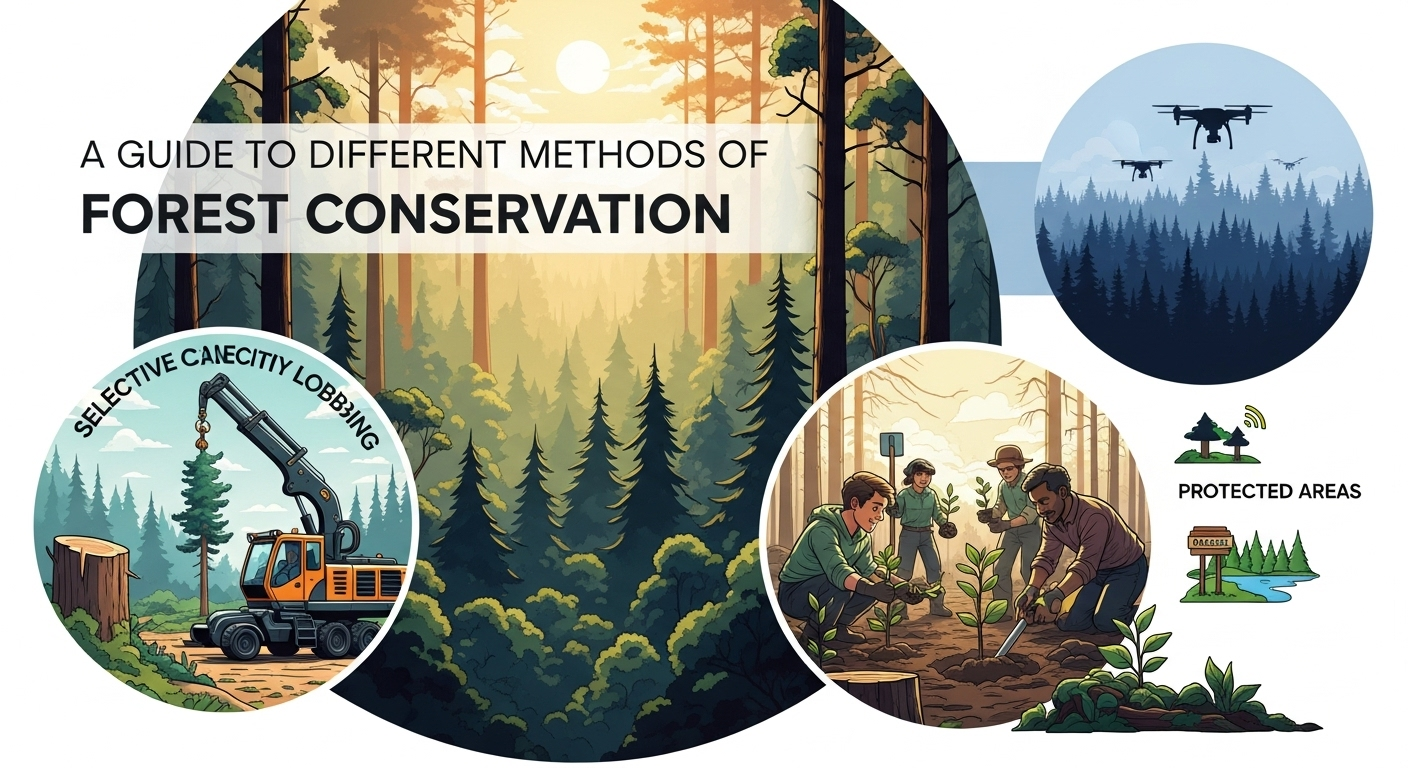
Conventional logging is often highly destructive, but it doesn’t have to be. Sustainable forestry involves harvesting timber in a way that minimizes damage to the surrounding forest, soil, and water. One key technique is Reduced-Impact Logging (RIL), which includes carefully planning logging roads to minimize forest clearing, using directional felling to avoid damaging non-target trees, and leaving a sufficient number of mature trees to allow for natural regeneration.
To verify these practices, third-party certification schemes have emerged, with the Forest Stewardship Council (FSC) being the most globally recognized. FSC certification provides consumers with an assurance that the wood or paper product they are buying comes from a forest that is managed in an environmentally appropriate, socially beneficial, and economically viable manner. By choosing FSC-certified products, consumers can use their purchasing power to support responsible forestry and create market incentives for companies to adopt sustainable practices.
- #### Agroforestry: Integrating Trees and Agriculture
A significant driver of deforestation is the expansion of agriculture. Agroforestry offers a brilliant solution by integrating trees and shrubs directly into farming systems. Instead of clear-cutting forests for farmland, this method combines trees with crops or livestock on the same plot of land. This creates a more diverse, productive, and sustainable land-use system that mimics a natural ecosystem.
The benefits of agroforestry are numerous. Trees provide shade, which can protect crops from excessive heat and reduce water evaporation. Their deep roots help stabilize soil and prevent erosion, while falling leaves enrich the soil with organic matter, reducing the need for chemical fertilizers. This integrated system also provides a more diverse habitat for pollinators and pest-controlling predators, and offers farmers a diversified income from both their crops and tree products (like fruit, nuts, or timber). Famous examples include shade-grown coffee and cacao, where crops are grown under a natural forest canopy, preserving biodiversity while producing a high-quality product.
Technological and Policy-Driven Interventions
In the 21st century, technology and global policy play an increasingly vital role in monitoring forests and creating the large-scale frameworks needed for effective conservation. These high-level interventions complement on-the-ground efforts.
- #### The Role of Technology in Monitoring and Enforcement
It’s no longer possible for illegal logging to happen entirely in the dark. Advanced technology has revolutionized our ability to monitor forests in near real-time. High-resolution satellite imagery, combined with Geographic Information Systems (GIS), allows governments and conservation organizations to detect deforestation as it happens. Platforms like Global Forest Watch provide publicly accessible data, empowering journalists, activists, and local communities to hold corporations and governments accountable.
Drones are also becoming a powerful tool for more localized monitoring, providing detailed imagery of remote or inaccessible areas to identify illegal logging camps or evidence of poaching. Furthermore, advanced data analytics and artificial intelligence (AI) can be used to predict where deforestation is most likely to occur, allowing for proactive deployment of enforcement resources. This technological arsenal makes it harder for illegal activities to go unnoticed and provides the evidence needed for legal action.
- #### Policy, Legislation, and International Agreements
Strong national laws and supportive international policies form the backbone of forest conservation. This includes government actions such as declaring moratoria on logging in primary forests, strengthening laws against illegal timber trade, and eliminating subsidies that encourage deforestation. Policies must be designed to address the root economic drivers of deforestation, such as land tenure insecurity and poverty.
On the international stage, programs like REDD+ (Reducing Emissions from Deforestation and forest Degradation) create a financial incentive for developing countries to protect their forests. Under this framework, developed countries or corporations can pay forested nations to keep their forests standing, thereby offsetting their own carbon emissions. While complex to implement, REDD+ represents a significant attempt to assign a direct economic value to the carbon storage service that forests provide, channeling billions of dollars into conservation efforts around the globe.
Frequently Asked Questions (FAQ)
Q: What is the single most effective method of forest conservation?
A: There is no single "most effective" method, as the best approach depends on the specific context, including the type of forest, the local socio-economic situation, and the primary threats. However, most experts agree that a combination of strategies is most powerful. Protecting existing old-growth forests (proforestation and protected areas) is the most immediate and impactful solution for climate and biodiversity, but this must be combined with sustainable management for working landscapes and active restoration (reforestation) for degraded areas.
Q: How can an individual contribute to forest conservation?
A: Individuals have significant power. You can contribute by:
- Making conscious consumer choices: Purchase products with certifications like FSC for wood/paper and Rainforest Alliance for food items.
- Reducing your carbon footprint: This lessens the overall pressure on the planet, including forests.
- Supporting conservation organizations: Donate or volunteer for reputable organizations working on the front lines of forest protection.
- Spreading awareness: Educate yourself, your friends, and your family about the importance of forests and the threats they face.
- Participating in local planting events: If available in your area, join local reforestation or community greening projects.
Q: What's the main difference between reforestation and afforestation?
A: The main difference is the history of the land. Reforestation is replanting trees on land that was recently a forest. The goal is to restore a previous ecosystem. Afforestation is planting trees on land that has not been forested for a long time (e.g., grassland), with the goal of creating a new forest ecosystem.
Q: Why is protecting old-growth forests so important?
A: Old-growth forests are ecologically irreplaceable. They have developed over centuries without significant disturbance and contain complex structures, massive old trees, and incredible biodiversity that cannot be replicated in a young or replanted forest. They are also the largest and most stable terrestrial carbon sinks. Protecting them is a top priority because once they are gone, their unique combination of carbon storage, biodiversity, and ecological complexity is lost forever.
Conclusion
The challenge of halting deforestation and conserving our planet's forests is one of the most pressing environmental issues of our time. As we have seen, there is no silver bullet. The different methods of forest conservation—from establishing protected areas and empowering local communities to implementing sustainable logging and harnessing advanced technology—each play a vital role in a comprehensive global strategy. Proactive protection of intact forests remains the highest priority, offering the most immediate benefits for climate and biodiversity.
Ultimately, success will depend on a multi-pronged approach that integrates strong government policies, corporate responsibility, community engagement, and individual action. By valuing forests for all the essential services they provide—not just for their timber—we can shift our relationship with these vital ecosystems from one of extraction to one of stewardship. The future of our forests, and indeed our planet, depends on the choices we make today.
***
Summary of the Article
This article, "A Guide to Different Methods of Forest Conservation," provides a comprehensive overview of the strategies used to protect and restore the world's forests. It begins by establishing the critical importance of forests as carbon sinks, hubs of biodiversity, and sources of livelihood for billions. The core of the article details various conservation methods, categorized into four main approaches.
First, Proactive Protection focuses on preserving existing forests through strategies like establishing legally protected areas (national parks), empowering local communities via Community-Based Forest Management (CBFM), and practicing proforestation—allowing mature forests to grow to their full potential. Second, Restorative Approaches are for degraded lands and include reforestation (replanting on recently deforested land) and afforestation (creating new forests where they didn't recently exist). A comparative table highlights the differences between these two.
Third, Sustainable Management seeks a balance between use and conservation through practices like Reduced-Impact Logging (certified by bodies like the FSC) and agroforestry, which integrates trees into agricultural systems. Finally, the article covers Technological and Policy-Driven Interventions, such as using satellite imagery and drones for monitoring and enforcement, as well as the role of international policies like REDD+. The piece concludes by emphasizing that a combined, multi-faceted approach is necessary for success and includes a helpful FAQ section to address common questions.
