
Conservation Solutions for Habitat Loss: Practical Actions Now
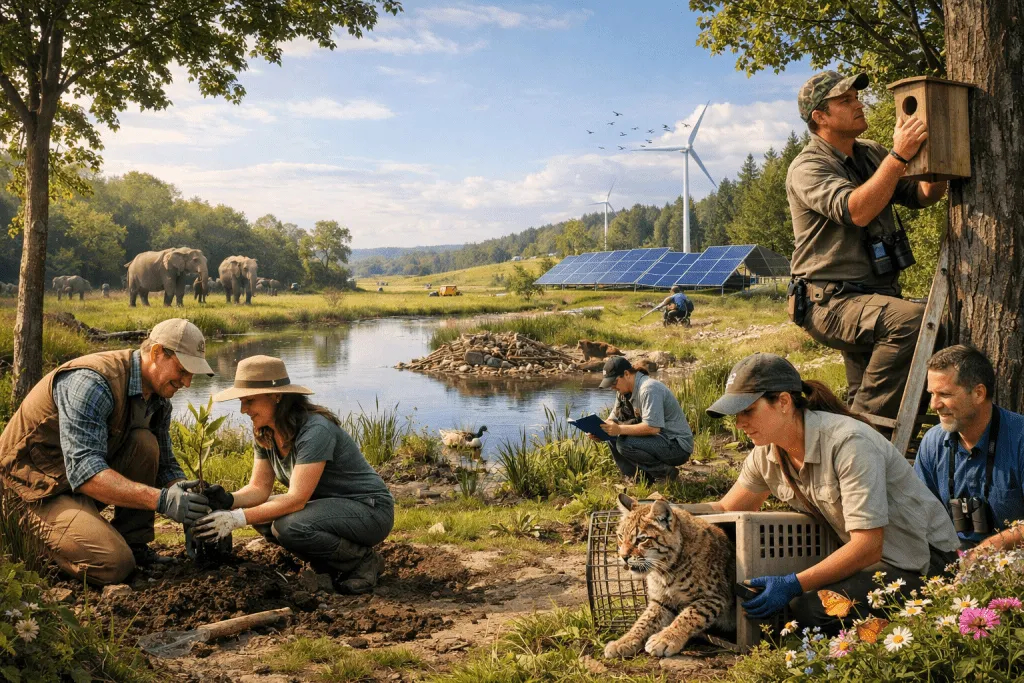
Habitat loss is the fastest way to push wildlife toward extinction and destabilize the natural systems humans depend on. Forests, wetlands, grasslands, coral reefs, and mangroves are being converted into farms, roads, cities, mines, and industrial zones at a pace that ecosystems cannot adapt to. The good news is that conservation solutions for habitat loss are not theoretical—they are practical, measurable, and available right now. What matters is applying the right actions at the right scale, from local land management to national policy and corporate supply chains.
This article breaks down the most effective, real-world approaches that can slow and reverse habitat destruction. It focuses on what works, why it works, and how it can be implemented immediately without waiting for perfect conditions.
Why Habitat Loss Is Still Accelerating
Habitat loss is not caused by one single activity. It is driven by a combination of agricultural expansion, urban growth, infrastructure development, and resource extraction. In many regions, land conversion happens faster than enforcement, planning, and conservation funding can respond. Even protected areas can become isolated “islands” if the surrounding landscapes are degraded.
Another reason habitat loss continues is that economic systems often treat nature as a free input. Forests are valued more when cleared for timber or plantations, and wetlands are seen as “empty land” rather than water filters and flood barriers. This creates a market incentive to destroy ecosystems, even when the long-term costs are higher than the short-term profits.
Finally, climate change amplifies habitat loss by increasing droughts, fires, storms, and ocean warming. That means conservation must now focus not only on protecting habitats, but also on strengthening ecosystem resilience. This is where modern conservation solutions for habitat loss become essential.
Protecting Remaining Habitat: The First Non-Negotiable Step
The most cost-effective conservation strategy is simple: protect what is still intact. Preventing destruction is almost always cheaper and more successful than rebuilding ecosystems after they collapse. This includes expanding protected areas, but also improving the quality of protection through enforcement, monitoring, and community involvement.
However, protection cannot rely only on creating parks on paper. Many protected areas fail due to weak governance, illegal logging, or lack of funding. Effective protection requires clear land rights, consistent patrol systems, and long-term budgets for management. Without these, “protected” habitats can still degrade quietly over time.
A major improvement in modern conservation is the use of technology. Satellite monitoring, drone mapping, and real-time deforestation alerts make it possible to detect illegal clearing quickly. When paired with enforcement and local partnerships, these tools can dramatically reduce habitat loss.
Importantly, protecting habitat must include Indigenous and community-managed lands. In many parts of the world, Indigenous territories contain some of the most intact ecosystems. Strengthening legal recognition and governance for these lands is one of the strongest conservation solutions for habitat loss available today.
Restoring Degraded Ecosystems: Rebuilding Function, Not Just Trees
Restoration is often misunderstood as planting trees. In reality, restoration is about rebuilding ecosystem function—water cycles, soil health, biodiversity, and natural regeneration. Some of the most valuable restoration work happens in wetlands, mangroves, grasslands, and river systems, not only forests.
Successful restoration begins with the right diagnosis. A degraded landscape may need invasive species removal, erosion control, or water flow repair before any planting makes sense. In many cases, the best method is assisted natural regeneration, where the ecosystem is allowed to recover with minimal intervention once key barriers are removed.
Restoration must also be designed for long-term survival. If a restored forest is replanted with a single fast-growing species, it may fail under drought or disease. More resilient restoration uses mixed native species, protects natural seed sources, and restores habitat structure such as canopy layers and deadwood. This supports insects, birds, mammals, and fungi that keep ecosystems stable.
Restoration becomes especially powerful when it reconnects fragmented habitats. A restored corridor between two forest patches can enable wildlife movement, genetic diversity, and climate adaptation. This is one of the most practical conservation solutions for habitat loss because it improves biodiversity outcomes even in heavily modified landscapes.
Sustainable Land Use: Changing How Human Landscapes Work
Because much habitat loss comes from farming and development, conservation cannot succeed by focusing only on protected areas. It must also reshape how human-used landscapes are managed. This includes farms, plantations, grazing lands, and urban expansion zones.
One high-impact strategy is land-use planning. Governments and municipalities can reduce habitat destruction by zoning development away from critical ecosystems and designing infrastructure routes that avoid fragmentation. This approach is often overlooked, but it prevents damage before it happens.
In agriculture, sustainable intensification can reduce pressure to clear new land. This means improving yields on existing farmland through soil management, water efficiency, and better crop systems, rather than expanding into forests or wetlands. It also includes agroforestry, which integrates trees into farming systems to improve biodiversity and reduce erosion.
Another key approach is making agriculture wildlife-friendly. Buffer zones, hedgerows, riparian vegetation, and pollinator habitats can support biodiversity while maintaining productivity. These measures may seem small, but at scale they significantly reduce the ecological footprint of food production.
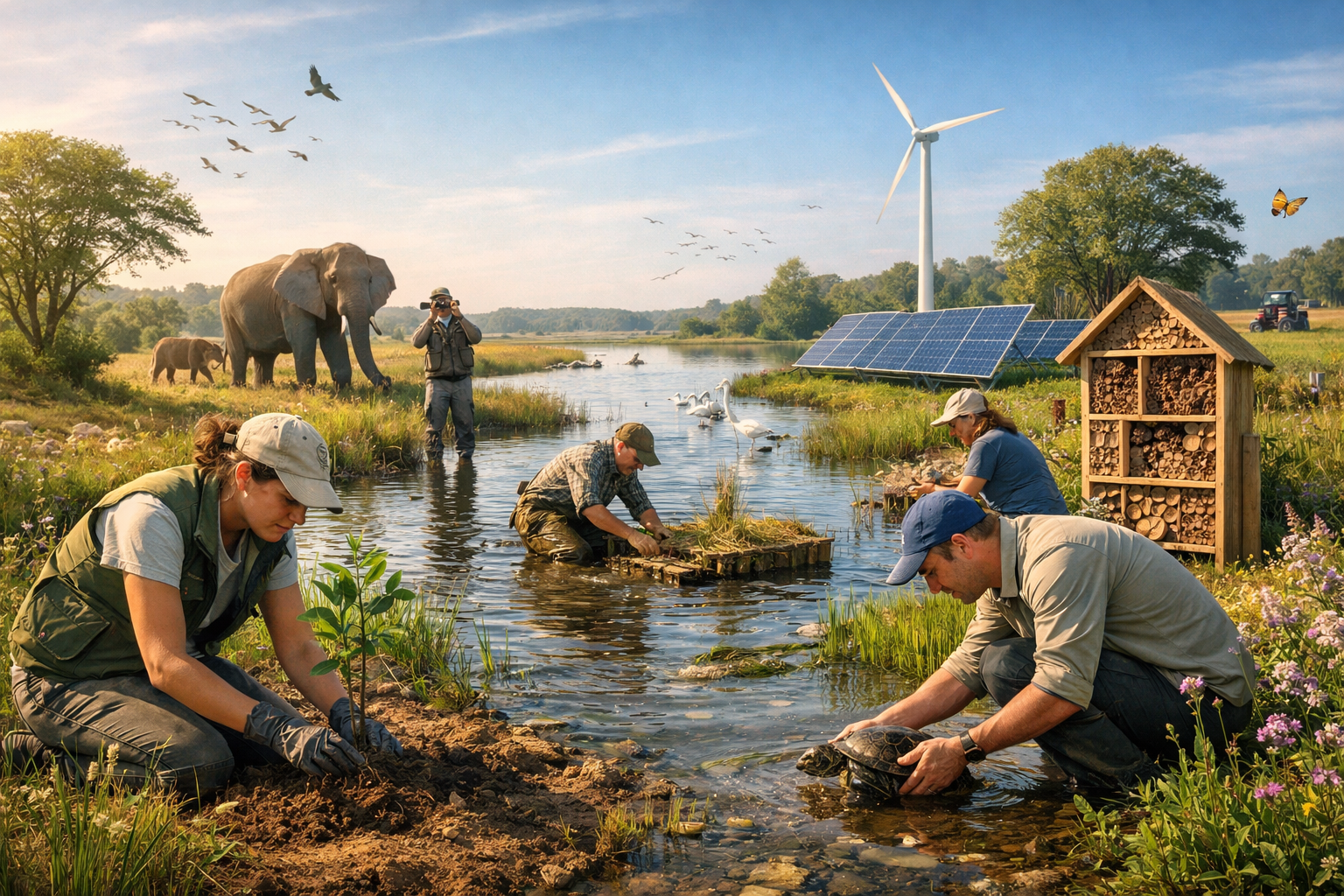
Urban and infrastructure planning also matters. Wildlife crossings, green corridors, and protection of urban wetlands can reduce fragmentation. Cities can grow without destroying every remaining habitat patch, but only if ecological design is included early in planning. These integrated strategies are essential conservation solutions for habitat loss because they work where habitat pressure is highest.
Policy, Enforcement, and Finance: Making Conservation Scalable
Local action is critical, but habitat loss is ultimately shaped by policy and economic incentives. Conservation becomes scalable when laws, enforcement systems, and financial mechanisms align with ecosystem protection.
Strong environmental regulations can limit deforestation, protect wetlands, and require biodiversity assessments before development. However, laws alone are not enough. Enforcement must be consistent, corruption must be addressed, and penalties must outweigh profits from illegal clearing.
A practical financial tool is payments for ecosystem services (PES). This approach compensates landowners or communities for protecting forests, watersheds, or biodiversity. When designed well, PES programs shift conservation from a moral request into an economic decision that supports livelihoods.
Corporate policy also matters because global supply chains drive land conversion. Deforestation-linked commodities like palm oil, soy, beef, timber, and cocoa can destroy habitat thousands of miles away from consumers. Companies adopting deforestation-free sourcing and transparent traceability reduce habitat loss at the production level.
Conservation finance must also expand. Public funding is rarely enough, so private investment and blended finance are increasingly important. Mechanisms such as green bonds, biodiversity credits, and conservation trust funds can provide long-term support for habitat protection and restoration. Without stable funding, conservation solutions for habitat loss remain limited to small projects rather than systemic change.
Community and Indigenous Leadership: The Most Reliable Long-Term Strategy
Habitat loss is not only an environmental issue. It is also a governance and rights issue. Many conservation projects fail when they exclude local communities or treat people as obstacles rather than partners. The most durable outcomes happen when conservation strengthens livelihoods and respects land ownership.
Community-based conservation works because local people have daily presence, knowledge, and long-term interest in the landscape. When communities benefit from conservation—through sustainable harvesting, ecotourism, PES programs, or secure land tenure—they are more likely to protect habitats against illegal encroachment.
Indigenous leadership is especially critical. Indigenous communities often manage ecosystems through traditional practices that maintain biodiversity. When their land rights are recognized and protected, habitat loss tends to decrease. This is not a cultural slogan; it is a practical conservation strategy with measurable outcomes.
Capacity building is also part of this solution. Training in monitoring, mapping, sustainable agriculture, and governance helps communities participate in conservation as decision-makers. Conservation solutions for habitat loss succeed when they build local power, not dependency.
Conclusion
The most effective conservation solutions for habitat loss are already known: protect remaining ecosystems, restore degraded landscapes, redesign land use, enforce strong policy, and fund conservation at scale while centering local and Indigenous leadership. Habitat loss can be slowed and reversed, but only through coordinated action that treats ecosystems as infrastructure essential to human survival. The priority now is execution, not experimentation.
FAQ
Q: What are the most effective conservation solutions for habitat loss today? A: Protecting intact habitats, restoring degraded ecosystems, improving land-use planning, and strengthening enforcement are the most consistently effective strategies.
Q: Is habitat restoration always better than protection? A: No. Protection is usually cheaper and more reliable, while restoration is essential when key ecosystems have already been damaged or fragmented.
Q: How does agriculture contribute to habitat loss, and what can reduce it? A: Agriculture drives land conversion through expansion; reducing it requires higher productivity on existing land, agroforestry, and better zoning to prevent clearing.
Q: Can companies really reduce habitat loss through supply chains? A: Yes. Deforestation-free sourcing, traceability, and verified standards can reduce demand for commodities linked to ecosystem destruction.
Q: Why are Indigenous and community-led approaches important for conservation? A: They improve long-term protection by securing land rights, using local knowledge, and creating incentives for sustainable habitat management.
