
How Technology is Revolutionizing Wildlife Conservation
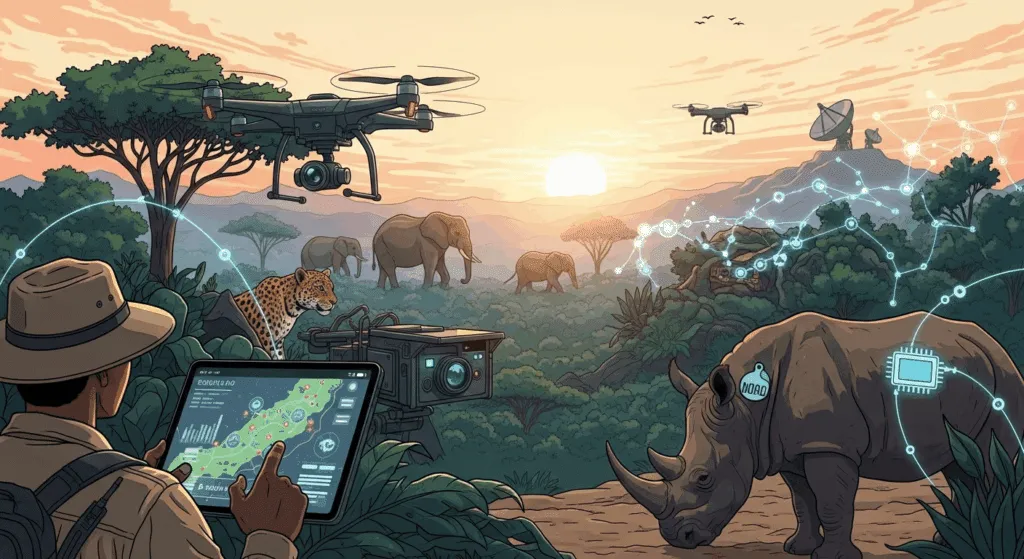
In an era where the planet's biodiversity faces unprecedented threats, from habitat loss and climate change to illegal poaching, the fight to protect our world's wildlife has become more critical than ever. Traditional conservation methods, while foundational, are often stretched thin against these mounting pressures. However, a new wave of innovation is sweeping through the field, offering a powerful arsenal of tools to safeguard endangered species and their ecosystems. This article explores in depth how technology is helping wildlife conservation, transforming it from a reactive practice into a proactive, data-driven science. We will delve into the revolutionary impact of everything from eyes in the sky to the invisible clues left in the environment, showcasing a future where innovation and nature work hand in hand.
The Eyes in the Sky: Drones and Satellite Imagery
The ability to see the big picture has always been a cornerstone of effective conservation. For decades, this meant expensive and often infrequent aerial surveys by plane or helicopter. Today, the advent of unmanned aerial vehicles (UAVs), or drones, and high-resolution satellite imagery has democratized aerial surveillance, providing conservationists with unprecedented access to real-time, high-quality data. This bird's-eye view is no longer a luxury but an essential tool for monitoring vast and often inaccessible terrains, from dense rainforests to expansive marine protected areas.
These aerial technologies serve multiple crucial functions. They enable precise mapping of habitats, allowing scientists to track deforestation, desertification, and the impacts of climate change with incredible accuracy. For anti-poaching units, drones equipped with thermal cameras can patrol protected areas at night, detecting poachers who operate under the cover of darkness. Furthermore, they are used for conducting animal censuses, offering a safer, less intrusive, and often more accurate way to count populations of large animals like elephants, rhinos, and wildebeest, providing vital data for population management strategies.
The synergy between drones and satellite imagery creates a comprehensive monitoring system. While satellites provide the broad, long-term context of landscape-level changes, drones offer the granular, on-demand detail needed for immediate action. A satellite might flag an area of recent deforestation, and a drone can then be deployed to investigate the cause, identify illegal logging activities, or assess the immediate impact on local wildlife. This multi-layered approach empowers conservation teams to be more strategic, efficient, and responsive to threats as they emerge.
- #### Drones: The Agile Guardians
Drones have evolved into versatile platforms far beyond simple aerial photography. Modern conservation drones are equipped with a suite of sensors, including high-resolution RGB cameras, LiDAR (Light Detection and Ranging) for creating detailed 3D maps of forest canopies, and thermal imaging cameras. The latter is a game-changer for anti-poaching efforts. Ranger patrols, which are often dangerous and limited by manpower, can now be augmented by drones that silently scan huge territories for heat signatures, distinguishing between animals and humans and alerting ground teams to potential threats in real-time.
Despite their immense potential, the deployment of drones is not without its challenges. The initial cost of high-end equipment, the need for skilled pilots and data analysts, regulatory hurdles in many countries, and limitations like battery life and weather dependency are all significant considerations. However, as the technology becomes more affordable and user-friendly, and as specific conservation-focused drone solutions are developed, their role is set to expand, making them an indispensable part of the modern conservationist's toolkit.
- #### Satellite Imagery: The Big Picture Perspective
Satellite remote sensing provides a perspective that is impossible to achieve from the ground. By analyzing images captured over weeks, months, and years, scientists can monitor the health of entire ecosystems. For instance, using indices like the Normalized Difference Vegetation Index (NDVI), they can measure forest health and detect areas under stress from drought or disease. This long-term monitoring is crucial for understanding the cumulative impacts of human activity and climate change.
Organizations like Global Forest Watch use satellite data to provide near-real-time alerts on deforestation, empowering authorities and local communities to take action against illegal logging. In marine conservation, satellite imagery is used to track sea surface temperatures, monitor coral bleaching events, and even detect illegal fishing vessels that have turned off their standard tracking systems. For species like polar bears, satellite images of sea ice are essential for predicting how their hunting grounds are shrinking, providing critical data to inform climate policy and conservation strategies.
Data-Driven Decisions: AI and Machine Learning
The explosion of data from drones, camera traps, GPS collars, and satellites presents both an opportunity and a challenge. Manually sifting through millions of images or data points is an impossible task for already over-stretched conservation teams. This is where Artificial Intelligence (AI) and machine learning come in, acting as a powerful brain to process and interpret this "big data." AI algorithms can be trained to perform complex tasks in a fraction of the time it would take a human, bringing a new level of efficiency and insight to wildlife protection.
AI is not just about speed; it's about depth of analysis. Machine learning models can identify subtle patterns in animal behavior, habitat use, and poaching activities that might be missed by the human eye. This allows for the development of predictive models, which can forecast where poaching is most likely to occur or which habitats will become unsuitable for a particular species in the future. This shift from reactive monitoring to proactive, predictive conservation is one of the most significant transformations driven by technology.
By automating the mundane and empowering deeper analysis, AI frees up conservationists to focus on what they do best: implementing on-the-ground strategies, engaging with communities, and making informed policy decisions. The technology acts as a force multiplier, amplifying the impact of every dollar spent and every hour worked in the service of wildlife.
- #### Artificial Intelligence in Species Recognition
One of the most immediate applications of AI is in analyzing the data from camera traps. These motion-activated cameras are a cornerstone of wildlife research, but they can generate hundreds of thousands of images, many of which may be empty or triggered by waving grass. AI-powered platforms like Wildbook and Wildlife Insights use machine learning to automatically filter these images, identify the species present, and even recognize individual animals based on unique markings, such as the stripes on a zebra or the spot patterns on a whale shark.
This automation saves researchers countless thousands of hours of manual labor. A task that might have taken a team a year to complete can now be done in a matter of days or weeks. This acceleration allows for faster publication of scientific findings, quicker assessments of population health, and more timely conservation interventions. The accuracy of these AI models is constantly improving, often rivaling or even surpassing that of human experts.
- #### Predictive Analytics for Anti-Poaching
Perhaps the most life-saving application of AI is in the fight against poaching. Programs like PAWS (Protection Assistant for Wildlife Security) use machine learning to analyze historical data on poaching incidents, animal movements, and ranger patrols. The AI model then generates predictions about which areas are at the highest risk of poaching on any given day.
This intelligence allows park managers to deploy their limited ranger resources much more effectively. Instead of conducting random patrols or simply reacting to a poaching event, rangers can be directed to high-risk "hotspots," creating a powerful deterrent and increasing the chances of intercepting poachers. This data-driven approach has been successfully implemented in national parks in Africa and Asia, leading to an increase in the seizure of snares and a measurable reduction in illegal wildlife crime.
On the Ground: Advanced Tracking and Monitoring
Understanding where animals go, how they behave, and what threats they face is fundamental to protecting them. For decades, this involved rudimentary radio collars that required researchers to follow animals on foot or by plane with a directional antenna. Today, technology has miniaturized and super-powered tracking devices, giving us an intimate, 24/7 look into the lives of wild animals without disruption.
Modern tracking devices utilize GPS, satellite communication (like the Argos system), and even mobile phone networks to transmit precise location data in near real-time. But they do much more than just provide a dot on a map. These "bio-loggers" are often equipped with accelerometers to study movement behavior (e.g., hunting, resting, migrating), environmental sensors to record temperature and altitude, and even cameras to see the world from the animal's perspective. This rich stream of data is revolutionizing our understanding of animal ecology.
The insights gained are directly applicable to conservation. By mapping the migration corridors of elephants, for example, conservationists can work with governments and local communities to protect these vital pathways from development. By understanding the foraging patterns of sea turtles, they can advocate for restrictions on fishing in critical areas. This technology bridges the gap between animal behavior and tangible conservation action.
- #### GPS and Satellite Collars
The evolution of GPS collars has been transformative. Lighter, more powerful batteries and more efficient electronics mean that collars can be fitted to a wider range of species, from majestic snow leopards in the Himalayas to elusive jaguars in the Amazon. The data collected helps researchers define home ranges, identify key breeding and feeding grounds, and, critically, understand an animal's interaction with human-dominated landscapes.
This information is vital for mitigating human-wildlife conflict. When a collared lion pride approaches a cattle enclosure, an automated alert can be sent to the local community, giving them time to secure their livestock and avoiding a retaliatory killing of the lions. Similarly, tracking data that shows elephants frequently crossing a proposed new highway can provide the evidence needed to argue for the construction of a wildlife overpass, saving both animal and human lives.
- #### The Unseen Clues: eDNA and Acoustic Monitoring
Some of the most exciting technological advances involve detecting species without ever seeing or touching them. Environmental DNA (eDNA) is a revolutionary technique where scientists can determine the presence of a species simply by analyzing trace amounts of DNA left behind in water, soil, or air from skin, feces, or other cells. This non-invasive method is perfect for detecting rare, shy, or aquatic species that are difficult to survey visually. A single bottle of water from a river can reveal the entire fish community living upstream.
Acoustic monitoring operates on a similar principle of passive detection. Arrays of sophisticated microphones can be deployed in forests or oceans to record the soundscape. AI algorithms then analyze these recordings to identify the calls of specific birds, frogs, bats, or marine mammals. This technique can be used to monitor biodiversity over large areas, track the recovery of an ecosystem after restoration, or even detect the sound of chainsaws or gunshots in protected areas, providing an early warning system for illegal activities.
Empowering People: Citizen Science and Mobile Technology
Conservation cannot succeed without public support and engagement. Technology is playing a pivotal role in breaking down the barriers between the scientific community and the general public, turning interested citizens into active participants in data collection. This movement, known as "citizen science," is being supercharged by the ubiquity of smartphones and mobile applications.
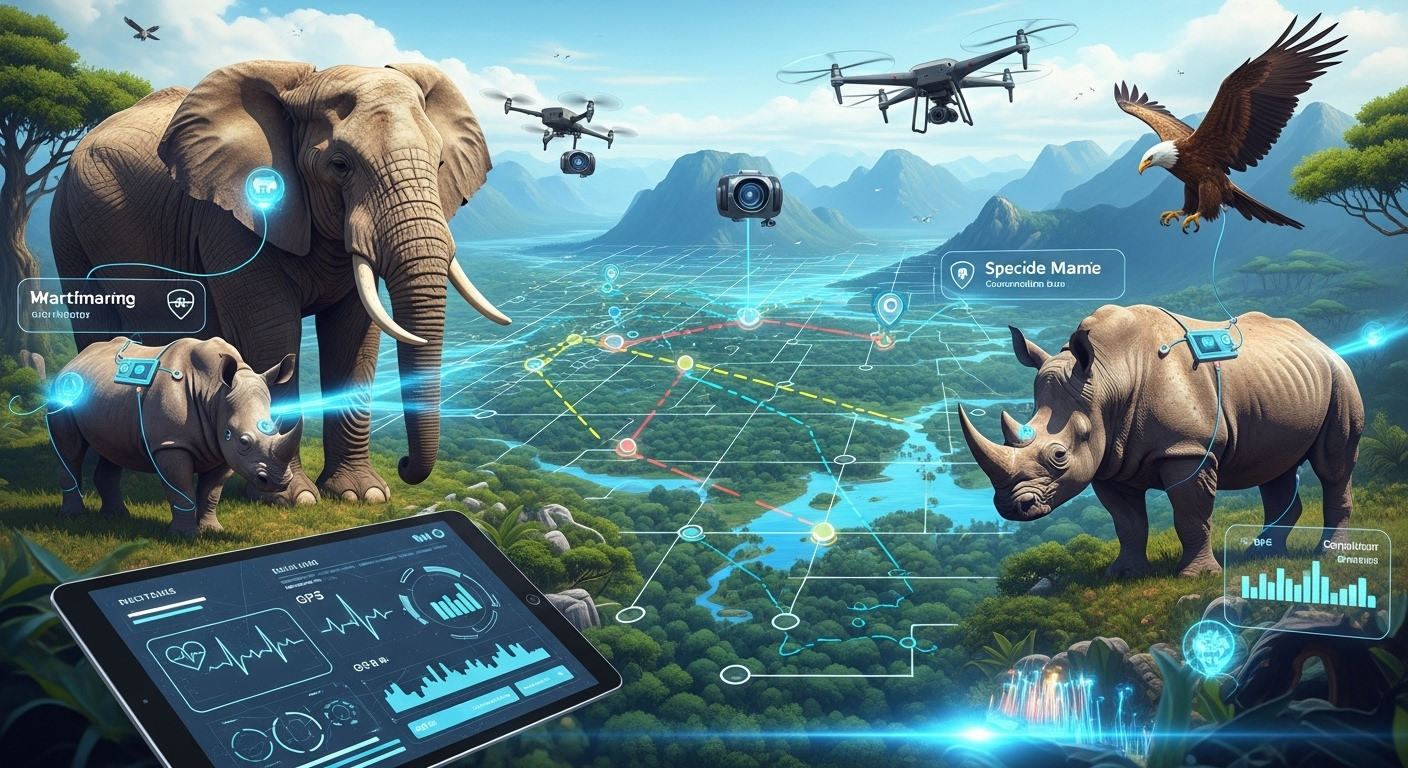
The principle is simple: empower ordinary people with the tools to record and submit their observations of the natural world. A tourist on safari, a hiker in a national park, or a birdwatcher in their backyard can all contribute valuable data. When aggregated, these millions of individual data points create a dataset of immense scale and geographic scope, far exceeding what professional scientists could ever collect on their own.
This approach has a powerful dual benefit. First, it provides researchers with a torrent of valuable, geo-tagged information on species distribution and abundance. Second, it fosters a deeper connection between people and nature. By actively participating in the scientific process, individuals become more invested in the outcomes of conservation, turning into advocates for wildlife protection in their own communities.
- #### Conservation at Your Fingertips: Mobile Apps
Mobile applications like iNaturalist have transformed the smartphone into a powerful conservation tool. A user can simply take a photo of a plant or animal, and the app’s image recognition AI will suggest a likely identification. Once confirmed by the community, this observation—complete with date, time, and GPS coordinates—becomes a scientific data point that is accessible to researchers worldwide.
Other apps are designed for more specific tasks. For example, Marine Debris Tracker allows users to log the types and quantities of litter they find on beaches, contributing to a global database on plastic pollution. Apps like ZSL Instant Wild allow users to identify animals in camera trap images, directly assisting conservation organizations with their data processing. These tools make contributing to real science accessible to anyone with a phone.
- #### Crowdsourcing Data Analysis
Beyond simple data collection, technology enables the crowdsourcing of complex analysis. Platforms like Zooniverse host hundreds of research projects that require human intelligence. Volunteers can help researchers by listening to audio files to identify whale calls, transcribing old museum specimen labels to digitize historical data, or tracing galaxies in astronomical images.
In the context of wildlife, a popular type of project involves classifying images from camera traps set up in remote locations. A small research team might be overwhelmed by 500,000 photos from the Serengeti, but by uploading them to Zooniverse, they can enlist tens of thousands of volunteers to help identify the animals in each image. This "power of the crowd" dramatically accelerates the pace of discovery and makes large-scale research projects feasible.
The Challenges and Ethical Considerations of Technology
While the promise of technology in conservation is immense, it is not a panacea. The deployment of these advanced tools comes with a host of challenges, practical hurdles, and ethical questions that must be carefully navigated. Over-reliance on technology without considering the socio-economic and ecological context can lead to failed projects and unintended negative consequences.
One of the most significant barriers is the "digital divide." High-tech solutions like predictive AI and advanced drone fleets are expensive to acquire, maintain, and operate. This creates a gap between well-funded international organizations and smaller, local, or government-run conservation groups, particularly in the developing nations where biodiversity is most threatened. Without equitable access and proper training, technology can widen existing inequalities rather than closing them.
Furthermore, the very data that is so valuable to conservationists can also be a liability. The location data of a tracked rhino, if it falls into the wrong hands, becomes a digital roadmap for poachers. The use of surveillance technology like drones also raises ethical questions about privacy, particularly when used in areas inhabited by local or indigenous communities. Therefore, robust data security protocols and a strong ethical framework are not optional extras; they are essential components of any tech-based conservation strategy.
- #### The Cost and Accessibility Barrier
The sticker price of a thermal drone or a satellite data subscription can be prohibitive for many organizations on the front lines of conservation. Beyond the initial purchase, there are ongoing costs for maintenance, software, data storage, and, crucially, the specialized personnel needed to operate the technology and analyze the data it produces.
Addressing this requires a multi-pronged approach. This includes the development of lower-cost, open-source hardware and software solutions. It also involves a greater emphasis on capacity building and training programs that empower local conservationists to use and maintain these tools independently. Partnerships between tech companies, academic institutions, and conservation NGOs are vital for transferring knowledge and making these powerful tools more accessible to those who need them most.
- #### Data Security and Misuse
The risk of tracking data being hacked by poaching syndicates is very real. To mitigate this, organizations must invest in strong data encryption, secure servers, and strict access protocols. Some systems are designed to only show the general area of an animal’s location, rather than its precise real-time coordinates, to anyone outside a core group of trusted security personnel.
Another ethical consideration is the impact of the technology on the animals themselves. The process of capturing and collaring an animal can be stressful and carries a risk of injury. Researchers must adhere to strict ethical guidelines to ensure that the scientific and conservation benefits of tracking an animal far outweigh the potential harm to the individual. The goal is always to gather critical data with the minimum possible disturbance.
***
Comparative Table: Traditional vs. Tech-Enabled Conservation
| Aspect of Conservation | Traditional Method | Technology-Enabled Method | Key Advantage of Technology |
|---|---|---|---|
| Animal Census | Manual ground counts, aerial surveys by plane. | Drone swarms, AI analysis of satellite imagery. | Higher accuracy, less disturbance, lower cost, safer for staff. |
| Anti-Poaching Patrols | Reactive patrols based on intuition or past incidents. | Predictive AI (e.g., PAWS) guiding proactive patrols. | Increased efficiency, deterrent effect, data-driven deployment. |
| Habitat Monitoring | Infrequent ground surveys to assess vegetation. | Real-time satellite imagery (e.g., Global Forest Watch). | Continuous, large-scale monitoring of deforestation and health. |
| Species Detection | Visual surveys, physical trapping. | eDNA analysis of water/soil, acoustic monitoring. | Non-invasive, detects rare/elusive species, broader scope. |
| Data Collection | Manual note-taking, localized data. | Citizen science apps (iNaturalist), crowdsourcing. | Massive scale, global coverage, public engagement, low cost. |
***
Frequently Asked Questions (FAQ)
Q: What is the single most impactful technology in wildlife conservation today?
A: It's difficult to name just one, as the most effective strategies often integrate multiple technologies. However, the combination of AI and remote sensing (drones and satellites) is arguably the most transformative. AI's ability to process massive datasets from these aerial platforms allows conservationists to monitor huge areas, detect threats in near real-time, and predict future hotspots, fundamentally changing the scale and efficiency of conservation efforts.
Q: Can ordinary people get involved with conservation technology?
A: Absolutely. This is one of the most exciting developments. Through citizen science platforms like iNaturalist and Zooniverse, anyone with a smartphone or computer can contribute directly to scientific research. You can help by logging wildlife sightings in your local park, identifying animals in camera trap photos from Africa, or transcribing historical records. This democratizes science and provides invaluable data for conservationists.
Q: Is technology making conservationists' jobs obsolete?
A: Not at all. Technology is a tool that enhances, rather than replaces, the work of conservationists. It automates repetitive tasks (like sorting images) and provides better data, which frees up human experts to focus on complex, uniquely human tasks: strategy, community engagement, policy advocacy, fundraising, and on-the-ground interventions. The technology provides the "what" and "where," but humans are still needed for the "how" and "why."
Q: What are the risks of using technology to track endangered animals?
A: The primary risk is security. The GPS data that helps protect an animal could, if intercepted by poachers, lead them directly to it. To combat this, conservation organizations use strong data encryption, controlled access, and sometimes intentionally reduce the precision of publicly shared data. There is also the physical risk and stress to the animal during the capture and collaring process, which is why all such procedures are governed by strict ethical veterinary protocols to minimize harm.
Conclusion
The narrative of wildlife conservation is being rewritten. No longer solely a story of determined rangers tracking footprints in the dust, it is now also a story of algorithms predicting poaching hotspots, of satellites tracking the health of a forest from space, and of a global community of citizen scientists contributing data with a tap on their phones. Technology is providing a powerful and ever-evolving arsenal of tools that are making conservation more intelligent, more efficient, and more proactive than ever before. From drones and AI to GPS tags and eDNA, these innovations are offering a new line of defense for the planet's most vulnerable species.
However, technology is not a silver bullet. It is a powerful amplifier of human effort, but it cannot replace the need for strong political will, sustainable funding, and deep community involvement. The future of wildlife depends on our ability to wisely integrate these revolutionary tools with the timeless dedication of the people on the ground, creating a hybrid strategy that is robust, equitable, and effective. The fight is far from over, but with technology as our ally, there is renewed hope for a future where humanity and wildlife can both thrive.
***
<h3>Article Summary</h3>
The article, "How Technology is Revolutionizing Wildlife Conservation," provides a comprehensive overview of how technological innovations are transforming the fight to protect global biodiversity. It highlights that while traditional methods are vital, technology offers a proactive, data-driven approach. Key technologies discussed include aerial surveillance tools like drones with thermal imaging for anti-poaching and high-resolution satellite imagery for habitat monitoring. The article emphasizes the critical role of Artificial Intelligence (AI) and machine learning in processing vast amounts of data, enabling automated species recognition from camera traps and predictive analytics to forecast poaching hotspots. It also covers on-the-ground advancements such as GPS collars for tracking animal movement and non-invasive methods like environmental DNA (eDNA) and acoustic monitoring. The piece further explores the empowerment of the public through citizen science and mobile apps, which crowdsource data collection and analysis. A dedicated section addresses the challenges and ethical considerations, including the digital divide, high costs, and the need for robust data security to protect tracked animals from poachers. The article concludes that technology is a powerful tool that amplifies human effort but must be integrated with strong policy and community engagement for true success, offering renewed hope for wildlife's future.
