
Greenwashing Explained: How to Spot a Fake Eco Brand
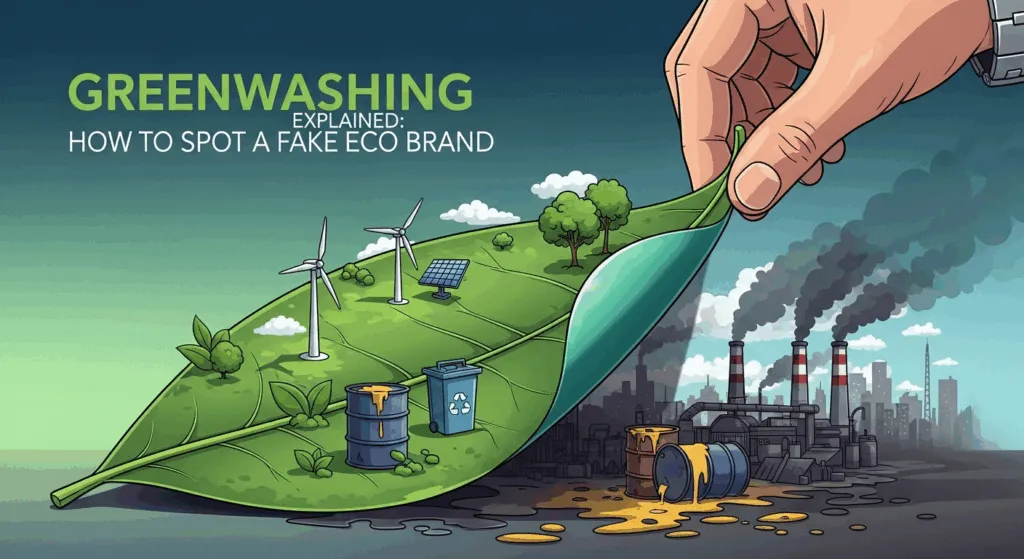
In an era where "sustainability" is more than just a buzzword, consumers are increasingly seeking out brands that align with their environmental values. We want products that are kind to the planet, made ethically, and contribute to a greener future. This powerful shift in consumer behavior has not gone unnoticed by corporations. While many companies are making genuine strides towards sustainability, others are simply riding the green wave with clever marketing tactics designed to deceive. This deceptive practice is rampant, making it crucial for every conscious consumer to understand what is greenwashing and how to spot it. This guide will arm you with the knowledge to cut through the noise, identify misleading claims, and truly support brands that are making a positive impact.
What Exactly is Greenwashing? A Deeper Dive
At its core, greenwashing is the act of conveying a false impression or providing misleading information about how a company's products are environmentally sound. It's a marketing spin employed to persuade the public that an organization's products, aims, or policies are environmentally friendly when, in reality, they are not. The term itself was coined in the 1980s by environmentalist Jay Westerveld, who noticed hotels were encouraging guests to reuse towels to "save the environment," while the same hotels were engaging in massive, non-eco-friendly expansion projects. This highlighted a critical disconnect: a small, token green act used to mask a much larger, environmentally damaging practice.
The motivation behind greenwashing is multifaceted but primarily driven by profit and reputation. Companies understand that a significant portion of the market—especially Millennials and Gen Z—is willing to pay more for sustainable products. By painting their products with a "green" brush, they can tap into this lucrative market without undertaking the often expensive and complex work of overhauling their supply chains, manufacturing processes, or business models. It’s a shortcut to a positive public image, allowing them to appear as responsible corporate citizens while potentially continuing harmful practices behind the scenes. This is not green marketing; it is deception.
The danger of greenwashing extends far beyond a single duped consumer. It systematically erodes public trust in all sustainability claims, making it harder for genuinely eco-conscious companies to stand out and be recognized for their efforts. When consumers become cynical and skeptical of all green labels, the market incentive for real change diminishes. Ultimately, greenwashing hinders progress by diverting well-intentioned consumer spending away from authentic solutions and toward cleverly disguised problems, perpetuating a cycle of environmental harm under the guise of responsibility.
The "Sins" of Greenwashing: A Framework for Detection
To help consumers navigate the murky waters of environmental claims, the environmental marketing firm TerraChoice (now part of UL) developed a framework known as the "Seven Sins of Greenwashing." This framework is an invaluable tool for deconstructing marketing messages and identifying red flags. Understanding these common deceptive tactics empowers you to ask the right questions and look beyond the surface-level claims. These 'sins' are not just theoretical; they are actively used in campaigns for products you see on shelves every day.
Learning to recognize these patterns is the first major step toward becoming an informed consumer. Instead of feeling overwhelmed by ambiguous green claims, you can use this framework as a mental checklist. Is the brand committing one or more of these sins? If so, it’s a strong indicator that you should be skeptical and dig deeper before making a purchase. Let's break down each of these deceptive strategies.
The Sin of the Hidden Trade-Off
This is one of the most common forms of greenwashing. It occurs when a company highlights a single "green" attribute of a product while ignoring other, more significant environmental issues associated with it. The claim itself might be true, but it's used to distract from a larger, less flattering picture. For example, a clothing company might boast that its t-shirts are made from "100% organic cotton" but fail to mention that the cotton was processed in a factory that pollutes local waterways and relies on exploitative labor practices.
A classic example in the paper industry is a product advertised as being made from sustainably harvested forests. While this sounds great, the claim conveniently glosses over the immense energy consumption, chlorine bleaching, and greenhouse gas emissions involved in the pulping and manufacturing process. The consumer is led to believe they are making a wholly sustainable choice, when in fact, they are only seeing a small, favorable piece of a much larger, more complex environmental puzzle. Always ask: what aren't they telling me?
The Sin of No Proof
This sin is committed when an environmental claim is made without any easily accessible supporting information or a reliable third-party certification. A brand might label their packaging as "recyclable" or their product as "biodegradable" without providing any evidence, instructions, or verification. These are just words on a package, designed to appeal to your green conscience without any accountability.
If a cosmetic brand claims its ingredients are "sustainably sourced," you should be able to find information on their website detailing where and how they are sourced. If a product boasts it's made with "50% more recycled content," there should be a certification like the Global Recycled Standard (GRS) or a detailed report to back it up. A legitimate green claim will always be transparent and verifiable. The absence of proof is a major red flag that suggests the claim is hollow.
The Sin of Vagueness
Vague and ambiguous terms are a greenwasher's best friend. This sin involves using words that are so poorly defined or broad that their real meaning is likely to be misunderstood by the consumer. phrases like "all-natural," "eco-friendly," "green," or "environmentally safe" are common culprits. What does "all-natural" even mean? Arsenic and mercury are also "all-natural," but you certainly wouldn't want them in your skincare.
These terms are essentially meaningless without specific context and clarification. A truly eco-friendly product would have specific claims, such as "Made with 100% wind power" or "Packaged in post-consumer recycled cardboard that is certified by the FSC." When you see a product simply labeled "eco-friendly," it's a signal that the company is likely trying to benefit from the positive association of the word without committing to any specific, measurable standard. Demand specifics; reject vagueness.
Real-World Greenwashing Examples: Learning from Big Brands
Greenwashing isn't confined to a single industry; it is a widespread issue that can be found in sectors ranging from fashion and beauty to energy and automotive. Examining real-world cases helps to solidify the concepts and makes it easier to spot these tactics in your own shopping experiences. Big corporations, with their massive marketing budgets, are often the most prominent examples, providing clear lessons on what to watch out for.
In the fast-fashion world, many brands have launched "conscious collections" or "sustainable lines." However, critics point out that the fundamental business model of fast fashion—producing huge volumes of low-quality clothing designed to be worn a few times and then discarded—is inherently unsustainable. Promoting a small collection made with organic cotton or recycled polyester while continuing to churn out millions of other garments is a textbook example of the Sin of the Hidden Trade-Off. It creates a halo effect for the brand without addressing the core problem of overproduction and waste.
The food and beverage industry is another hotbed for greenwashing. You might see a plastic water bottle adorned with images of green leaves and mountains, with the word "pure" or "eco" prominently displayed. This is visual greenwashing, designed to make you feel that the product is environmentally friendly. In reality, the production and disposal of single-use plastic bottles have a massive negative environmental impact. Similarly, a snack brand might label its product "natural" because it doesn't contain artificial flavors, while ignoring the fact that its main ingredients (like palm oil) may be linked to deforestation and habitat destruction.
Your Toolkit for Spotting Greenwashing: Practical Steps
Becoming adept at spotting greenwashing isn't about being cynical; it's about being a critical and empowered consumer. You don’t need a degree in environmental science to make informed choices. By developing a few key habits and knowing where to look for information, you can build a reliable "greenwashing detector." This toolkit is about moving beyond the marketing slogans and evaluating a brand based on its actions, not just its words.
Scrutinize the Language and Imagery
The first line of defense is a critical eye. Pay close attention to the specific words used on packaging and in advertisements. As we've discussed, be immediately skeptical of vague, feel-good terms like "eco," "green," and "earth-friendly." Instead, look for concrete and specific claims. "Made from 50% post-consumer recycled plastic" is a strong, measurable claim. "Eco-friendly plastic" is not. Also, be wary of imagery. Brands often use pictures of leaves, green fields, and pristine water to create an unfounded association with nature. Ask yourself if the product's actual qualities justify this imagery.

Look for Third-Party Certifications
This is perhaps the most reliable way to verify a brand's claims. Independent, third-party organizations exist to audit companies and certify that their products meet specific environmental or ethical standards. These certifications provide an objective seal of approval that cuts through marketing fluff. When you see a certification logo, it means the company has gone through a rigorous verification process.
Some of the most reputable certifications to look for include:
- USDA Organic: For food and agricultural products, ensures they are grown and processed according to federal guidelines.
- Fair Trade Certified: Focuses on ethical standards, ensuring that producers in developing countries receive fair prices and have safe working conditions.
- Forest Stewardship Council (FSC): For paper and wood products, certifies that they come from responsibly managed forests.
- B Corp Certification: A holistic certification that evaluates a company's entire social and environmental performance, from supply chain to employee benefits.
- EWG Verified™: For cosmetics and personal care products, ensures they are free from the Environmental Working Group's chemicals of concern.
Demand Transparency and Data
A truly sustainable company is proud of its efforts and is usually happy to share the details. Transparency is the antidote to greenwashing. Look for a dedicated sustainability or impact section on the company's website. This is where you should find detailed reports, data, and information about their supply chain, carbon footprint, water usage, and goals for the future.
If a company claims to be "carbon neutral," they should have a public report explaining how they calculated their emissions and what specific offsets or reduction strategies they are using. If they claim to pay a living wage, they should be transparent about how they define and verify that. If this information is hard to find, non-existent, or hidden behind a corporate paywall, it’s a strong signal that the company’s green claims may be more about marketing than genuine commitment.
The Broader Impact: Why Greenwashing Matters
The consequences of greenwashing are far more severe than simply a consumer wasting a few extra dollars on a product that isn't as green as advertised. This practice inflicts deep and lasting damage on the entire sustainability movement. When companies repeatedly make false or exaggerated claims, it breeds a culture of cynicism and distrust among the public. Consumers become weary of being misled and may start to believe that no company is truly sustainable, a phenomenon known as "green-skepticism."
This erosion of trust is incredibly harmful to the small and medium-sized businesses that are genuinely innovating and investing in sustainable practices. These authentic brands often operate on tighter margins and cannot compete with the massive marketing budgets of large corporations that greenwash. When a consumer can't tell the difference between a genuinely circular product and a cleverly marketed disposable one, the truly sustainable option loses its competitive edge. Greenwashing levels the playing field in favor of the deceivers, punishing the innovators.
Furthermore, greenwashing creates a dangerous illusion of progress. It allows corporations and, by extension, consumers to feel good about their choices without making any meaningful changes. This diverts attention, investment, and regulatory pressure away from addressing the root causes of environmental degradation. Instead of pushing for systemic change—like redesigning products for longevity, investing in renewable energy, or transitioning to a circular economy—we get distracted by token gestures. This ultimately slows down the urgent and necessary transition to a truly sustainable global economy.
Greenwashing Claims vs. Genuine Sustainability
To make these concepts even clearer, the table below compares common greenwashing tactics with the hallmarks of a genuinely sustainable approach.
| Greenwashing Claim/Tactic | Red Flag | Genuine Sustainability Indicator |
|---|---|---|
| Vague statement like "Eco-Friendly" or "Green" | No specific meaning, impossible to verify. | Specific claim like "Made with 100% renewable energy from our on-site solar panels." |
| Emphasizing one minor green attribute. | The Sin of the Hidden Trade-Off. | Holistic transparency. The company provides a full lifecycle assessment or annual sustainability report. |
| Having a "conscious collection" while the core business is unsustainable. | A small good deed used to mask a larger negative impact. | The company's core business model is built on sustainability, such as a B Corp Certification. |
| Using nature-based imagery (leaves, water) on unsustainable products (e.g., plastic bottles). | Emotional manipulation, no connection to the product's actual impact. | The product has a credible eco-label like FSC Certified or USDA Organic displayed clearly. |
| Making a claim with no way to check it. | The Sin of No Proof. | The claim is backed by publicly available data, reports, and reputable third-party certifications. |
FAQ: Frequently Asked Questions About Greenwashing
Q: Is greenwashing illegal?
A: In many countries, yes, it can be. Deceptive advertising is regulated by government bodies like the Federal Trade Commission (FTC) in the United States. The FTC's Green Guides provide direction on what constitutes a fair and unfair environmental marketing claim. Companies that make false or unsubstantiated claims can face fines and legal action. However, enforcement can be challenging, which is why consumer awareness is so critical.
Q: What's the difference between green marketing and greenwashing?
A: Green marketing is the legitimate practice of promoting products or services based on their genuine environmental benefits. It is honest, transparent, and backed by evidence. For example, an electric car company advertising its vehicle's zero tailpipe emissions is green marketing. Greenwashing, on the other hand, is the deceptive use of green marketing to mislead consumers. It's when the claims are false, exaggerated, or used to distract from larger environmental harms.
Q: Can small businesses also be guilty of greenwashing?
A: Absolutely. While large corporations are often the most high-profile offenders, greenwashing can happen at any scale. A small, local soap maker might label their products "all-natural" and "chemical-free" to appeal to consumers, even if they use synthetic fragrances or other non-natural ingredients. The intent and the deceptive effect are the same, regardless of the company's size.
Q: What should I do if I think a company is greenwashing?
A: You have power as a consumer. First, choose not to buy the product. Spend your money on brands you have verified to be more sustainable. Second, you can contact the company directly via social media or email and ask for proof of their claims. Third, for significant false advertising, you can report the company to consumer protection agencies like the FTC or the Better Business Bureau. Publicly calling out a brand can also pressure them to be more transparent.
Conclusion
Navigating the world of sustainable consumerism is becoming increasingly complex, but it is far from impossible. Greenwashing thrives on consumer ignorance and apathy. By understanding its common tactics—from hidden trade-offs to vague language—you are no longer an easy target for deceptive marketing. The power to drive real change lies in our collective ability to ask critical questions, demand transparency, and look for verifiable proof in the form of data and third-party certifications.
Every purchase is a vote for the kind of world you want to live in. By choosing to support companies that demonstrate a genuine, holistic commitment to environmental and social responsibility, you send a powerful message to the entire market: Genuineness sells, and deception will be exposed. Be curious, be critical, and invest in a future that is truly, not just superficially, green.
***
Summary
The article, "Greenwashing Explained: How to Spot a Fake Eco Brand," serves as a comprehensive guide for conscious consumers aiming to identify and avoid deceptive environmental marketing. It defines greenwashing as the practice of misleading the public into believing a company's products or policies are more environmentally friendly than they actually are. The article breaks down common greenwashing tactics using the "Seven Sins" framework, including the Sin of the Hidden Trade-Off, the Sin of No Proof, and the Sin of Vagueness. It provides real-world examples from industries like fast fashion and food, illustrating how these deceptive strategies are applied.
To empower readers, the article offers a practical toolkit for spotting greenwashing, emphasizing the need to scrutinize vague language, look for credible third-party certifications (like B Corp or FSC), and demand corporate transparency through public data and sustainability reports. It underscores the broader negative impacts of greenwashing, such as eroding consumer trust and hindering genuine environmental progress. Finally, a comparative table, an FAQ section, and a strong conclusion encourage consumers to use their purchasing power to support authentic sustainable brands and hold misleading companies accountable.
