
Smart Ways for Families to Reduce Energy Consumption
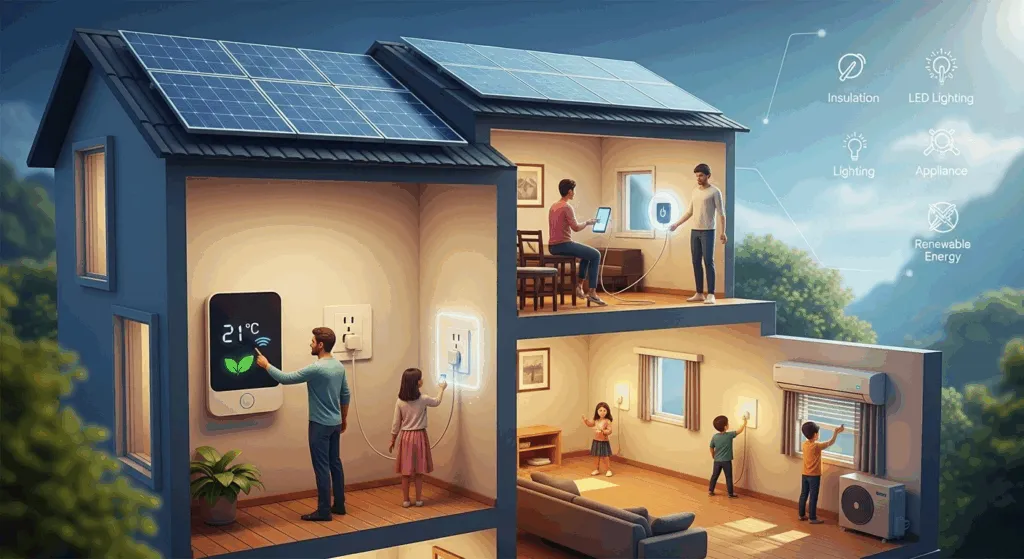
In today's world, where utility bills seem to be constantly on the rise and environmental awareness is more critical than ever, finding effective methods for reducing energy consumption for families is no longer just a trend—it's a necessity. For many households, the challenge lies not in the desire to save energy, but in knowing where to start. It can feel like a monumental task, riddled with technical jargon and expensive upgrades. The good news is that significant savings and a smaller carbon footprint are achievable through a series of smart, practical, and often simple changes. This comprehensive guide will walk you through actionable strategies, from quick habit adjustments to wise long-term investments, empowering your family to become a more energy-efficient unit.
The Foundation: Performing a Family-Friendly Home Energy Audit
Before you can effectively reduce your energy consumption, you first need to understand where it's all going. A home energy audit is like a detective investigation for your house, uncovering the culprits behind high utility bills. It's the critical first step that provides a baseline and a roadmap for your energy-saving journey. Without this data, you might be focusing your efforts in the wrong places, like obsessing over unplugging a phone charger while an old, drafty window is costing you hundreds of dollars a year in lost heat.
An audit reveals the "low-hanging fruit"—the easiest and most impactful changes you can make right away. It also helps you prioritize larger investments. You'll discover which appliances are the biggest energy hogs, where your home is losing precious heated or cooled air, and how your family's daily habits contribute to the overall picture. This foundational knowledge is empowering, transforming the abstract goal of "saving energy" into a concrete, manageable plan with measurable results.
The process doesn't have to be overly technical or expensive. While professional audits offer detailed analysis using specialized equipment like blower doors and infrared cameras, a do-it-yourself (DIY) audit is an excellent starting point for any family. It involves a systematic walkthrough of your home, using your senses and some basic tools to identify problem areas. This hands-on approach is also a fantastic educational opportunity to get the entire family involved from day one, making them part of the solution.
The DIY Energy Audit Checklist
A DIY audit is all about being observant. Grab a notepad and walk through your home, both inside and out, specifically looking for energy waste. A great way to involve kids is to call them "Energy Detectives" and give them specific tasks. Look for air leaks around windows and doors, check the age and condition of your insulation in the attic, and inspect the seals on your refrigerator and freezer doors.
Here’s a simple checklist to get you started:
- Locate Air Leaks: On a windy day, hold a lit incense stick or a thin piece of toilet paper near windows, electrical outlets, and door frames. If the smoke or paper wavers, you have an air leak that needs sealing with caulk or weatherstripping.
- Check Insulation: Head up to your attic. Can you see the floor joists? If so, you likely need more insulation. Measure the depth; most regions recommend at least 12-15 inches of fiberglass or cellulose insulation.
- Inspect Appliances and Electronics: Make a list of your major appliances. Note their age and look for the ENERGY STAR® label. Check how many electronic devices are plugged in at all times, even when not in use. This helps identify sources of "vampire power."
- Review Lighting: Count how many of your lightbulbs are still incandescent rather than LEDs. This is one of the quickest and most cost-effective changes you can make.
When to Call a Professional
While a DIY audit is invaluable, a professional energy auditor can take your understanding to the next level. They are particularly useful if you live in an older home, are planning a major renovation, or if your DIY audit doesn't explain your persistently high bills. These experts use sophisticated tools to provide a quantifiable analysis of your home's energy performance.
A professional will typically perform a blower door test, which depressurizes your home to pinpoint every single air leak with stunning accuracy. They also use thermographic inspections (infrared scans) to visually identify areas of poor insulation or heat loss that are invisible to the naked eye. The detailed report you receive will not only list the problems but also recommend solutions prioritized by their return on investment (ROI). This tells you which upgrades will save you the most money the fastest, taking the guesswork out of your long-term planning.
Mastering Heating and Cooling: The Biggest Energy Battleground
For the average family, heating and cooling account for nearly half of their total energy bill. This makes your HVAC (Heating, Ventilation, and Air Conditioning) system the single most important area to optimize. Even small adjustments in how you manage your home's temperature can lead to substantial financial savings and a significant reduction in your carbon footprint. The key is to work smarter, not harder, by using technology and simple physics to your advantage.
Think of your home as a thermal container. Your goal is to keep the heat inside during the winter and outside during the summer. Every time your HVAC system kicks on, it's a direct response to your home failing to maintain its desired temperature. By improving your home's ability to retain that temperature naturally, you reduce the workload on your system. This involves a three-pronged attack: smart thermostat management, sealing your home's envelope, and using natural elements to your advantage.
The impact of focusing on this area cannot be overstated. According to the Department of Energy, you can save as much as 10% a year on heating and cooling by simply turning your thermostat back 7°-10°F from its normal setting for 8 hours a day. Combining this simple habit change with improvements in insulation and air sealing can easily double those savings, putting hundreds of dollars back into your family's budget each year.
The Power of a Programmable or Smart Thermostat
If you still have an old-school manual thermostat, upgrading to a programmable or smart model is one of the highest-impact investments you can make. A programmable thermostat allows you to "set it and forget it," automatically adjusting the temperature when your family is asleep or away from home. You no longer have to remember to turn the heat down before leaving for work; the thermostat does it for you.
A smart thermostat takes this a step further. It learns your family's patterns and preferences over time, building a custom schedule to maximize efficiency. Many models can be controlled remotely from your smartphone, so if you forget to adjust the temperature before leaving for vacation, you can do it from the airport. Some even use geofencing to detect when your phone leaves the house and automatically switch to an "away" mode. This level of automation ensures you are never wasting energy heating or cooling an empty home.
Sealing the Deal: Insulation and Air Leaks
You can have the most efficient HVAC system in the world, but it won't matter if your heated or cooled air is escaping through cracks and gaps. This is like trying to fill a leaky bucket. Caulk and weatherstripping are your best friends in this fight. They are inexpensive, easy to apply, and provide an immediate payback by sealing leaks around windows, doors, and baseboards.
Proper insulation, particularly in your attic, is another critical component. Heat naturally rises, and in the winter, a poorly insulated attic acts like a giant vent, letting all that expensive warmth escape. In the summer, the sun beats down on your roof, and a lack of insulation allows that heat to radiate down into your living space, making your air conditioner work overtime. Adding insulation is not a glamorous project, but it’s a one-time investment that delivers energy savings for the life of your home.
The Kitchen and Laundry Room: Energy-Saving Hotspots
The kitchen and laundry room are bustling hubs of family life, but they are also packed with some of your home's most energy-intensive appliances. From the refrigerator that runs 24/7 to the dryer that tumbles heavy loads of wet clothes, these rooms are major contributors to your utility bills. The good news is that they are also filled with opportunities for significant energy savings through a combination of smarter usage habits and strategic appliance choices.
Many of the most effective changes in these rooms cost nothing at all. They are about shifting your mindset and routines. For example, simply waiting until you have a full load before running the dishwasher or washing machine can make a big difference. These small, conscious decisions, when adopted by the whole family and repeated daily, compound into impressive annual savings. It's about maximizing the efficiency of every cycle and every appliance.
Furthermore, when it comes time to replace an old appliance, making an energy-efficient choice is paramount. Look for the blue ENERGY STAR® label, which certifies that the product meets strict energy efficiency guidelines set by the U.S. Environmental Protection Agency. An ENERGY STAR® certified refrigerator, for instance, is about 9% more energy-efficient than a standard model, while a certified clothes washer uses about 25% less energy and 33% less water.
Smart Appliance Habits
Let's start with the kitchen. Your refrigerator is a silent energy consumer. Ensure its temperature is set correctly—between 37°F and 40°F for the fridge and at 0°F for the freezer. Regularly clean the condenser coils on the back or bottom of the unit; dusty coils force the compressor to work harder. When cooking, use smaller appliances like microwaves, slow cookers, or toaster ovens whenever possible, as they use significantly less energy than a full-sized electric oven.
In the laundry room, the biggest energy hog is usually the clothes dryer. Make it a habit to clean the lint filter after every single load to improve air circulation and efficiency. Better yet, embrace line-drying your clothes on sunny days. It’s free, gentle on your fabrics, and leaves your clothes smelling fresh. If you must use a dryer, use the moisture-sensor setting instead of a timed dry, as this automatically shuts the machine off when the clothes are dry, preventing wasted energy. For your washer, a revolutionary change is to wash your clothes in cold water. Modern detergents are formulated to work just as effectively in cold water, and this simple switch eliminates the energy used to heat the water, which can account for up to 90% of the energy a washer consumes.
The Full Load Philosophy
This principle applies to both the dishwasher and the washing machine. These appliances are designed to be most efficient when they are running at full capacity. Running a half-empty dishwasher uses almost the same amount of water and energy as running a full one. This means you are essentially doubling your energy cost per dish.
Teach your family to scrape, not rinse, plates before loading them into the dishwasher; modern detergents and dishwashers are powerful enough to handle the rest. Wait until the dishwasher is completely full before starting a cycle. The same logic applies to laundry. Instead of washing small, frequent loads, aim for full loads. This not only saves energy and water but also reduces wear and tear on your machines and saves you time.
Lighting and Electronics: Slaying the "Vampire Power" Dragon
In our hyper-connected world, the number of electronic devices in the average home has exploded. From televisions and gaming consoles to laptops and a myriad of smart speakers and chargers, our homes are filled with gadgets that constantly draw power. This phenomenon, often called "vampire power" or "phantom load," refers to the energy that electronics consume even when they are turned off or in standby mode. This silent energy drain can account for up to 10% of your household's electricity use.
Alongside electronics, lighting is another key area for easy energy savings. For decades, the inefficient incandescent bulb was the standard, wasting about 90% of its energy as heat. The shift to more efficient lighting technologies, particularly LEDs, represents one of the simplest and most cost-effective energy-saving upgrades a family can make. Tackling both lighting and electronic-related energy waste can quickly trim your electricity bill.
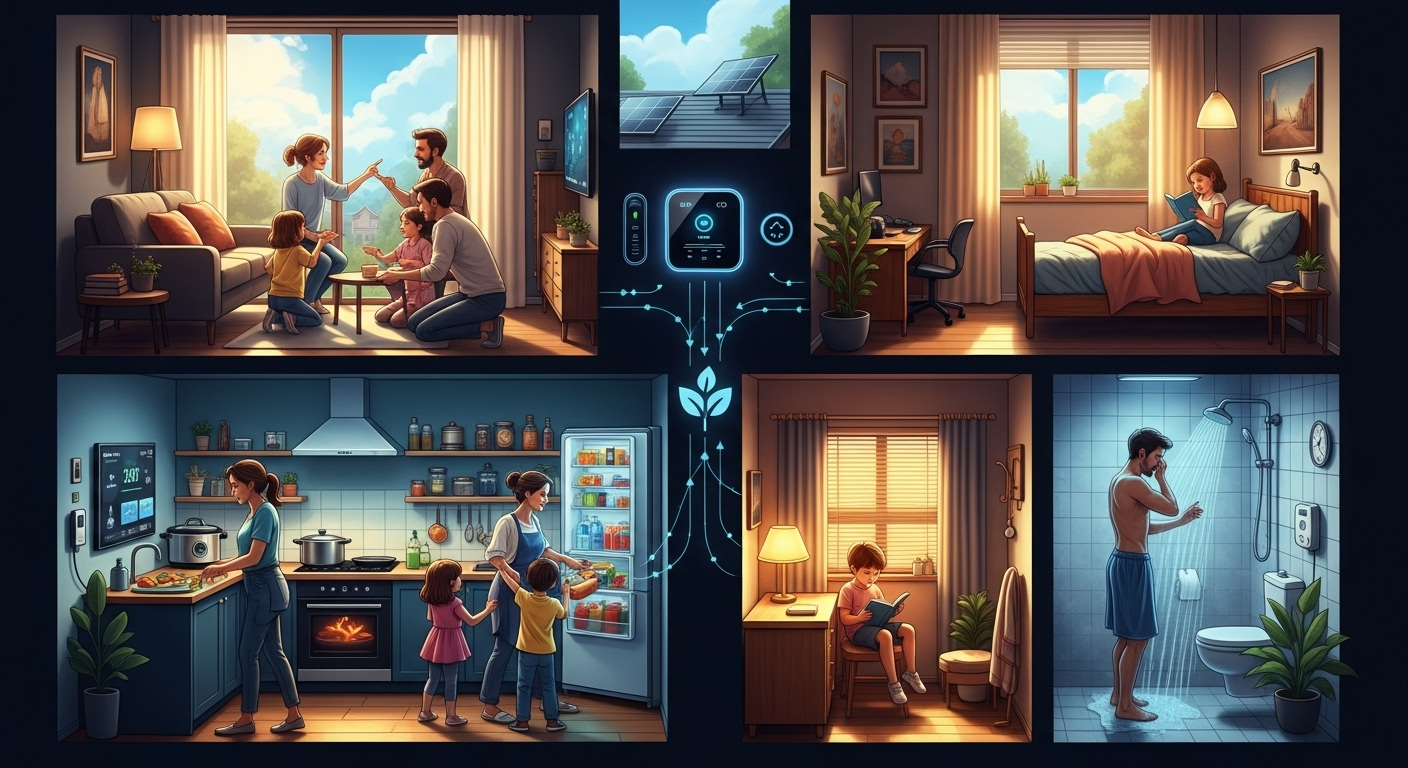
The strategy here is twofold: replace inefficient technology with modern, efficient alternatives, and change your family's habits to eliminate waste. These are tangible changes with visible results. When you swap out a single old lightbulb for an LED, you are initiating decades of energy savings. When you use a smart power strip to cut power to your entertainment center at night, you are actively slaying the vampire power dragon.
The Undeniable Brilliance of LEDs
Switching to Light-Emitting Diodes (LEDs) is a simple task with a massive impact. While they may have a higher upfront cost than old incandescent bulbs, their long-term benefits are staggering. LEDs use up to 90% less energy and can last up to 25 times longer. This means you not only save money on your electricity bill every month, but you also save money on replacement bulbs and the hassle of changing them.
Consider the data. A single 60-watt incandescent bulb used for 6 hours a day will cost you a certain amount per year in electricity. An equivalent LED bulb, which produces the same amount of light, might only use 9 watts. Over the course of a year, the savings from that one bulb are significant. Now, multiply that by all the light fixtures in your home. The cumulative effect is enormous.
Here is a table comparing the three main types of lightbulbs:
| Feature | Incandescent | Compact Fluorescent (CFL) | Light-Emitting Diode (LED) |
|---|---|---|---|
| Average Lifespan | 1,200 hours | 8,000 hours | 25,000+ hours |
| Energy Use (60W Equiv.) | 60 Watts | 13-15 Watts | 8-12 Watts |
| Annual Energy Cost* | ~$7.00 | ~$1.60 | ~$1.20 |
| Key Weakness | Very inefficient, short life | Contains mercury, warm-up time | Higher initial cost |
| Best Feature | Cheap initial cost | Better efficiency than incandescent | Highest efficiency, longest life |
\Based on 2 hours/day usage at $0.11/kWh.*
Taming the Electronic Zoo with Smart Power Strips
The easiest way to combat vampire power is to unplug devices when they are not in use. However, this can be impractical for an entire entertainment center or home office setup. This is where smart power strips come in. These ingenious devices work by automatically cutting the power to connected electronics when they go into standby mode.
For example, you can plug your TV into the "master" outlet and your gaming console, soundbar, and Blu-ray player into the "controlled" outlets. When you turn the TV off with your remote, the smart strip detects the drop in power and cuts off the electricity supply to all the peripheral devices. This completely eliminates their phantom load without you having to unplug a single cord. Placing these in your home's main electronic hubs is a simple and highly effective way to automate your energy savings.
Getting Everyone on Board: Making Energy Saving a Family Mission
The most successful strategies for reducing energy consumption for families are those that involve every member of the household. True, long-lasting change comes from building a culture of conservation, not just from upgrading appliances. When parents, teenagers, and young children all understand the "why" behind saving energy and feel a sense of ownership, small actions become ingrained habits. This team effort not only lowers bills but also teaches children valuable lessons about responsibility, sustainability, and the impact of their choices.
Turning energy saving into a collaborative goal can be a fun and rewarding experience. Instead of nagging, frame it as a family challenge or a game. Celebrate milestones, such as a lower-than-expected electricity bill, and connect the savings to a tangible family reward, like a pizza night or a trip to the movies. This creates a positive feedback loop where everyone sees the direct benefit of their efforts. As a parent, you are not just a rule-enforcer; you are the coach of an energy-saving team.
This approach instills lifelong habits. A child who learns to turn off lights when leaving a room and to take shorter showers is more likely to carry those habits into adulthood. You are teaching them to be conscious consumers and responsible global citizens. The conversations you have about the utility bill or the reasons for line-drying clothes can be powerful educational moments, linking everyday actions to broader concepts like resource management and environmental stewardship. You can even read books together, like the fictional The Little Light That Could, to bring the concepts to life for younger children.
Gamify Conservation for Fun and Results
Kids, and even adults, respond well to games and friendly competition. Create a simple chart and post it on the refrigerator. Award points or stickers for energy-saving actions: turning off lights, unplugging chargers, or remembering to close the door quickly. Designate a weekly "Energy Sheriff" whose job is to give gentle reminders to the rest of the family.
Set a clear, achievable goal. For example, aim to reduce your electricity usage by 10% compared to the same month last year (you can find this data on your utility bill). If the family achieves the goal, celebrate with a pre-determined reward funded by the savings. This makes the connection between conservation and reward direct and exciting. It transforms a chore into a shared mission for a common prize.
Use the Utility Bill as a Teaching Tool
Don't hide the utility bill from your kids. Instead, use it as a powerful teaching tool. Sit down with them and show them the charts and graphs that detail your family's energy usage. Explain what a kilowatt-hour (kWh) is and how different activities contribute to the final number. Point out the difference in cost between summer (high A/C usage) and spring (milder temperatures).
This practice demystifies where the money goes and makes the concept of energy consumption tangible. When a teenager understands that their hour-long hot shower has a real, measurable cost, they are more likely to be mindful of the time. When the whole family sees the bill drop after a month of concerted effort, it validates their actions and motivates them to continue. It's a real-world math and science lesson with a direct financial impact on the family.
—
Frequently Asked Questions (FAQ)
Q: What is the single easiest and cheapest first step to reduce energy consumption?
A: Without a doubt, the easiest first step is to focus on habits and lighting. Actively turn off lights when you leave a room and unplug electronics that are not in use. Simultaneously, begin replacing your most frequently used incandescent or CFL bulbs with energy-efficient LEDs. These actions require minimal investment and effort but provide immediate and noticeable savings.
Q: Are smart thermostats really worth the cost for a family?
A: Yes, for most families, a smart thermostat is a fantastic investment. While the upfront cost is higher than a simple programmable model, the payback period is often just one to two years. Their ability to learn your family's schedule, be controlled remotely, and provide detailed energy usage reports allows for a level of optimization that easily pays for the device through sustained energy savings on heating and cooling.
Q: How can I convince my teenagers to care about saving energy?
A: The key with teenagers is to connect energy saving to what they value. Frame it in terms of money: "The more we save on the electricity bill, the more money is available for things like your allowance, new video games, or family outings." You can also appeal to their tech-savvy nature by getting them involved in programming a smart thermostat or researching smart power strips. Finally, many teenagers are environmentally conscious, so explaining the positive impact on the planet can be a powerful motivator.
Q: What exactly is "vampire power" and is it really a big deal?
A: "Vampire power," also known as phantom load, is the electricity consumed by electronics when they are turned off but still plugged in. Devices with standby lights, digital clocks (like on a microwave or coffee maker), or remote controls are common culprits. While a single device might only draw a watt or two, the cumulative effect of dozens of devices in a modern home can be significant, often accounting for 5-10% of your total electricity bill. Using power strips to cut power to these devices when not in use is the most effective way to stop this silent drain.
—
Conclusion
Reducing energy consumption for families is a journey, not a destination. It's a continuous process of making smarter choices, adopting new habits, and investing wisely in your home's efficiency. By starting with a simple home audit, you can create a clear action plan. Tackling the big energy users like your HVAC system and high-traffic areas like the kitchen will yield the most significant results. Meanwhile, upgrading to LED lighting and taming vampire power provides quick and satisfying wins.
Most importantly, transforming your household into an energy-saving powerhouse is a team sport. By involving everyone, from the youngest child to the adults, you build a lasting culture of conservation. The rewards are twofold: you’ll enjoy lower utility bills and more financial freedom, and you’ll have the profound satisfaction of knowing your family is doing its part to protect the environment for future generations. The smart, small changes you make today will compound into a brighter, more sustainable, and more affordable future.
***
Article Summary
This article, "Smart Ways for Families to Reduce Energy Consumption," provides a comprehensive guide for households seeking to lower their energy bills and environmental impact. It emphasizes that reducing energy use is an achievable goal through a combination of practical habits, strategic upgrades, and whole-family involvement.
The key strategies discussed are:
- Conducting a Home Energy Audit: Starting with a DIY audit to identify air leaks, insulation gaps, and inefficient appliances is the foundational step to creating an effective energy-saving plan.
- Mastering Heating and Cooling: As HVAC systems are the largest energy consumers, optimizing them through smart thermostats, proper insulation, and air sealing offers the biggest return on investment.
- Optimizing Kitchen and Laundry Rooms: Adopting habits like washing clothes in cold water, running full loads in dishwashers and washing machines, and using smaller cooking appliances can lead to significant savings.
- Controlling Lighting and Electronics: Switching to energy-efficient LED bulbs is a simple, high-impact change. Additionally, combating "vampire power" from electronics in standby mode by using smart power strips can cut down on wasted electricity.
- Involving the Whole Family: The most crucial element for long-term success is making energy conservation a team effort. Gamifying the process, celebrating savings, and using the utility bill as a teaching tool can create lasting, positive habits for children and adults alike.
The article concludes that by implementing these strategies, families can enjoy both financial savings and the satisfaction of contributing to a more sustainable future.
