
Iran war risks long-term toxic legacy for people and nature
Iran War Risks Long-Term Toxic Legacy for People and Nature
Fighting in the Middle East, including attacks on oil refineries and sunk vessels, poses enduring threats to the region’s ecosystems, water resources, and public health. Experts are alarmed by the potential for lasting environmental harm, especially as the US-Israeli conflict intensifies. The Conflict and Environment Observatory (CEOBS), based in the UK, has documented over 300 incidents of environmental damage since the war began—ranging from missile base strikes to assaults on oil tankers in the Persian Gulf. However, CEOBS director Doug Weir emphasized that these numbers likely represent only a small portion of the actual impact.
Environmental Fallout Lingers Beyond Immediate Conflict
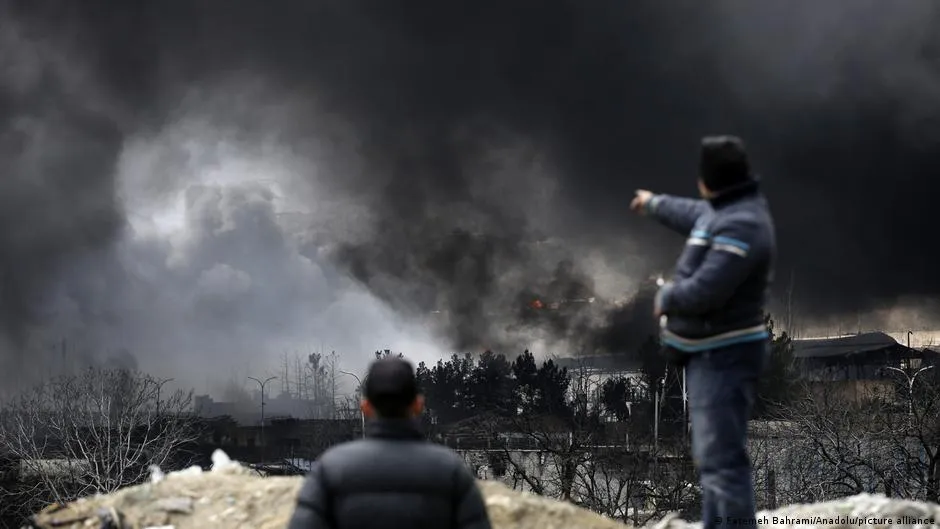
According to Weir, the US claims to have targeted more than 5,000 sites, suggesting that the current assessment is merely a superficial glimpse. The United Nations has also sounded the alarm, warning that strikes on oil facilities could trigger severe environmental consequences, affecting clean water, breathable air, and food sources. A striking example of this came when “black rain”—a combination of oil and water—descended on Tehran after Israel’s attacks on multiple oil installations. Smoke from the fires blanketed the city, home to nearly 10 million residents, prompting health warnings to stay indoors.
“That’s just the tip of the iceberg,” Weir said. “We’re only scratching the surface with the current data.”
Residents reported symptoms like headaches and breathing difficulties, raising concerns about toxic pollutants in the air. Zongbo Shi, a professor from the University of Birmingham, noted the presence of fine particulate matter, sulfur dioxide, and volatile organic compounds in the smoke. These substances can infiltrate lungs and increase risks for respiratory and cardiovascular diseases, particularly in vulnerable populations.
Contamination from Bombing and Fire
Experts warn that bombed military and energy sites may leave behind hazardous residues that persist for years. When oil facilities are targeted, they release toxic plumes that can spread to nearby communities, settling on roads, soil, and farmland. Similarly, attacks on missile bases could disperse fuels, heavy metals, PFAS, and explosives into the environment. For instance, TNT, a military explosive labeled as a possible carcinogen by the EPA, remains in the soil and may harm vegetation and human health.
“We don’t have detailed data on what’s been destroyed or what remains in these sites,” Weir explained. “It’s hard to assess without on-site testing.”
CEOBS relies on satellite images, radar maps, social media, and news reports to track risks remotely. Meanwhile, oil spills from US-Israeli strikes on Iran’s navy and Tehran’s attacks on ships in the Strait of Hormuz further endanger marine environments. The Persian Gulf hosts critical ecosystems, including seagrass beds that support fish, green turtles, and endangered dugongs. Coastal communities dependent on seafood face additional threats as pollutants from attacks could seep into the water.
Long-Lasting Consequences for Marine Life
Environmental experts highlight the unique danger of oil spills, which can disrupt marine habitats and food chains. “This is a dimension we often overlook in conflicts,” Weir remarked. “Coastal sites hit by Israel show a high chance of pollutants entering the environment.” The US reported striking over 60 Iranian ships during the conflict, compounding risks to the region’s ecological balance.
