
Will Ukraine help Gulf states down Iranian drones?
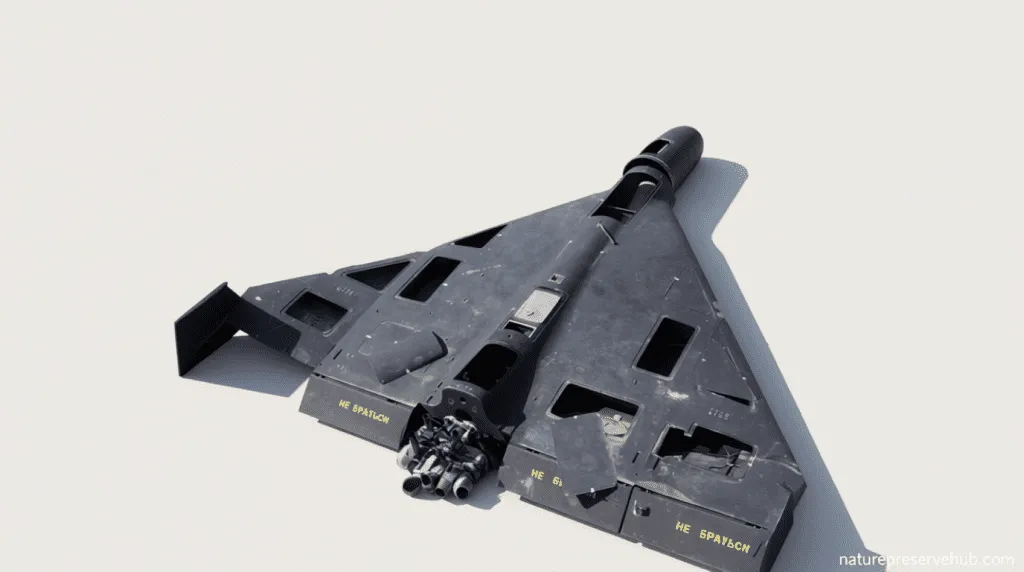
Will Ukraine help Gulf states down Iranian drones?
Ukrainian officials have stated that their nation can provide expertise to assist Gulf countries in countering drone attacks from Iran. President Volodymyr Zelenskyy highlighted Ukraine’s significant experience in drone defense, noting that the country is prepared to share its knowledge with Middle Eastern allies. However, he emphasized that Ukrainian specialists cannot depart their homeland while the ongoing conflict continues.
Conditions for Support
Zelenskyy outlined a key prerequisite for Ukraine’s assistance, stating in an interview with Bloomberg that “Middle East leaders have strong ties with Russians, so they can request a one-month ceasefire from Russia.” He suggested that once this pause in hostilities is established, Ukraine would dispatch its most skilled drone defense operators to the region. “We can offer similar support to Israel,” he added.
“Leaders of the Middle East have great relations with Russians, they can ask Russia to implement a month-long ceasefire,” Zelenskyy said.
Expert Perspectives
Ukrainian Foreign Minister Andrii Sybiha echoed Zelenskyy’s stance, noting in a Reuters interview that the armed forces could neutralize 90% of Iranian Shahed drones using domestically developed interceptor systems. He acknowledged that sending all forces was not feasible but assured that some personnel could be deployed if Russia’s attacks on Ukraine are halted.
“We won’t be able to send all our forces, but we will definitely be able to send some if it is guaranteed that there will be no Russian attacks on our country,” Sybiha said.
Oleksandr Chara, a security analyst from the Center for Defense Strategies (CDS), explained that Arab states initially underestimated the Russian-Ukrainian conflict. Their perception shifted after Iranian drones, equipped with Russian technology, began targeting Gulf regions. Chara argues that Kyiv’s expertise in drone interception and trained personnel could be valuable for Gulf nations.
Strategic Collaboration
Chara outlined three potential models for cooperation: deploying Ukrainian forces with interceptor drones immediately, training Arab pilots in Ukraine, or investing Gulf capital into Ukrainian defense manufacturing. He noted that wealthy Gulf nations might prioritize economic efficiency in drone defense, as using expensive missiles to down mid-range drones could be costly.
“Shooting down a $30,000 drone with a missile that costs at least $100,000 becomes a hopeless endeavor,” Chara remarked. “Given the threat from Iran, it makes sense to invest in proven Ukrainian systems.”
On March 3, Zelenskyy mentioned that Ukraine might transfer some drone production to Gulf states, in exchange for acquiring American PAC-3 missiles to upgrade its air defenses. The Financial Times reported on March 5 that the Pentagon and a Gulf state were discussing the purchase of Ukrainian interceptors, as noted by an unnamed industry representative.
Oleh Katkov, a military expert and editor-in-chief of Defense Express, pointed out that Gulf states have ample financial resources but lack practical data on drone defense systems. “The real value lies in our experience,” he told DW. “We can provide insights on deployment numbers, ammunition requirements, and equipment effectiveness that others haven’t gathered.”
Zelenskyy appears to seek leverage from Ukraine’s military experience, hoping that countries benefiting from his nation’s expertise will shift support away from Russia and instead push for a resolution to the war. Chara described this potential partnership as a “classic win-win situation,” suggesting that Gulf states could gain effective drone defense while Ukraine secures critical resources. “This is an extraordinary amount of useful information,” Katkov added, emphasizing the strategic importance of Ukraine’s wartime data.
