
The Greens’ Gorton and Denton by-election win was about inclusion — not sectarianism
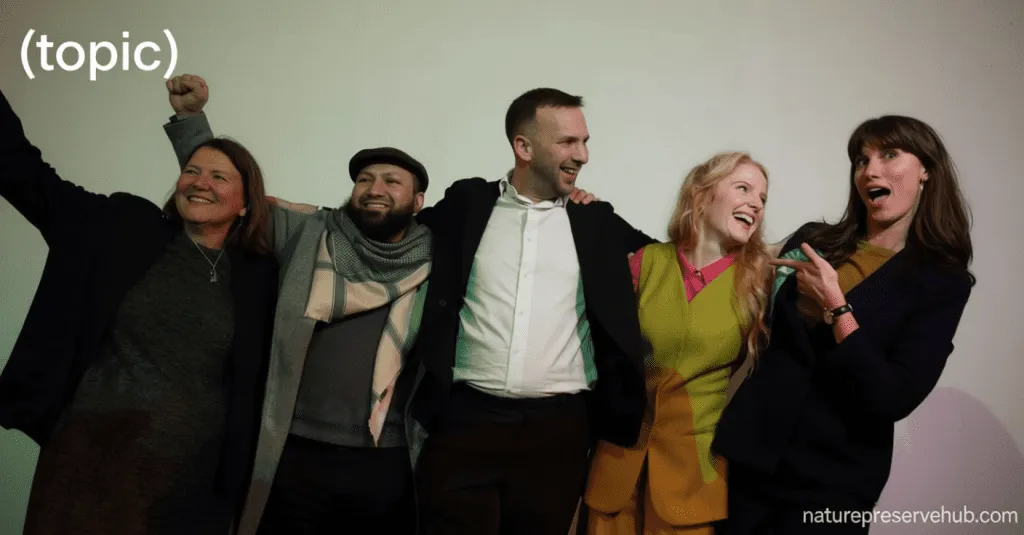
The Greens’ Gorton and Denton by-election win was about inclusion — not sectarianism
It was a historic night for the Green Party, marking their first parliamentary by-election victory in Gorton and Denton. The win overturned a Labour majority that had long been considered unshakable, with a gap of over 13,000 votes. This achievement is part of a broader campaign that has seen a 26.5% shift in support toward the Greens.
Reaching Beyond the Echo Chamber
The campaign’s success was not merely about policies or the individual effort of Hannah Spencer, the candidate. It was rooted in a deliberate strategy to connect with voters on a personal level. In communities where nearly 40% of residents are Muslim and many speak languages like Urdu, Bangla, or Arabic at home, traditional political messaging often fell short.
Language is more than a tool—it’s a bridge. When we talk about rent, bills, the NHS, racism, or peace, those issues matter to everyone. Whether they speak English at home or Punjabi, Urdu, Somali, or any other language, their voices deserve to be heard.
UK politics has long relied on a one-way communication style, using English as the primary language. Reform’s candidate, Matt Goodwin, exemplified this approach, speaking in a manner shaped by Westminster and southern England’s cultural norms. Yet, in Gorton and Denton, that method was insufficient. The campaign adapted by incorporating materials in multiple languages, including a viral Urdu video, to ensure the message resonated with those whose experiences were often overlooked.
More Than a Tactical Move
Some critics, including former Labour and Reform politicians, dismissed the multilingual strategy as divisive. They labeled it ‘sectarian,’ suggesting it targeted specific groups. But this view misses the mark. The campaign was about inclusivity, not exclusion. By speaking in the languages people use daily, the Greens demonstrated a commitment to reflecting their lived realities in political discourse.
Examples from abroad highlight the effectiveness of this approach. In New York, Zohran Mamdani’s campaign used Arabic, Spanish, and Urdu videos, which played a key role in his victory. This strategy, praised by Labour supporters, underscores how language can unite rather than divide, inviting communities into the political conversation.
A New Political Narrative
The Greens’ win in Gorton and Denton represents a shift in how politics can engage diverse populations. It’s a testament to the power of inclusive messaging, where language becomes a tool for connection rather than a barrier. By valuing participation and acknowledging lived experiences, the campaign redefined what it means to be part of the democratic process.
This victory is more than a headline. It’s a signal that politics can be hopeful, that every voice matters, and that representation can be a shared goal. As the Greens continue to build their movement, they prove that inclusion is not just a principle—it’s a practical strategy for meaningful change.
To view this video, JavaScript must be enabled, and a browser supporting HTML5 is required.
This site is protected by reCAPTCHA, and the Google Privacy Policy and Terms of Service apply. Your information will be used in line with our Privacy Policy.
