
Exploring the Characteristics of a Rainforest Habitat
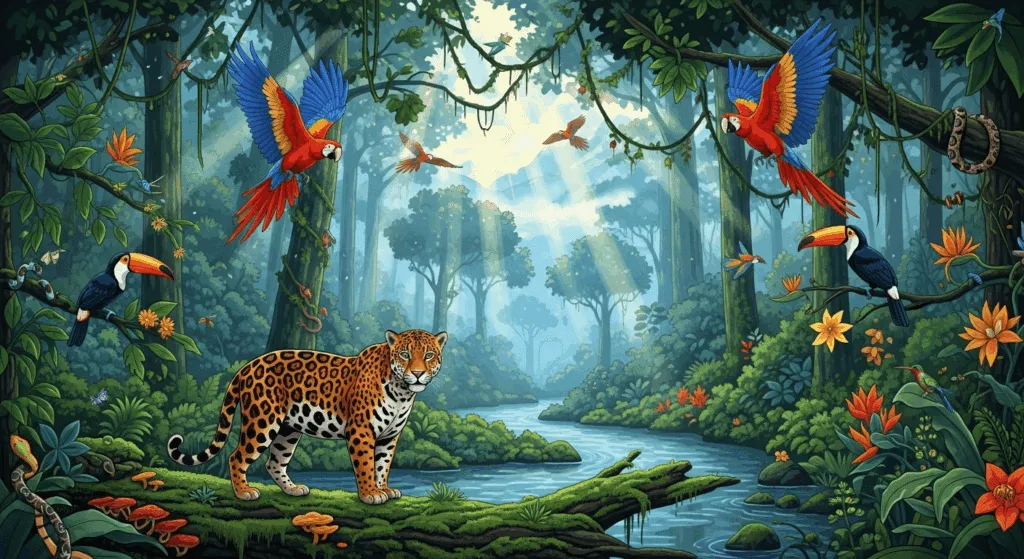
Step into the heart of the world's most vibrant and complex ecosystems. Rainforests, often called the "jewels of the Earth," are teeming with a staggering diversity of life, a symphony of sounds, and a canopy so dense it creates its own world beneath. These vital biomes play a crucial role in regulating global climate and harboring millions of species, many yet to be discovered. To truly appreciate their importance and fragility, understanding the key characteristics of a rainforest habitat is crucial. From the constant drip of moisture to the intricate web of life that connects the tallest trees to the forest floor, every element is part of a delicate, interconnected system that has evolved over millions of years.
The Defining Climate: High Rainfall and Consistent Warmth
One of the most fundamental characteristics of a rainforest habitat is its distinct climate, dominated by incredibly high levels of precipitation. Rainforests are, by definition, forests that receive a large amount of rain. This constant moisture is the lifeblood of the ecosystem, influencing everything from the types of plants that can grow to the very composition of the soil. Broadly, rainforests are categorized into two main types: tropical and temperate. While both are characterized by significant rainfall, they differ in their temperature ranges, with tropical rainforests located near the equator and temperate ones found in mid-latitude coastal regions.
The climate of a tropical rainforest is remarkably stable and predictable throughout the year. There are no distinct seasons like summer, winter, spring, or fall. Instead, the year is divided into a wet season and a slightly less wet season. Temperatures remain consistently high, typically hovering between 21°C to 30°C (70°F to 85°F), with very little variation between day and night. This constant warmth, combined with high humidity, creates a greenhouse-like environment perfect for explosive plant growth. The air is often thick with moisture, a result of both the heavy rainfall and a process called transpiration, where plants release water vapor into the atmosphere.
In contrast, temperate rainforests experience more seasonal variation. While they also receive massive amounts of rainfall, their temperatures are cooler and fluctuate more significantly throughout the year. Found in regions like the Pacific Northwest of North America, Chile, and New Zealand, these forests have cooler, milder winters and warm, moist summers. The persistent rain and coastal fog provide the necessary moisture to sustain the lush vegetation, including some of the tallest trees on Earth, like the Coast Redwood (Sequoia sempervirens). Despite the cooler temperatures, the defining feature remains the overwhelming presence of water.
The Role of High Precipitation
The sheer volume of rain is what sets a rainforest apart. Tropical rainforests typically receive over 2,000 millimeters (80 inches) of rain annually, with some areas exceeding a staggering 10,000 millimeters (394 inches). This precipitation is often generated through a process called convectional rainfall. The intense equatorial sun heats the moist surface, causing warm, humid air to rise rapidly. As it ascends, it cools and condenses, forming dense clouds that release torrential downpours, usually in the afternoon.
This constant deluge has a profound impact on the landscape. It feeds the massive rivers like the Amazon and the Congo, creating a network of waterways that function as arteries for the ecosystem. However, it also leads to a significant challenge: nutrient leaching. The incessant flow of water washes essential soluble nutrients like calcium and magnesium out of the soil, carrying them away before plants can fully absorb them. This process directly influences the soil's composition, a paradox we will explore later. Plants have adapted to this with features like "drip tips" on their leaves, which allow excess water to run off quickly, preventing the growth of fungi and bacteria.
Humidity and Temperature Stability
Humidity in a tropical rainforest is consistently high, often ranging from 77% to 88% and sometimes approaching 100% at night. This pervasive dampness is a direct result of the high rainfall and the immense amount of water vapor released by the millions of plants through transpiration. The dense canopy traps this moisture, creating a steamy, enclosed environment, especially in the understory and on the forest floor. This high humidity is critical for many species, particularly amphibians like tree frogs, whose thin skin requires a moist environment to prevent dehydration.
The temperature stability is another cornerstone of the tropical rainforest climate. Located near the equator, these regions receive direct, intense sunlight year-round, leading to consistently warm conditions. This lack of temperature-driven seasonality means that plants can grow, flower, and fruit continuously. Likewise, animals do not need to hibernate or migrate due to cold weather. This year-round productivity allows for continuous breeding cycles and supports a level of biological activity that is unmatched in any other terrestrial biome. It is this combination of warmth and water that fuels the incredible engine of life in the rainforest.
Unparalleled Biodiversity: A Hub of Life
Perhaps the most celebrated characteristic of a rainforest habitat is its mind-boggling biodiversity. Although they cover only about 6% of the Earth's land surface, rainforests are home to more than half of the world's plant and animal species. This concentration of life is so immense that a single hectare of Amazonian rainforest can contain more tree species than all of Europe combined. This biological richness, or biodiversity, encompasses the variety of genes, species, and ecosystems, making rainforests a living library of evolutionary history.
The sheer numbers are staggering. Rainforests host millions of species of insects, tens of thousands of plant species, and thousands of species of birds, mammals, and fish. Many of these species are endemic, meaning they are found nowhere else on Earth. The vibrant colors of a poison dart frog, the call of a howler monkey, the silent glide of a jaguar—all are part of a complex tapestry of life. This density of species creates intense competition for resources like light, food, and space, which in turn drives the evolution of incredible specializations and adaptations.
The reasons for this extraordinary biodiversity are manifold. The stable, warm, and wet climate provides ideal conditions for life to flourish year-round without the stresses of winter cold or seasonal drought. The complex vertical structure of the forest, with its multiple layers from the floor to the canopy, creates a wide array of distinct micro-habitats, or niches. This allows countless species to coexist by specializing in different food sources or living in different parts of the forest, a concept known as niche partitioning. The long, uninterrupted evolutionary history of many rainforests has also given life ample time to diversify into the complex web we see today.
Flora: The Green Foundation
The plant life, or flora, of the rainforest is as diverse as it is vital. It forms the foundation of the ecosystem, harnessing sunlight to create energy through photosynthesis. The competition for this sunlight is fierce, leading to the evolution of giant trees that can grow over 60 meters (200 feet) tall to reach the light. Below them, a profusion of other plants adapts to life in the shade. This includes an incredible variety of vines, or lianas, which use trees for support to climb towards the light, and epiphytes—plants that grow on other plants without harming them.
Rainforest plants display a remarkable array of adaptations. Buttress roots, massive, wide-spreading roots at the base of tall trees, provide stability in the shallow, soft soil. As mentioned earlier, many leaves have waxy surfaces and drip tips to shed the heavy rainfall efficiently. Epiphytes like orchids, bromeliads, and ferns have evolved to capture water and nutrients that fall from the canopy, forming their own tiny ecosystems high in the trees. Some bromeliads can hold several gallons of water, providing a habitat for frogs, insects, and other small creatures.
Fauna: A Symphony of Animal Life
The animal life, or fauna, in a rainforest is a spectacle of diversity and specialization. Mammals range from large predators like jaguars and leopards to arboreal (tree-dwelling) specialists like sloths, monkeys, and orangutans. Birds fill every niche, from majestic birds of prey like the Harpy Eagle soaring over the canopy to the jewel-like hummingbirds flitting between flowers in the understory. Reptiles and amphibians are everywhere, with countless species of snakes, lizards, and famously, the brightly colored tree frogs that are synonymous with the rainforest.
This immense variety of animal life is supported by the equally varied plant life and the numerous niches the forest provides. For instance, different primate species in the same forest often specialize in different types of fruit or leaves to avoid direct competition. Insectivorous birds may hunt at different levels of the canopy, or at different times of the day. This specialization is a key theme. The three-toed sloth has a slow metabolism adapted to a low-energy diet of leaves, while army ants move across the forest floor in massive columns, consuming any small creature in their path. Every animal has a specific role to play in the intricate functioning of the ecosystem.
The Vertical Structure: Layers of the Rainforest
A defining organizational characteristic of a rainforest habitat is its vertical stratification. The forest is not a single, uniform environment but is instead divided into several distinct horizontal layers, each with its own unique set of conditions regarding sunlight, temperature, and humidity. This layering creates a multitude of micro-habitats, allowing for the incredible density of species to coexist by occupying different vertical niches. This structure is a direct result of the intense competition for sunlight.
From the dark, damp floor to the sun-drenched tops of the tallest trees, each layer supports a different community of plants and animals. The amount of light that penetrates each layer determines the type of vegetation that can grow there, which in turn dictates the kinds of animals that will call it home. An animal adapted to life in the bright, open canopy would struggle to survive on the gloomy forest floor, and vice-versa. This vertical division of the habitat is a masterful solution to resource allocation in a crowded environment.
Understanding this structure is key to understanding how so many species can be packed into one ecosystem. The layers are not sharply divided but rather blend into one another, creating a gradual transition of environmental conditions. Ecologists typically identify four main layers, each a world unto itself, contributing to the overall complexity and stability of the rainforest biome.
Understanding the Four Main Strata
The complex ecosystem of the rainforest is best understood by examining its four primary layers. Each stratum has a unique microclimate and supports a specialized community of organisms that are adapted to its specific conditions. This vertical architecture is one of the most important characteristics of a rainforest habitat.
Below is a breakdown of the four layers, from top to bottom:
- 1. The Emergent Layer: This is the highest layer, consisting of the crowns of the very tallest trees, which can reach heights of up to 80 meters (260 feet). These trees poke through the canopy below, exposed to direct sunlight, high temperatures, strong winds, and low humidity. Life here is tough, and only hardy species can survive. This layer is home to animals like the Harpy Eagle, certain bats, butterflies, and some monkey species that are agile enough to navigate the sparse branches.
- 2. The Canopy Layer: Located just below the emergent layer, the canopy forms a dense, continuous roof of overlapping leaves and branches, typically 20-40 meters (65-130 feet) above the ground. This layer is the powerhouse of the rainforest, absorbing the vast majority of sunlight. It is also where the greatest concentration of biodiversity is found. The canopy is a bustling world of its own, filled with fruits, flowers, and leaves, supporting a vast array of life, including monkeys, sloths, toucans, snakes, tree frogs, and countless insects. Epiphytes and lianas are most abundant here.
- 3. The Understory Layer: Situated below the canopy, the understory is a much darker, more humid, and calmer environment. Only about 2-5% of sunlight filters through the dense canopy above, so plants here must be adapted to low-light conditions. These include smaller trees, shrubs, and non-woody plants with large leaves to maximize light absorption. Animals that live here are often experts at moving through dense vegetation and may have adaptations for low-light vision or navigation by sound. Jaguars, leopards, red-eyed tree frogs, and many insects inhabit this layer.
- 4. The Forest Floor: The bottom-most layer is the darkest and dampest of all, receiving less than 2% of the sunlight. As a result, very few plants can grow here. The floor is covered in a thin layer of fallen leaves, twigs, and other organic debris. This is the realm of decomposers. Fungi, bacteria, termites, and earthworms work rapidly to break down dead organic material, recycling nutrients back into the ecosystem. Larger animals like anteaters, tapirs, and wild pigs forage on the forest floor for insects and fallen fruit.
Soil Composition and Nutrient Cycling
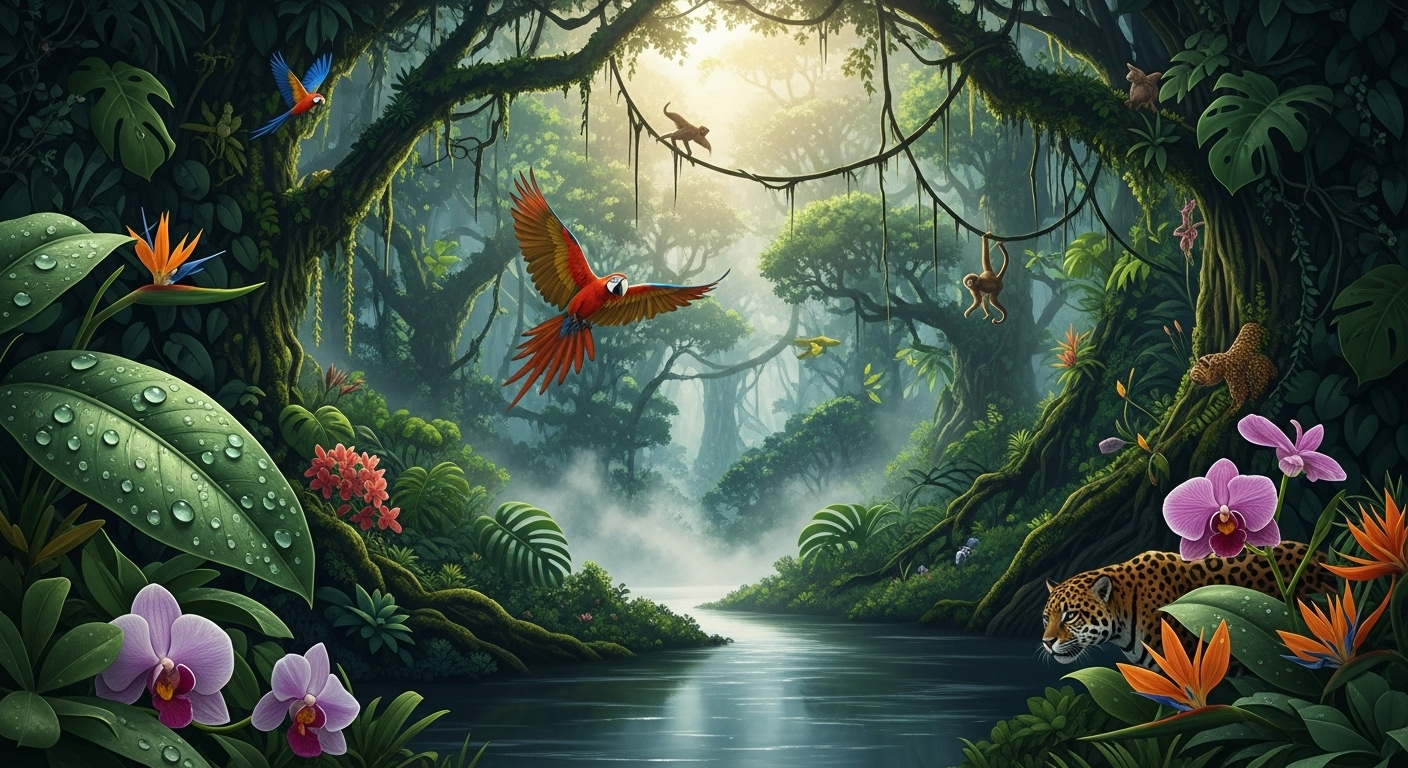
One of the great paradoxes of the rainforest is that its lush, vibrant life grows upon surprisingly poor and thin soil. Contrary to what one might expect, the soil itself is not rich in nutrients. This seemingly contradictory characteristic of a rainforest habitat is a result of its unique climate and the incredibly efficient biological processes that have evolved to compensate for it. The vast majority of the rainforest's nutrients are not held in the soil but are instead locked up in the living biomass—the trees, plants, and animals themselves.
The primary reason for the nutrient-poor soil, known to scientists as oxisols or ultisols, is the process of leaching. The immense and constant rainfall washes soluble nutrients deep into the ground, far below the reach of plant roots. Over millions of years, this has left behind a soil that is rich in iron and aluminum oxides—which give it a characteristic reddish or yellowish color—but deficient in essential minerals like phosphorus, potassium, and calcium. The high temperatures and moisture also accelerate chemical weathering, further breaking down minerals.
To overcome this limitation, the rainforest ecosystem has developed an extremely rapid and efficient nutrient cycle. Instead of relying on a deep reservoir of nutrients in the soil, the system recycles them almost instantaneously. When a leaf falls, a tree dies, or an animal perishes, an army of decomposers on the forest floor immediately goes to work. Fungi, bacteria, and insects break down the organic matter at a phenomenal rate, releasing the locked-in nutrients. These nutrients are then quickly reabsorbed by the shallow, wide-spreading root systems of the plants before they can be washed away by the rain.
The Paradox of Poor Soil and Rich Life
The reddish, clay-like soil of many tropical rainforests starkly contrasts with the deep, black, fertile soils found in temperate grasslands. This difference is a direct consequence of the climatic conditions. The heavy rainfall that defines the rainforest is also responsible for stripping its soil of the very minerals needed to sustain plant life. This leaching process is so effective that the soil layer, or topsoil, is often very thin, sometimes only a few centimeters deep.
This paradox highlights the incredible efficiency and adaptability of the rainforest ecosystem. It has evolved to be a closed-loop system, where nutrients are kept in constant circulation within the living components of the forest. This is why deforestation is so devastating. When the trees are cleared and burned, the vast storehouse of nutrients held within the biomass is released into the atmosphere or washed away by the first heavy rains. Without the rapid recycling system provided by the intact forest, the nutrient-poor soil is quickly exhausted and can become barren, unable to support agriculture or regenerate the forest for a very long time.
The Role of Decomposers
The true heroes of the rainforest's nutrient cycle are the decomposers. This diverse group of organisms, including fungi, bacteria, termites, millipedes, and earthworms, are the engine of recycling. They thrive in the warm, moist conditions of the forest floor, where they rapidly break down the constant rain of dead organic material—a process known as decomposition. Without them, nutrients would remain locked in dead wood and leaves, and the entire ecosystem would grind to a halt.
Fungi are particularly important, as many form symbiotic relationships with tree roots called mycorrhizae. The fungal filaments extend far into the soil, acting as an extension of the tree's root system, dramatically increasing its ability to absorb scarce nutrients and water. In return, the tree provides the fungus with sugars produced through photosynthesis. This partnership is so effective that nutrients from a fallen leaf can be reabsorbed into a living plant in a matter of weeks, a process that might take years in a cooler, drier forest. This rapid turnover is the secret to sustaining such immense life on such poor soil.
Symbiotic Relationships and Complex Interactions
Beyond the climate and physical structure, the intricate web of interactions between species is a defining characteristic of a rainforest habitat. The ecosystem is not simply a collection of individual plants and animals; it is a dynamic network of complex relationships. These interactions, known as symbiosis, range from mutually beneficial partnerships to outright parasitism. This complexity contributes to the overall stability and resilience of the rainforest, ensuring that energy flows, nutrients are cycled, and populations are kept in balance.
The sheer density of life in the rainforest necessitates such complex relationships. With countless species competing for the same limited resources, many have evolved to cooperate or depend on each other for survival. Pollination is a classic example. Many rainforest plants rely on specific species of birds, bats, or insects to transfer their pollen, often evolving elaborate flowers to attract their designated partner. In return, the pollinator receives a vital food source in the form of nectar. This co-dependence ensures the reproductive success of both partners.
These interactions are woven into every layer of the forest. From the fungi forming partnerships with tree roots in the soil to the bromeliads providing a home for frogs in the canopy, symbiosis is a fundamental organizing principle. Ecologists categorize these relationships into several types, with the most common being mutualism, commensalism, and parasitism. Each type of interaction adds another layer of complexity to the vibrant and interconnected world of the rainforest.
| Type of Relationship | Definition | Rainforest Example |
|---|---|---|
| Mutualism | A relationship where both species benefit. | Leaf-cutter ants cultivate a specific fungus for food, which in turn gets a safe place to grow and a constant supply of leaves. |
| Commensalism | A relationship where one species benefits, and the other is unaffected. | Epiphytic orchids grow on tree branches to get closer to sunlight, without harming or helping the host tree. |
| Parasitism | A relationship where one species (the parasite) benefits at the expense of the other (the host). | The Strangler Fig starts as an epiphyte but eventually sends roots to the ground, enveloping and often killing its host tree. |
Examples of Mutualism
Mutualism, where both organisms benefit, is a cornerstone of the rainforest's collaborative environment. The relationship between certain ant species and acacia trees is a perfect illustration. The acacia tree provides hollow thorns for the ants to live in and produces nectar for them to eat. In return, the aggressive ants defend the tree from herbivores, such as insects and even larger mammals, and clear away competing plants from its base. Both the tree and the ants thrive because of this partnership.
Another powerful example is seed dispersal. Many rainforest trees produce fleshy fruits to entice animals like monkeys, birds, and bats. The animal eats the fruit, travels some distance, and then excretes the seed, often in a pile of natural fertilizer. This C- disperses the seeds far from the parent tree, reducing competition and helping the forest to expand and regenerate. The animal gets a nutritious meal, and the tree gets its offspring planted in a new location.
Commensalism and Parasitism
Commensalism, where one species benefits while the other is neither helped nor harmed, is also common. The relationship between poison dart frogs and bromeliads is a fantastic example. The bromeliad plant, an epiphyte, collects a pool of water in its central leaves. The frog uses this tiny, self-contained pond as a safe place to lay its eggs and for its tadpoles to develop, protected from predators on the forest floor. The bromeliad is completely unaffected by the presence of the frogs.
Parasitism, in which one organism benefits by harming another, reveals the more competitive side of rainforest life. The most dramatic example is the Strangler Fig (Ficus spp.). Its seed, often deposited by a bird, germinates high in the canopy of a host tree. It sends long roots down to the ground while its leafy crown grows upward, competing with the host for sunlight. Over decades, the fig's roots thicken and fuse, forming a lattice-like trunk around the host. Eventually, the host tree is "strangled" and dies from lack of light and root competition, leaving the hollow, lattice-like trunk of the fig standing alone.
—
Conclusion
The characteristics of a rainforest habitat paint a picture of a world that is simultaneously robust and fragile. From the life-giving high rainfall and stable warmth to the astonishing biodiversity it supports, every element is finely tuned. The vertical layering of the forest creates myriad homes for this life, while the paradox of nutrient-poor soil is overcome by an incredibly rapid nutrient cycle powered by an army of decomposers. Tying it all together is the complex web of symbiotic relationships, where competition and cooperation drive the evolution of a truly dynamic ecosystem. These biomes are not just beautiful and mysterious; they are the lungs of our planet, crucial for climate regulation, and a priceless reservoir of biological and genetic information. Understanding their characteristics is the first step toward appreciating their immense value and the urgent need for their conservation.
—
Frequently Asked Questions (FAQ)
Q: What are the two main types of rainforests?
A: The two main types are tropical rainforests and temperate rainforests. Tropical rainforests are found near the equator and are characterized by consistently high temperatures and rainfall year-round. Temperate rainforests are found in coastal, mid-latitude regions and have cooler temperatures with more seasonal variation, but still receive very high levels of rainfall.
Q: Why is rainforest soil so poor in nutrients?
A: Rainforest soil is nutrient-poor primarily due to a process called leaching. The constant, heavy rainfall washes soluble minerals and nutrients out of the topsoil, carrying them away before plants can use them. The vast majority of the ecosystem's nutrients are held within the living plants and animals, not the soil itself.
Q: What is the most biodiverse layer of the rainforest?
A: The canopy layer is considered the most biodiverse part of the rainforest. It forms a dense roof of leaves and branches high above the ground, capturing most of the sunlight. This layer is rich in food sources like fruits, flowers, and insects, supporting the largest concentration of animal life, including monkeys, sloths, toucans, snakes, and countless epiphytic plants.
Q: How do plants in the rainforest adapt to high rainfall?
A: Rainforest plants have several adaptations to cope with high rainfall. Many have leaves with a waxy coating and pointed tips, known as "drip tips." This structure allows excess water to run off the leaf's surface quickly, preventing the growth of harmful fungi and bacteria and ensuring the leaf can continue to photosynthesize effectively.
Q: Why are rainforests called the "lungs of the Earth"?
A: This nickname comes from their crucial role in the global oxygen and carbon cycles. Through the process of photosynthesis, the vast number of trees and plants in rainforests absorb enormous amounts of carbon dioxide (a major greenhouse gas) from the atmosphere and release oxygen. They act as a massive carbon sink, helping to regulate the Earth's climate.
***
Summary
The article, "Exploring the Characteristics of a Rainforest Habitat," provides a comprehensive analysis of the defining features of these vital ecosystems. Key characteristics include a climate defined by high precipitation and humidity, with tropical rainforests having stable, warm temperatures and temperate rainforests being cooler. This climate fuels unparalleled biodiversity, with rainforests housing over half of the world's species despite covering only 6% of its land. The article details the unique vertical structure of rainforests, which are stratified into four main layers—Emergent, Canopy, Understory, and Forest Floor—each with its own microclimate and specialized life. It also explains the paradox of nutrient-poor soil, a result of leaching, which is compensated for by an extremely rapid and efficient nutrient cycle driven by decomposers. Finally, the piece explores the complex web of symbiotic relationships (mutualism, commensalism, parasitism) that govern interactions between species, highlighting the interconnectedness of all life within this biome. The conclusion emphasizes the rainforest's global importance and the need for its conservation.
