
What Animals Live in the Tundra Habitat? A Full Guide
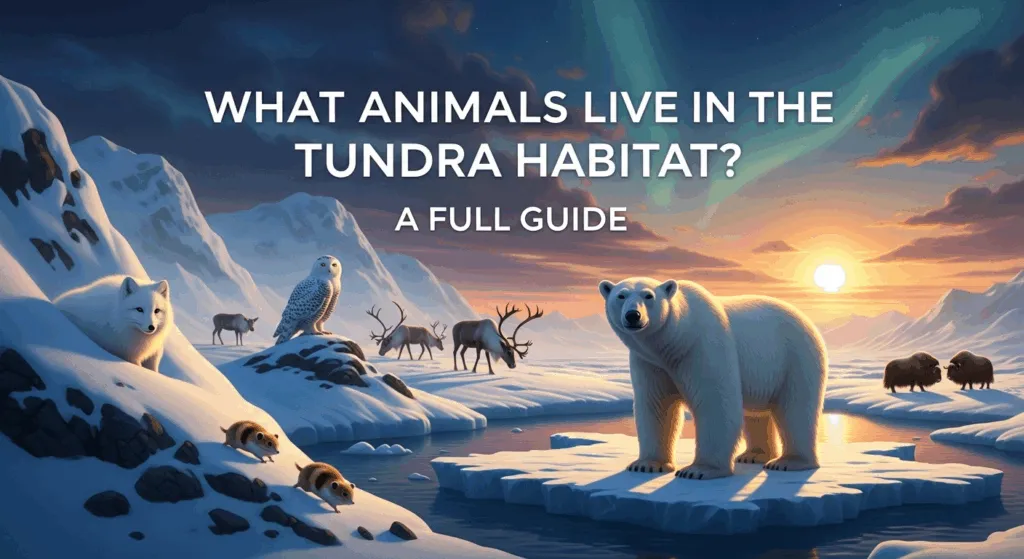
What Animals Live in the Tundra Habitat? A Full Guide
The tundra is one of Earth’s most extreme and fascinating ecosystems. If you’ve ever wondered what animals live in the tundra habitat, this guide will walk you through the most characteristic species, their roles in the food web, their adaptations to cold and short seasons, and the threats they face. Read on for a comprehensive, SEO-friendly overview that is useful for students, nature lovers, and conservationists.
Overview of the Tundra Habitat
The tundra covers large areas of the Arctic and high mountains and is defined by cold temperatures, a short growing season, and limited tree growth. There are two main tundra types: the Arctic tundra, which stretches across northern North America, Europe, and Asia; and the alpine tundra, found on high mountaintops worldwide. Both types share similar environmental constraints that shape the animals living there.
Permafrost—permanently frozen ground—controls water flow and plant root systems, creating bogs, wetlands, and patchy vegetation. During the brief summer, the tundra bursts into life as mosses, lichens, grasses, and dwarf shrubs grow rapidly. These plants form the essential base of the tundra food web and support a surprising diversity of animals adapted to harsh conditions.
Seasonality is extreme: long, dark winters with deep cold and short, intense summers with continuous daylight in the Arctic. Animals in the tundra must cope with limited food availability, temperature extremes, and often rapid environmental changes, making this ecosystem a natural laboratory for evolutionary adaptations.
Types of Tundra (Arctic vs Alpine)
Arctic tundra lies on continents near the poles and typically has continuous permafrost with low-growing vegetation. The region supports large migratory populations of birds and herds of large mammals that travel over vast distances.
Alpine tundra occurs at high elevations where cold temperatures limit tree growth regardless of latitude. Here, the ground is generally not permanently frozen, and species assemblages can differ significantly from Arctic tundra. However, many adaptive strategies—such as low body profile and insulation—are shared.
Both tundra types are sensitive to climate change, but alpine areas may be affected faster by temperature shifts and human activities like tourism and grazing. Understanding the differences helps when discussing what animals live in the tundra habitat across regions.
Climate and Seasons
In the tundra, winter temperatures can plunge far below freezing, while summer temperatures may hover above freezing for a few weeks to months. Snow and ice cover most of the year in some areas, impacting animal movement and access to food.
The seasonal pulse—spring thaw and summer bloom—drives reproductive cycles. Many birds migrate thousands of kilometers to breed during the short Arctic summer when insect abundance and plant productivity peak.
Climate extremes also create unique survival challenges: animals must store fat, find shelter from wind and cold, or migrate. Rising temperatures shift these seasonal cues, influencing migration timing, reproductive success, and food availability.
Iconic Mammals of the Tundra
The tundra is home to a number of mammals that have become symbols of the region. These animals are often highly specialized and critical components of tundra ecosystems.
Many large herbivores migrate to exploit seasonal plant growth, while predators adapt to follow or ambush prey. Mammals display a wide range of adaptations—insulating fur, fat reserves, specialized hooves, and social behaviors—enabling survival in harsh conditions.
Human activities like hunting, infrastructure development, and climate change directly impact mammal populations. Conservation and traditional indigenous management play important roles in maintaining healthy populations and cultural connections.
Caribou (Reindeer)
Caribou (also called Rangifer tarandus, often reindeer in Eurasia) are among the most iconic Arctic tundra mammals. They migrate in massive herds, sometimes covering hundreds of kilometers between winter and summer ranges.
Caribou feed primarily on lichens in winter and on grasses, sedges, and willow shoots in summer. Their hooves are adapted to different seasons—sharp edges grip ice, and when the ground softens, the hooves spread to act like snowshoes.
Population numbers fluctuate due to predation, climate variations, habitat disturbance, and human harvest. Caribou are vital to indigenous peoples for food, clothing, and culture.
Arctic Fox
The Arctic fox (Vulpes lagopus) is perfectly adapted to tundra life. It changes coat color seasonally—from white in winter for camouflage in snow to brown or gray in summer to blend with rocks and vegetation.
Arctic foxes are opportunistic feeders: they prey on small mammals like lemmings, scavenge carcasses left by larger predators, and may raid bird eggs and nests. Their thick fur and compact body minimize heat loss in cold weather.
Localized declines can occur when food supplies dip or when competitive species like the red fox encroach northward due to warming climates, altering predator-prey dynamics.
Polar Bear
Polar bears (Ursus maritimus) are the apex predators of the Arctic tundra and sea ice margins. While not strictly a terrestrial tundra species, they depend on sea ice for hunting seals and use coastal tundra for denning and seasonal movements.
These bears have insulating fat layers, black skin under their transparent fur for heat absorption, and massive paws that distribute weight on ice. Polar bears’ survival is tightly linked to sea ice extent and timing.
As sea ice declines with warming, polar bears face decreased access to seals, longer fasting periods, and increased human-bear interactions near coastal communities.
Birds, Insects, and Small Creatures
Despite the harsh conditions, the tundra supports diverse bird life, abundant insects during summer, and a variety of small mammals. These species often have high reproductive rates timed to the short productive season.
Migratory birds turn the tundra into one of the world’s most crowded breeding grounds during summer. Insects and arthropods, though unseen much of the year, provide rich protein to birds and mammals when temperatures rise.
Small mammals like lemmings and voles are keystone species; their population cycles strongly influence predators and the entire tundra food web.
Migratory Birds
The Arctic is a premier breeding area for many migratory species, including geese, swans, sandpipers, and terns. Birds arrive in spring to exploit abundant insect prey and long daylight hours for feeding and chick rearing.
Many species are seasonal specialists: they breed intensively in summer, then migrate to temperate or tropical regions for winter. This migration links the tundra to global ecosystems and makes the region vital for bird conservation.
Climate change affects migratory timing and the availability of insects. If birds arrive too late or early relative to peak food abundance, chick survival may decline, altering population trends.
Ptarmigan and Resident Birds
Resident species like rock ptarmigan and willow ptarmigan remain year-round. Ptarmigan exhibit seasonal plumage changes—from white in winter to mottled brown in summer—for camouflage.
These birds feed on buds, leaves, and seeds, and often roost in snow burrows to reduce heat loss. Their ability to stay in the tundra year-round makes them important prey for foxes and raptors.
Other resident birds include snowy owls and gyrfalcons, which prey on small mammals and birds. Snowy owls may move south in years when lemming populations crash.
Invertebrates and Small Mammals
In summer, insect abundance explodes: mosquitoes, blackflies, midges, beetles, and spiders become active. For many birds, the tundra summer is a buffet of protein-rich insects.
Small rodents—lemmings and voles—undergo dramatic population cycles that can drive pulses in predator numbers. Lemmings dig tunnels under the snow for insulation and serve as primary prey for Arctic foxes, snowy owls, and stoats.
Biodiversity of soil microbes and invertebrates is also critical for nutrient cycling; decomposers accelerate growth during the short summer season.
Tundra Food Web and Ecological Roles
The tundra food web is relatively simple compared to forests or tropical ecosystems, but it is tightly interconnected with strong top-down and bottom-up controls.
Primary producers—lichens, mosses, grasses, and dwarf shrubs—support herbivores, which in turn support predators. Decomposers recycle nutrients in a system where nutrient availability is a limiting factor.
Disruptions at any level—plant community shifts, herbivore population crashes, loss of predators—can cascade through the ecosystem, demonstrating the tundra’s sensitivity and the importance of preserving its balance.
Primary Producers
Plants in the tundra are adapted to low nutrient soils, short growing seasons, and cold. Lichens and mosses are especially important as winter food for caribou and reindeer and as ground cover that reduces soil erosion.
During summer, photosynthesis is rapid and supports blooms of insects and herbivores. Root systems are generally shallow due to permafrost, meaning plants are vulnerable to trampling and warming.
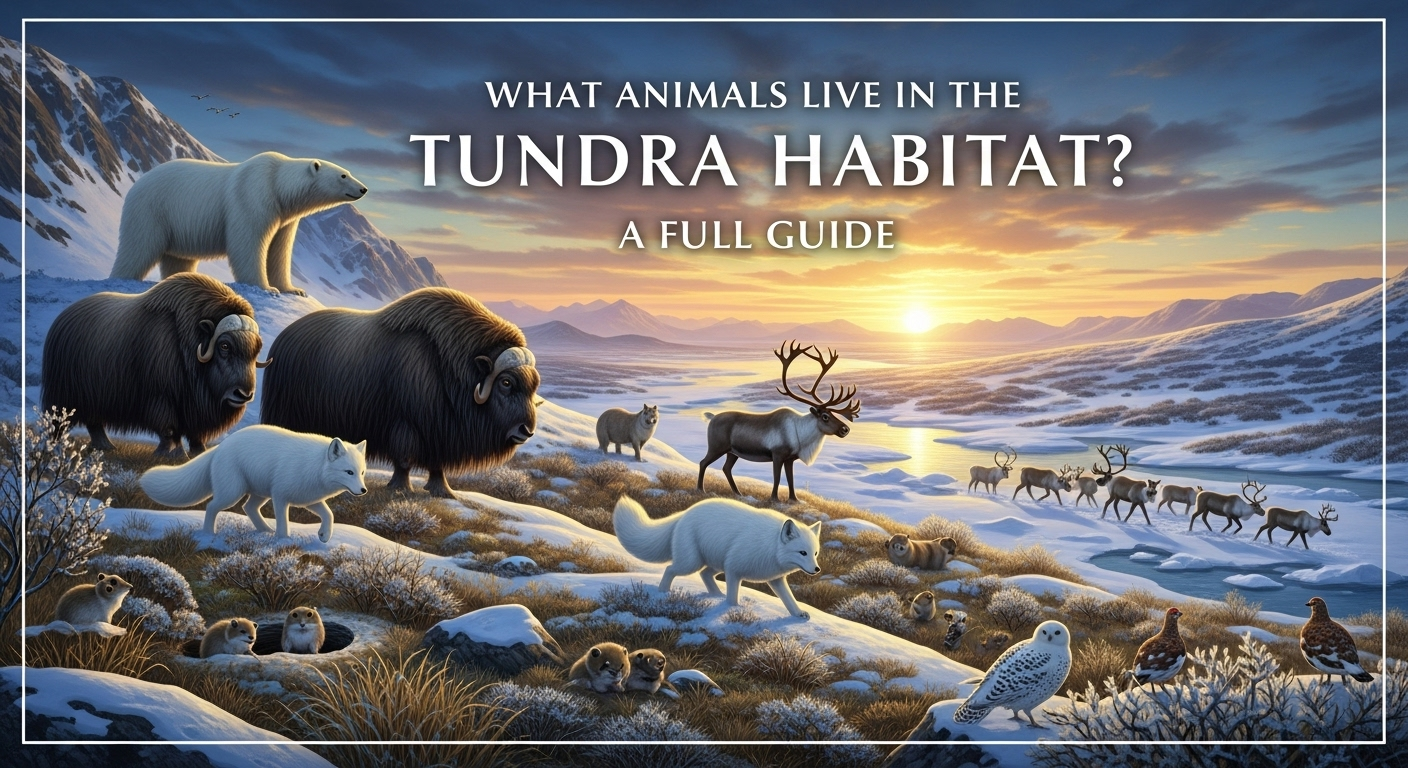
Changes in plant composition—such as shrub expansion—can alter albedo (surface reflectivity), soil insulation, and habitat structure, with wide-ranging ecological effects.
Herbivores and Predators
Herbivores like caribou, muskox, lemmings, and ptarmigan convert plant biomass into animal protein. Predators—wolves, Arctic foxes, and birds of prey—regulate herbivore populations and help maintain ecosystem balance.
Predator-prey dynamics are often tightly linked to cyclic patterns (e.g., lemming cycles). When prey populations decline, predators may experience reproductive failure or move elsewhere.
Human-managed hunting and predator control in some regions have disrupted natural population regulation, sometimes leading to overgrazing or predator declines.
Decomposers
Microbes, fungi, and detritivores break down organic matter, releasing nitrogen and other nutrients vital for plant growth during the short summer. Decomposer activity increases with temperature, accelerating nutrient cycling.
Permafrost thaw can release long-stored organic material, altering soil chemistry and greenhouse gas emissions. Changes in decomposition rates can feedback into climate systems and plant community dynamics.
Adaptations to Extreme Conditions
Animals in the tundra display remarkable morphological, physiological, and behavioral adaptations that allow survival where temperatures are low and resources are seasonal.
Insulation, camouflage, metabolic changes, migration, and altered life-history strategies are common. These adaptations often reflect trade-offs shaped by evolutionary pressures in an extreme environment.
Understanding these adaptations helps explain why certain species thrive in tundra environments and how vulnerable they might be to rapid environmental change.
Behavioral Adaptations
Many tundra animals modify their behavior seasonally—for example, migrating birds travel long distances to exploit summer resources and escape winter scarcity. Herbivores like caribou migrate to calving grounds that reduce predation risk.
Other behaviors include huddling (e.g., muskoxen forming defensive circles), burrowing under snow (small mammals), or caching food for lean months. These strategies reduce energy expenditure and protect vulnerable life stages.
Behavioral flexibility can sometimes buffer species against rapid change, but extreme or rapid shifts in climate can outpace behavioral adjustments.
Physiological and Morphological Adaptations
Thick fur, dense undercoats, fat layers, and short extremities (to reduce heat loss) are common. The Arctic fox’s seasonal color change is a classic example of morphological adaptation for camouflage.
Some animals exhibit counter-current heat exchange in limbs to reduce heat loss, while others have metabolic adaptations to endure fasting during winter. Insulative feathers and dense plumage help birds retain warmth.
Reproductive timing is also physiological: many species time births and fledging to coincide with peak resource availability, maximizing offspring survival.
Seasonal Strategies
Seasonal strategies include hibernation (not common in tundra but used by some mammals), torpor, and altered reproductive output. For instance, many rodents have high reproductive rates in summer to build populations quickly.
Fat accumulation prior to winter is essential for large mammals and carnivores relying on stored energy. Animals also exploit snow as insulation for nests and dens in winter.
Human-induced changes to seasonality—earlier springs, later winters—can disrupt these finely tuned life cycles.
Threats and Conservation
The tundra faces growing threats from climate change, industrial development, pollution, and shifts in species distributions. These pressures are changing habitats, food webs, and the long-term viability of tundra species.
Conservation efforts involve protected areas, sustainable management of natural resources, indigenous partnerships, and international agreements addressing climate change. Monitoring and adaptive management are crucial.
Public awareness, research, and policy action are needed to mitigate impacts and help species adapt. The tundra’s fate has global implications due to carbon storage and climate feedbacks.
Climate Change Impacts
Warming temperatures are causing permafrost thaw, shrub expansion, altered hydrology, and reduced sea ice. These changes affect food availability, habitat structure, and migration routes for many species.
Predators and competitors from lower latitudes (e.g., red foxes) are moving into tundra regions as the climate warms, threatening specialized Arctic species. Changes in snow patterns also affect breeding success and camouflage efficacy.
Rising temperatures may also increase disease and parasite loads, challenging species with little evolutionary exposure to certain pathogens.
Human Activities & Pollution
Oil and gas development, mining, road construction, and tourism fragment habitats and introduce pollutants. Spills and infrastructure increase mortality risk and disturbance for sensitive species.
Contaminants like persistent organic pollutants (POPs) and heavy metals bioaccumulate in food webs, affecting top predators—including humans who rely on subsistence hunting. Microplastics are an emerging concern in polar regions.
Balancing economic interests and conservation requires stringent environmental assessments and incorporation of indigenous knowledge in decision-making.
Conservation Strategies
Key strategies include:
- Establishing and enforcing protected areas covering critical habitats.
- Supporting indigenous stewardship and co-management frameworks.
- Reducing global greenhouse gas emissions to limit warming.
- Monitoring species populations and conducting long-term ecological research.
Community-based conservation, combined with international cooperation, offers the best prospects for protecting tundra biodiversity and the ecosystem services it provides.
Tundra Species Comparison Table
Below is a comparison of selected tundra animals, showing diet, typical adult weight, and conservation status.
| Species | Diet | Typical Adult Weight | IUCN Status |
|---|---|---|---|
| Caribou / Reindeer (Rangifer tarandus) | Lichens, shrubs, grasses | 80–180 kg (varies) | Vulnerable (some populations) |
| Arctic Fox (Vulpes lagopus) | Lemmings, eggs, carrion | 3–9 kg | Least Concern (regional threats) |
| Polar Bear (Ursus maritimus) | Seals, marine mammals | 350–700 kg (males) | Vulnerable |
| Lemming (various) | Grasses, mosses | 30–150 g | Least Concern |
| Snowy Owl (Bubo scandiacus) | Lemmings, birds | 1.6–3.6 kg | Vulnerable (regional fluctuations) |
| Muskox (Ovibos moschatus) | Mosses, grasses | 200–400 kg | Least Concern (local threats) |
Note: Weights and statuses vary by subspecies and region; check local conservation listings for exact figures.
Frequently Asked Questions (FAQ)
Q: What animals live in the tundra habitat year-round?
A: Resident species include Arctic foxes, ptarmigan, lemmings, voles, and some owl species. Larger animals like caribou may migrate seasonally rather than staying year-round.
Q: Are there predators in the tundra?
A: Yes. Predators include Arctic foxes, wolves, polar bears (near coasts/sea ice), snowy owls, and peregrine falcons in some areas.
Q: How do animals survive the long, dark winters?
A: Strategies include migration, fat storage, dense insulation (fur/feathers), snow dens for insulation, reduced metabolic rates, and behavioral changes like huddling.
Q: Is the tundra disappearing?
A: The tundra is shrinking and changing due to warming temperatures, permafrost thaw, and shrub encroachment. Some tundra areas are being altered substantially, affecting species composition.
Q: How can people help conserve tundra wildlife?
A: Support climate action, sustainable development policies, Indigenous stewardship, and conservation organizations focusing on Arctic and alpine ecosystems.
Q: Do human communities rely on tundra animals?
A: Yes. Indigenous peoples depend on species like caribou, seals, and fish for food, culture, and livelihoods. Conservation measures must include these communities.
Conclusion
The tundra is a unique, fragile ecosystem supporting a specialized array of animals adapted to extreme cold, short summers, and seasonal variability. From migratory birds and vast caribou herds to Arctic foxes and tiny lemmings, tundra species are integral to a tightly woven food web. Climate change and human activities are altering these systems rapidly, making conservation and informed management essential. Preserving tundra habitats protects biodiversity, cultural heritage, and global climate regulation.
Summary (English)
This guide answers the question "what animals live in the tundra habitat" by exploring the types of tundra, iconic mammals (caribou, Arctic fox, polar bear), birds and invertebrates, food web dynamics, and the adaptations that allow species to survive extreme conditions. It also outlines major threats—especially climate change—and conservation strategies. A comparison table summarizes key species traits, and a FAQ addresses common concerns. The tundra’s long-term health depends on effective conservation, indigenous knowledge, and global action to reduce greenhouse gas emissions.
