
Your Guide to Natural Habitat Conservation Strategies
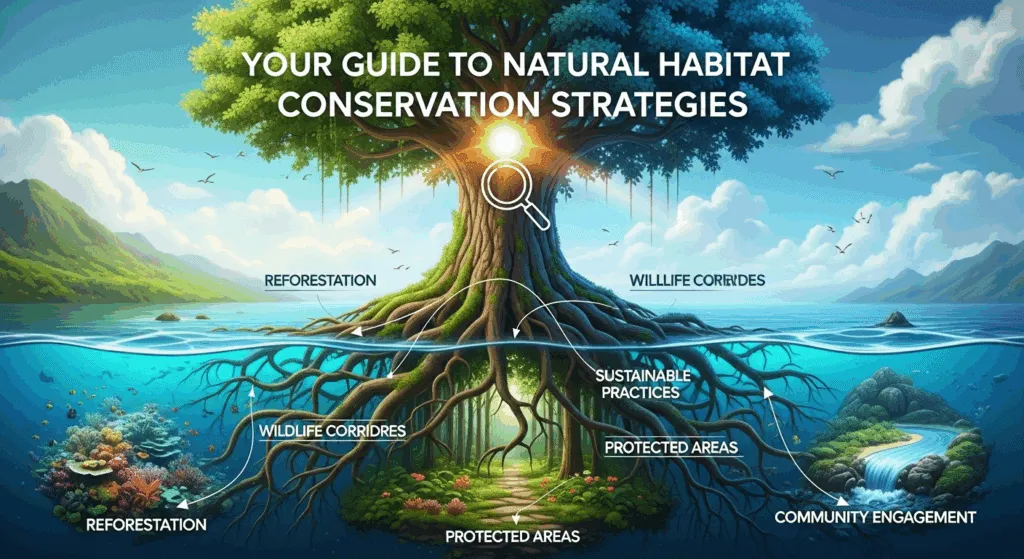
Table: Comparison of Key Habitat Conservation Strategies**
| Strategy | Primary Goal | Key Activities | Example |
|---|---|---|---|
| Protected Areas | In-situ conservation of intact ecosystems and species within them. | Legal designation, enforcement against threats, scientific monitoring. | Serengeti National Park, Tanzania; Great Barrier Reef Marine Park, Australia. |
| Habitat Restoration | Assist the recovery of a degraded ecosystem to its historical state. | Reforestation with native species, removal of invasive species, re-establishing natural water flows. | Replanting mangrove forests in Southeast Asia; restoring peatlands in the UK. |
| Rewilding | Restore natural processes and ecosystem function, often by reintroducing keystone species. | Reintroduction of predators or large herbivores, reducing human management. | Reintroduction of wolves to Yellowstone National Park, USA. |
| Community-Based Conservation | Empower local people to manage and benefit from their natural resources. | Establishing community conservancies, developing eco-tourism, sharing revenue. | Community conservancies in Namibia; community forests in Nepal. |
***
Frequently Asked Questions (FAQ)
Q: What is the difference between habitat conservation and species conservation?
A: They are closely related but distinct. Species conservation often focuses on a single species (e.g., through captive breeding programs or anti-poaching efforts for rhinos). Habitat conservation takes a broader, ecosystem-level approach. The idea is that by saving the entire "home" (the habitat), you automatically protect all the species living within it, including the plants, insects, and less charismatic creatures that are equally vital. Habitat conservation is generally considered more efficient and effective for preserving overall biodiversity.
Q: How can an ordinary person contribute to habitat conservation?
A: There are many ways to contribute. You can:
- Make conscious consumer choices: Support companies committed to sustainability and avoid products linked to deforestation, like uncertified palm oil.
- Reduce your footprint: Conserve energy and water, reduce waste, and eat a more plant-rich diet, as meat production has a large land footprint.
- Support conservation organizations: Donate to or volunteer with reputable non-profits working on habitat protection and restoration.
- Get involved locally: Participate in local clean-ups, plant native species in your garden to support pollinators, and advocate for green spaces in your community.
- Stay informed and spread awareness: Educate yourself and others about the importance of these issues.
Q: Is habitat restoration always successful?
A: No, it is not a guaranteed success. Restoration is a complex science and can be very challenging. Success depends on many factors, including the level of initial degradation, the availability of native seeds, control of invasive species, and long-term funding and commitment. Some ecosystems, like ancient primary forests or peatlands, have taken thousands of years to develop and are nearly impossible to fully restore once destroyed. This is why protecting existing, intact habitats is always the first and most important strategy.
Q: What is a "biodiversity hotspot"?
A: A biodiversity hotspot is a biogeographic region that is both a significant reservoir of biodiversity and is under threat from human activity. The concept was first defined by scientist Norman Myers. To qualify as a hotspot, a region must contain at least 1,500 species of vascular plants as endemics (found nowhere else on Earth) and have lost at least 70% of its primary native vegetation. There are currently 36 recognized hotspots around the world, and they represent top priorities for global conservation investment.

Conclusion
The challenge of conserving the world's natural habitats is immense, but it is not insurmountable. The solution lies in an integrated, adaptable, and collaborative approach. We must fiercely protect what remains through a robust and well-managed network of protected areas and wildlife corridors. We must actively restore what has been lost through thoughtful, science-based initiatives like reforestation and rewilding. And critically, we must embed conservation within our social and political fabric through effective policies and by empowering local communities as the frontline guardians of their natural heritage.
Bolstered by cutting-edge technology, these strategies form a powerful toolkit for change. The path forward requires a shared commitment from governments, corporations, communities, and individuals alike. The health of our planet's habitats is inextricably linked to our own. By investing in natural habitat conservation strategies today, we are not just saving wildlife; we are securing a stable climate, clean air and water, and a sustainable future for all generations to come.
—
Article Summary
Your Guide to Natural Habitat Conservation Strategies provides a comprehensive overview of the essential methods used to protect and restore Earth's ecosystems. The article begins by outlining the crisis of habitat loss, driven by agriculture, urbanization, and climate change, and emphasizes its devastating impact on biodiversity and vital ecosystem services.
The core of the guide details a multi-pronged conservation approach, starting with foundational strategies like establishing and managing protected areas and creating wildlife corridors to connect fragmented landscapes. It then moves to active intervention techniques, such as habitat restoration, reforestation with native species, and the progressive concept of rewilding, which involves reintroducing keystone species to restore natural processes.
Recognizing that conservation is a human endeavor, the text highlights the critical role of policy, law, and community involvement, showcasing the success of Community-Based Natural Resource Management (CBNRM). The guide also explores how modern technology—including remote sensing, GIS, drones, AI, and Environmental DNA (eDNA)—is revolutionizing monitoring and enforcement. The article includes a comparative table of different strategies and an FAQ section to address common questions, concluding that an integrated approach combining protection, restoration, policy, and technology is essential for securing a sustainable future for both wildlife and humanity.
