
250 missing after migrant boat sinks in Indian Ocean
250 Missing After Migrant Boat Sinks in Indian Ocean
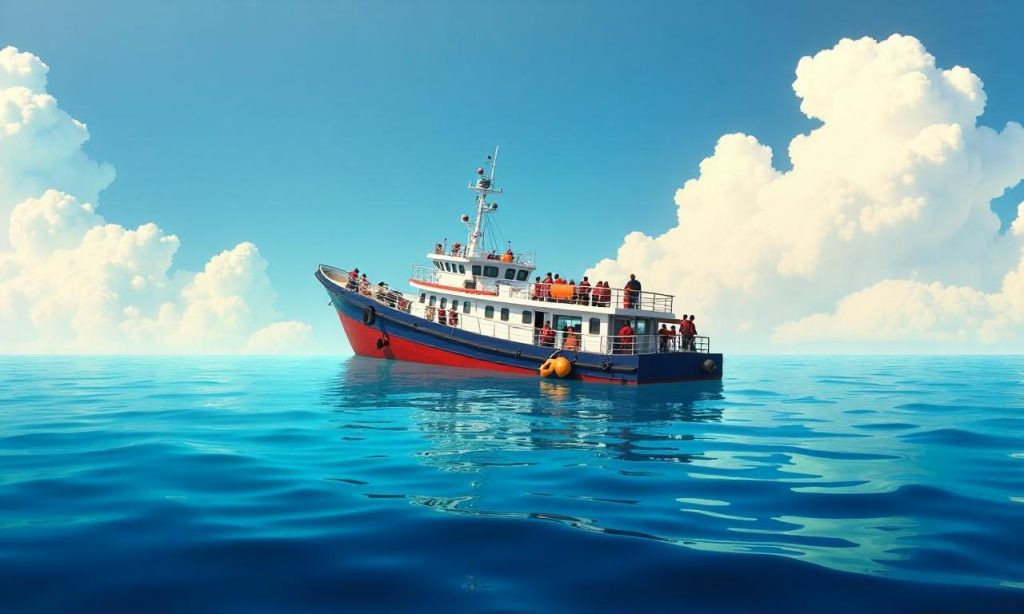
Following a recent incident in the Andaman Sea, the United Nations’ refugee and migration agencies reported that approximately 250 Rohingya and Bangladeshis, including children, are unaccounted for after their vessel overturned. The boat, which set sail from Bangladesh heading toward Malaysia, is said to have “sunk due to heavy winds, rough seas, and overcrowding,” according to the agencies. The Bangladesh Coast Guard informed AFP that one of its ships recovered nine individuals from the boat on April 9, though the precise moment of the capsizing remains unclear.
“I floated for nearly 36 hours before being rescued,” said Rafiqul Islam, a survivor. “The oil that spilled from the vessel burned my skin.” The 40-year-old noted that the promise of employment in Malaysia convinced him to embark on the perilous journey.
Since 2017, hundreds of thousands of Rohingya, an ethnic minority in Myanmar, have sought refuge in Bangladesh following a violent crackdown. Denied citizenship by Myanmar’s government, the Rohingya are primarily Muslim, while the majority of the country’s population follows Buddhism. Despite improved conditions in Bangladesh, some Rohingya continue to risk life-threatening voyages to Malaysia, a Muslim-majority nation seen as a potential safe haven.
Malaysia has recently turned away two boats carrying around 300 refugees, providing them with food and water before rejecting their entry. A Rohingya refugee in Cox’s Bazar, Bangladesh, previously told Reuters, “People are dying in the fighting, dying from hunger. So some think it’s better to die at sea than to die slowly here.” This reflects the grim reality of displacement, where protracted crises and limited solutions drive desperate decisions.
“This tragedy underscores the severe consequences of prolonged displacement and the lack of sustainable solutions for the Rohingya,” stated the UN High Commissioner for Refugees (UNHCR) in a joint declaration with the International Organization for Migration. The agencies emphasized that ongoing conflict in Rakhine State has diminished hopes for a safe return, while shrinking humanitarian aid and challenging living conditions in refugee camps have further compelled families to take such risks.
The boats used for these crossings are often small, cramped, and lacking essential facilities like fresh water and sanitation. Many do not reach their destinations, with some passengers perishing at sea, others detained, and a few deported. Upon arrival in Malaysia and Indonesia, some refugees are also turned away by local authorities or communities. As Bangladesh observes its new year, the UN urged the global community to maintain financial support for Rohingya refugees and their host populations, stressing the need for urgent action to address the root causes of displacement in Myanmar and enable voluntary, safe returns with dignity.
