
Greek police using masked migrants to forcibly push other migrants back across border
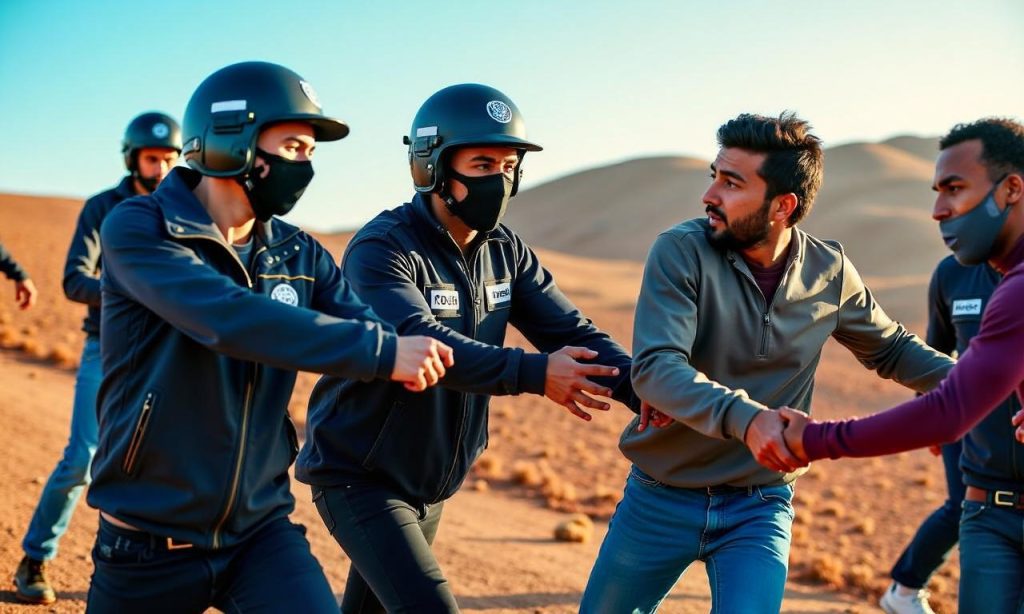
Greek Police Using Migrants as Mercenaries for Border Pushbacks
Greek law enforcement authorities have reportedly enlisted migrants to assist in forcibly returning others across the country’s border with Turkey, as revealed by a comprehensive investigation conducted by the BBC. Internal documents from Greek police show that officers in charge ordered and monitored the recruitment of these so-called mercenaries. The findings highlight accusations of harsh treatment, including instances of migrants being stripped, beaten, robbed, and even sexually assaulted.
Unverified Claims and Collaborative Research
The BBC’s inquiry began last autumn after receiving video footage allegedly depicting mistreatment of migrants by mercenaries. The clip, shared by a smuggler who claimed to be dissatisfied with his peers, shows a group of individuals crossing into Evros and facing an ambush. Though the content remains unverified, it aligns with accounts from other independent sources. The investigation also drew on testimonies from migrants, former mercenaries, police officials, and leaked transcripts.
Greece has witnessed over a million migrant arrivals since 2015, primarily through sea routes but also via the land border with Turkey. This frontier, spanning 200 kilometers along the Evros River, forms the edge of the European Union and separates Greece’s Evros region from Turkey’s East Thrace. Once crossing the river, migrants enter a heavily guarded zone with watchtowers, where pushbacks are allegedly executed.
Merchants of Misery: The Mercenaries’ Role
Internal documents suggest that mercenaries—migrants from countries like Pakistan, Syria, and Afghanistan—are recruited to aid in border operations. These individuals are reportedly compensated with stolen belongings, including cash and mobile devices, as well as documents enabling them to pass through Greece. A local police official confirmed that hundreds of people are repelled weekly by these masked operatives.
In a March 2023 exchange with the BBC, Prime Minister Kyriakos Mitsotakis stated he was “totally unaware” of the alleged use of migrants as pushback tools. However, he emphasized Greece’s efforts to secure its borders and noted European leaders’ resolve to avoid repeating previous mistakes, such as the “massive influx” of asylum seekers.
Frontex Report and Human Rights Concerns
A 2023 incident, captured on video, shows masked individuals ambushing migrants in Evros. A Frontex-backed report concluded that 10 to 20 “third-country nationals” were acting under Greek officers’ orders, subjecting migrants to verbal abuse, sexualized searches, and physical harm. The report cited violations of EU human rights law, as migrants were forcibly transported back to Turkey. Greek authorities have contested this, denying the presence of migrants in the area on that day.
Maria Gavouneli, head of Greece’s human rights commission, described the situation as a potential “extremely significant” breach of rights. The organization has documented over 100 cases of alleged forced returns in Evros, with reports continuing into October 2025. While the frequency of such incidents may be decreasing, many involve non-Greek nationals, raising ongoing concerns about systemic abuse.
Frontex’s Stance
Frontex has dismissed allegations of organized pushbacks, stating that the use of masked individuals does not constitute systematic violations. Despite this, the organization’s Fundamental Rights Office has issued multiple reports on the issue, including findings from recent investigations. The BBC’s evidence, combined with testimonies and documents, continues to challenge the narrative, urging further scrutiny of Greece’s border policies.
