
Lebanon enters talks with Israel but with no cards to play
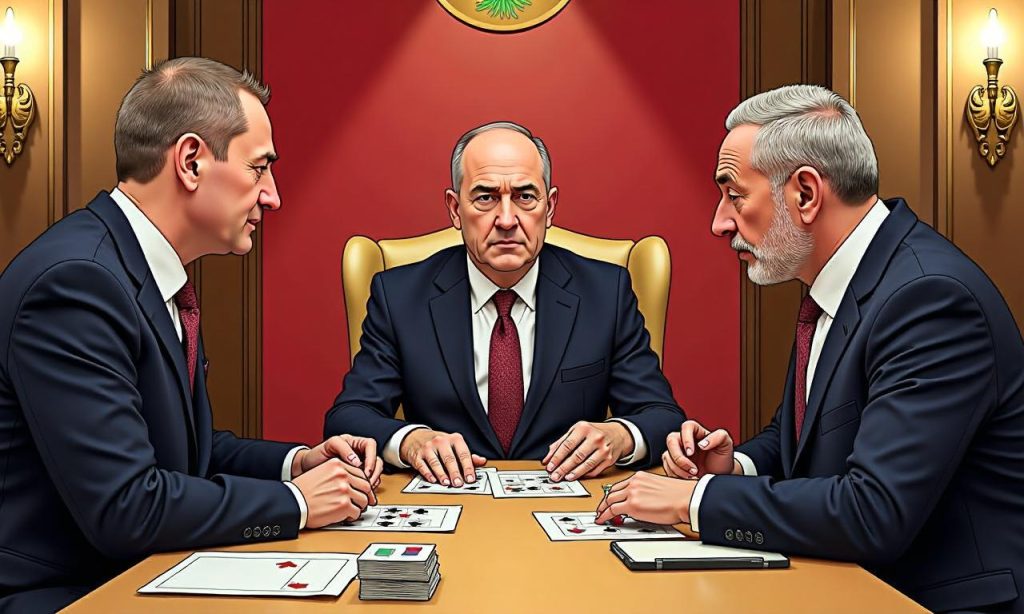
Lebanon enters talks with Israel but with no cards to play
Lebanon once again finds itself in the throes of conflict, prompting President Joseph Aoun to seek direct dialogue with Israel. During a meeting at Baabda Palace, a modernist structure perched atop a hill overlooking Beirut in August, Aoun, a former army commander, expressed hope for resolution. His administration emerged after a brutal war between Israel and Hezbollah, a militia and political faction backed by Iran, which had been significantly weakened and isolated following the conflict.
Aoun’s primary goal was to disband Hezbollah, a challenge that has long divided the nation. Despite his resolve, the group’s supporters view it as their shield against Israeli aggression, while critics accuse it of prioritizing Iranian interests over Lebanon’s stability. This tension escalated in February when Ayatollah Ali Khamenei, Iran’s supreme leader, was killed in an attack on Tehran. Hezbollah retaliated by launching rockets into Israel, framing the strikes as a response to the loss and ongoing Israeli bombings during the ceasefire.
“I was born an optimist,” Aoun remarked, reflecting his belief in a peaceful path forward.
A fragile ceasefire, established in November 2024, has not halted Israeli operations. The country remains in turmoil, with near-daily strikes targeting Hezbollah-linked individuals. In some regions, the war never truly ended. From my vantage point in east Beirut, the hum of Israeli drones overhead was a constant reminder of the conflict’s persistence.
Lebanon’s government, with limited control over Hezbollah, faces a critical dilemma. The group, known as the Party of God, was formed in the 1980s during Israel’s occupation of Lebanon. It has since been sustained by Iranian funding, training, and arms, with the eradication of Israel as a declared objective. The Taif Agreement of 1989, which concluded the Lebanese Civil War, required all militias to relinquish their weapons and introduced a power-sharing framework among the country’s diverse sects. Yet Hezbollah retained its arsenal, positioning itself as a resistance force.
Israel withdrew its troops from southern Lebanon in 2000 after an 18-year occupation, but territorial disputes lingered. UN Resolution 1701, enacted in 2006 to end the war and mandate Hezbollah’s disarmament, has not been fully executed. The group is labeled a terrorist organization by nations like the UK and the US, but within Lebanon, it operates as a political party, a social movement, and a key provider of services in underserved areas. It is the nation’s most influential entity.
President Aoun, advocating for a “state monopoly on arms,” has defended his stance since assuming office. Under the 2024 ceasefire deal, Hezbollah agreed to withdraw fighters and weapons from southern Lebanon, which had been under its de facto control for decades. However, its secretary-general, Naim Qassem, has refused to consider complete national disarmament. Aoun warns that unilateral action could reignite violence. “We can’t let the country descend into another civil war,” he said during our August conversation.
With Israel’s relentless attacks and Hezbollah’s resistance, Aoun’s options appear constrained. A meeting between ambassadors, focused on achieving a ceasefire, is set to occur in Washington this Tuesday. The outcome remains uncertain, as Lebanon grapples with the challenge of ending a conflict that has deepened its divisions.
